Welcome all seeking refuge from dogmatic lifestyle advice!

Please check out the tabs below to learn more about the Asylum, its founding and purpose, and the inmate running this place. Take the light-hearted quiz to see if you should stay for a spell and join us over at the Meeting Rooms for some lively discussion.

align="middle" align="middle" align="middle" align="middle"
______________ last updated 6/28/11 _____________________ last updated 7/29/11 _____________________ last updated 6/25/11 ______________________ Come on Over! _________

Tuesday, March 30, 2010

Postprandial de novo lipogenesis and metabolic changes induced by a high-carbohydrate, low-fat meal in lean and overweight men

Postprandial de novo lipogenesis and metabolic changes induced by a high-carbohydrate, low-fat meal in lean and overweight men
Background: Adjustments of carbohydrate intake and oxidation occur in both normal-weight and overweight individuals. Nevertheless, the contribution of carbohydrates to the accumulation of fat through either reduction of fat oxidation or stimulation of fat synthesis in obesity remains poorly investigated.
Objective: The objective of this study was to assess the postprandial metabolic changes and the fractional hepatic de novo lipogenesis (DNL) induced by a high-carbohydrate, low-fat meal in lean and overweight young men.
Design: A high-carbohydrate, low-fat meal was administered to 6 lean and 7 overweight men after a 17.5-h fast. During the fasting and postprandial periods, energy expenditure (EE), macronutrient oxidation, diet-induced thermogenesis, and serum insulin, glucose, triacylglycerol, and fatty acids were measured. To determine DNL, [1-13C]sodium acetate was infused and the mass isotopomer distribution analysis method was applied.  **My addition:  Subjects were fed isocaloric diet for 3 days prior to ensure equivalent glycogen stores.
Results: After intake of the high-carbohydrate meal, the overweight men had hyperinsulinemia and higher fatty acid and triacylglycerol concentrations than did the lean men. The overweight group showed a greater EE, whereas there was no significant difference in carbohydrate oxidation between the groups. Nevertheless, the overweight men had a marginally higher protein oxidation and a lower lipid oxidation than did the lean men. DNL was significantly higher before and after meal intake in the overweight men and was positively associated with fasting serum glucose and insulin concentrations. Furthermore, postprandial DNL was positively correlated with body fat mass, EE, and triacylglycerol.
Conclusion: After a high-carbohydrate, low-fat meal, overweight men had a lower fat oxidation and a higher fractional hepatic fat synthesis than did lean men.

The discussion section is of great interest to me, especially as relates to the claim that it is excess carbs that are turned to fat.   Some excerpts:

It is known that dietary carbohydrate promotes its own oxidation (9, 13, 32) and that under normal conditions DNL is not a major way to increase body fat stores, as found by other investigators using indirect calorimetry (20, 31). Most short-term studies (1315, 30) in which carbohydrate was added to mixed diets, even in large quantities, did not show net DNL, based on indirect calorimetry, because storage as glycogen was concluded to represent the fate of excess dietary carbohydrate. In the present study, NPRQ was high throughout the postprandial period, reaching values slightly >1 in the overweight group after the first 60 min, although there was no positive postprandial net lipogenesis, and remained <1 in the lean men, as found in other studies (13, 14). This information indicates that there was no net gain in body fat after the administration of a large carbohydrate load.
Using tracer techniques, several authors assessed the effect of carbohydrate on DNL both in isoenergetic diets (10, 15, 18) and during surplus-carbohydrate diets (15, 33) and reported that carbohydrate consumption produced a dose-dependent increase in fractional DNL. Nevertheless, it remained unimportant to body fat stores because it represented only a few grams per day, when the absolute rate of lipogenesis was measured. 
This study's aim was to see if this occurred in overweight men as well.  These men had elevated fasting levels of glucose, insulin, triglycerides and DNL rate.  The overweight men responded differently to the high carb meal with higher DNL, lower fatty acid oxidation rates, increased trigs and NEFA.

Taken together, these results - ... - all point to an impairment of tissue fuel selection (utilization of fatty acids) in the overweight group, in whom a carbohydrate load produced a fat-sparing effect more pronounced than in lean men and so a less negative fat balance than in lean men.
The authors point to a TEF of the carbohydrate load in the overweight men which goes counter to the LC dogma.  This could not be correlated to the energy cost of DNL b/c that was not measured.

But here's some "red meat" for the carbs turn to fat crowd:
... the fact remains that obesity can develop from overeating simple carbohydrates, especially in persons who show a higher hepatic fat synthesis and lower fat oxidation during carbohydrate overfeeding. 
Taubesians will read that and ignore the rest of this study, however.  The discussion goes on to say:
Because the heavier participants in this study were already overweight, it is uncertain whether these responses to carbohydrate intake contribute to the development of obesity, but it clearly could contribute to the maintenance of their overweight state.

My take:  

The fatty acids and triglycerides created through DNL go into various lipid "pools" in the body.  Once there, they are indistinguishable from lipids from other sources, namely diet and adipose tissues.  In lean men, the excess carbs were not converted to fats in any significant manner.  The hierarchy of fuel usage -- where fats are the last on the list -- has been pretty well established, and as the study authors implied, their fuel selection process is in "good repair".   I don't get excited by the whole carbs suppress fat burning thing because they will only do so until you run out of them.  The fact is that DNL occurs in the fasted state.  The fact is that DNL also occurs at fairly low rates in all cases so it is somewhat alarmist to point to 2 or 3 fold increases (temporarily) in the rate.  The fats created through this process are metabolically equivalent to ingested fats that are continually undergoing slow turnover in our fat cells.  They are a few drops in the pool and will be "burned" in due time when energy requirements dictate.  They will only add (net) to STORED fats if there's a chronic positive energy balance.   If anything, the "genesis" of lipids from carbs requires some energy.  All of this does not address whether some may overeat carbs, and certainly refined carby foods make this really easy to do.  I continue to contend that for most, however, this overeating is of foods rich in carbs and fat.   However, once someone is obese, I believe LC induces a metabolic state that can and should more easily allow the person to lose weight -- e.g. return to a normal metabolic state.  Absent permanent damage (e.g. impaired ß-cells) I believe one can return to a "lean metabolism" and handle carbs once the "overstuffed" state has been ameliorated.

Fiber and CRP

Came across this so just putting it out there.  It's a meta study of 7 clinical trials in which fiber was studied or reported.  In 6 of 7 CRP was reduced.  One study involving just psyllium showed no effect.

The effects of dietary fibre on C-reactive protein, an inflammation marker predicting cardiovascular disease
Conclusions: In the presence of weight loss and modified saturated, monounsaturated and polyunsaturated fat intakes, significantly lower CRP concentrations (25–54%) are seen with increased fibre consumption 3.3 g/MJ). Mechanisms are inconclusive but may involve the effect of DF on weight loss, and/or changes in the secretion, turnover or metabolism of insulin, glucose, adiponectin, interleukin-6, free fatty acids and triglycerides. Clinical studies of high- and low-fibre diets are needed to explore the potential favourable effects as observed epidemiologically, and to understand individual susceptibility to its anti-inflammatory effect and long-term cardiovascular reduction.
Unfortunately for those interested, full text is not free.

Monday, March 29, 2010

Finger Pointing at Fructose

Gary Taubes pointed fingers at just the excess carbohydrates in diets as the cause of the obesity epidemic.
Lustig narrows the finger pointing even more to just one little sugar molecule:  fructose.

Where he gets off saying that fructose is poison is beyond me.  When not consumed in excess/acute doses, there's no evidence that fructose if bad for humans.  Given that we have a separate metabolic pathway to handle it AND convert it to another form for energy storage fructose being a poison doesn't make sense.  Furthermore, evidence abounds that paleo man consumed most carbs from fruits and honey (honey having the fructose:glucose ratio similar to HFCS).

AFAIC, it is a no-brainer, or should be, that consuming Mega Gulps of sugary sodas or several glasses of fruit juices and/or drinks is just plain stupid.  Why do Americans do this?  Lustig implies some addictive new ingredients in the secret formulas.  Sheesh!  It is not the American government, or the low-fat advocates who have encouraged folks to consume 20-30% of their daily calories in the form of sugary drinks!!  Nor, frankly to choose processed/refined/fake foods over whole real foods.  And it's not big business' fault either.  They are giving us what we want.  If more Americans wanted XYZ, someone would make it. 

Taubes hit the nail on the head about sodas ... should have stopped there instead of going on with the various unsubstantiable theories on fat and carbs.  Lustig suggests eliminating liquid calories from the diet.  Again ... should have just stopped right there. 

If this stuff scares folks off the sugars, that's great.  But fruits are already wrongly demonized and obsessed over in the LC community.  I, myself, have gone months maybe even without enjoying one of my favorite things on the planet out of fear of the carbs.  And now to fear the fructose itself. 

Count me out on this alarmist's band wagon.  Humans ate and were meant to eat fruit.  I've been adding in more if anything to no ill effect.

Saturday, March 27, 2010

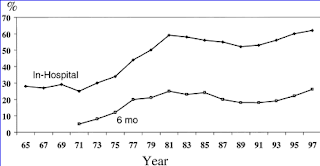
Obese 6 month olds

One of the issues Dr. Lustig points to in his crusade against fructose is that of the obesity epidemic amongst 6 month olds.  Surely they can't be "eating more and moving less" like the rest of us, so there must be some bogey man here.  He points to sucrose in one brand of formula.  This got me to looking into whether or not there was a link between breastfeeding and obesity.   The results of numerous studies are inconclusive except for controlled studies limiting protein content.  So this got me to thinking of the usual tactic of correlating trends to identify the culprit.  One would expect a negative relationship between breastfeeding rates and obesity rates, when in fact the opposite seems to be the case.


Formula feeding was even more popular in the 50's, and I've seen the resurging breastfeeding rates continue through at least 2003.  It hardly seems plausible, given the varied contents of formulas, that fructose in formula is singly responsible for the obesity of 6 month olds ... it may not even be a factor, let alone the factor.

But here's an interesting study I came across: http://www.nutritionj.com/content/4/1/17

Infants born to obese biological mothers consumed more energy, and energy as carbohydrate, than their normal weight counterparts (Table 3). Three, out of the four infants born to obese biological mothers consumed complementary foods. The amount of energy consumed from complementary foods by these infants of obese biological mothers was 18.3 ± 2.5 kcal/kg. This was in addition to the energy intake of 69.1 ± 20.3 kcal/kg from formula for these same infants. However, energy intake from protein and fat, for both complementary feedings and formula, were similar among the two groups (Table 3). The amount of formula intake was also similar (90.1 ± 16.3 vs. 98.9 ± 35.4 ml/kg) between the infants born to obese and the normal weight biological mothers. There was a significant (p < 0.05) correlation between total energy intake and maternal body weight (r = -0.73; p < 0.06; Figure 2a).

Could it be that we're experiencing a generational "multiplier" of sorts?  Whatever it is, I think they should take a closer look at expanding studies of this nature.  Bottom line, it may well be that obese babies ARE just eating more.

Tuesday, March 23, 2010

Carbohydrate restriction regulates the adaptive response to fasting

Carbohydrate restriction regulates the adaptive response to fasting

The importance of either carbohydrate or energy restriction in initiating the metabolic response to fasting was studied in five normal volunteers. The subjects participated in two study protocols in a randomized crossover fashion. In one study the subjects fasted for 84 h (control study), and in the other a lipid emulsion was infused daily to meet resting energy requirements during the 84-h oral fast (lipid study). Glycerol and palmitic acid rates of appearance in plasma were determined by infusing [2H5]glycerol and [1-13C]palmitic acid, respectively, after 12 and 84 h of oral fasting. Changes in plasma glucose, free fatty acids, ketone bodies, insulin, and epinephrine concentrations during fasting were the same in both the control and lipid studies. Glycerol and palmitic acid rates of appearance increased by 1.63 +/- 0.42 and 1.41 +/- 0.46 mumol.kg-1.min-1, respectively, during fasting in the control study and by 1.35 +/- 0.41 and 1.43 +/- 0.44 mumol.kg-1.min-1, respectively, in the lipid study. These results demonstrate that restriction of dietary carbohydrate, not the general absence of energy intake itself, is responsible for initiating the metabolic response to short-term fasting.

I've felt for a long time that LC is equivalent to "starvation mode".  It is interesting that NEFA/FFA were the same in both the fasted group and that getting the lipid infusion.  This would indicate to me that "dietary" fat in and of itself does not stimulate further lipolysis.  It would be interesting to see if the result would differ if the fats were ingested.

Energy deficit w/o LC alters resting carb oxidation and FA availability

Energy deficit without reducing dietary carbohydrate alters resting carbohydrate oxidation and fatty acid availability

Reduced carbohydrate (CHO) availability after exercise has a potent influence on the regulation of substrate metabolism, but little is known about the impact of fat availability and/or energy deficit on fuel metabolism when dietary CHO availability is not reduced. The purpose of this study was to determine the influence of a postexercise energy deficit, independent of CHO availability, on plasma substrate concentrations and substrate oxidation.
Seven moderately trained men (peak oxygen uptake: 56 ± 2 ml·kg–1·min–1) performed exhaustive cycling exercise on two separate occasions. The two trials differed only by the meals ingested after exercise: 1) a high-fat diet designed to maintain energy balance or 2) a low-fat diet designed to elicit energy deficit. The CHO and protein contents of the diets were identical. The next morning, we measured plasma substrate and insulin concentrations and CHO oxidation, and we obtained muscle biopsies from the vastus lateralis for measurement of pyruvate dehydrogenase kinase (PDK)-2 and PDK-4 mRNA expression by using RT-PCR.
Despite identical blood glucose (5.0 ± 0.1 and 4.9 ± 0.1 mM) and insulin (7.9 ± 1.1 and 8.4 ± 0.9 µU/ml) concentrations, plasma fatty acid and glycerol concentrations were elevated three- to fourfold during energy deficit compared with energy balance and CHO oxidation was 40% lower (P < 0.01) the morning after energy deficit compared with energy balance (328 ± 69 and 565 ± 89 µmol/min). The lower CHO oxidation was accompanied by a 7.3 ± 2.5-fold increase in PDK-4 mRNA expression after energy deficit (P < 0.05), whereas PDK-2 mRNA was similar between the trials.
In conclusion, energy deficit increases fatty acid availability, increases PDK-4 mRNA expression, and suppresses CHO oxidation even when dietary CHO content is not reduced.
The theory part of this article is fairly lay-person friendly so I encourage reading it.

I found this very interesting.  I only wish they had added a third meal for comparison -- that being a high fat/low carb energy deficit diet. 

Each phase of the study lasted 2 days.  They got a standard meal to eat for dinner the night before the study.  On Day 1 resting data was collected, they exercised to exhaustion, and were then given a diet to be eaten in 3 equal portions afterwards.  The study diet consisted of 1.1g/kg protein and 5g/kg carbohydrate, ~165g fat was added to the energy balance "high fat" diet, while the energy deficit diet contained ~1500 cal less.  Resting data was collected on Day 2.

This study demonstrates that the energy deficit, independent of carb ingestion, dramatically alters the post exercise response of energy substrate usage.  And this was over a 24 hour period.  Here are the plasma lipid levels (click on the pic to enlarge):

The increased glycerol and NEFA/FFA are the result of increased lipolysis of endogenous (body!) fat.  Interestingly enough, the insulin was reduced from Day 1 but the same in both groups.  Changes in IL-6 were not statistically significant although they do seem to trend up and become more variable in that energy balance group.


And lastly, the carbohydrate and fat oxidation rates:

*Significantly different from energy balance trial, P < 0.05.  
{dagger}Significantly different from day 1, P < 0.05.

So exercising to exhaustion changed energy substrate usage (daggers indicate stat.sig. differences from Day 1) in both groups.  Carb oxidation is reduced while fat oxidation increases.  The fat oxidation increaase is greater in the energy deficit group!!

Now these men weighed ~76 kg so both diets contained >300g carbohydrate!  An amount that Taubesians would presume sends insulin levels through the roof, locks fat into our cells and should send blood glucose levels and triglycerides through the roof. 

From the Discussion :

An acute energy deficit triggers essential metabolic alterations to mobilize endogenous lipids and preserve endogenous carbohydrate when exogenous energy availability is low (2, 26). However, because carbohydrate availability provides a potent influence on substrate selection, it is often very difficult to distinguish between the effects of energy deficit and carbohydrate restriction. The major finding of this study was that, without reducing dietary carbohydrate availability, an exercise-induced energy deficit increased plasma fatty acid concentration and suppressed carbohydrate oxidation. Moreover, compared with an exercise-induced energy deficit, maintaining energy balance by ingesting extra dietary fat after exercise (without changing dietary carbohydrate content) prevented the rise in plasma fatty acid concentration and attenuated the decline in carbohydrate oxidation the next morning.

Exercise-induced energy deficit is known to suppress carbohydrate oxidation (1, 40). However, because the human body is keenly sensitive to alterations in dietary carbohydrate, much of this effect has been attributed to the reduction in dietary carbohydrate and the resultant low liver and muscle glycogen resynthesis, rather than the negative energy balance. Providing identical carbohydrate content during energy deficit and energy balance in our study enabled us to differentiate between the effects of energy deficit and the known potent influence of alterations in dietary carbohydrate (8, 16, 43). This study is the first to demonstrate that preventing energy deficit after exercise by ingesting extra dietary fat attenuated the reduction in carbohydrate oxidation. Interestingly, this attenuation in carbohydrate oxidation the day after exercise was found despite identical plasma insulin and glucose concentrations during energy deficit and energy balance. Furthermore, in a companion study to this project using these same subjects (13), we found that adding extra dietary fat to meals after exercise did not affect muscle glycogen resynthesis. These findings indicate that the reduction in carbohydrate oxidation during energy deficit is not solely dependent on plasma insulin concentration or endogenous and exogenous carbohydrate availability, but that it can respond to dietary fat and/or energy availability, per se.
Now this study was done in moderately trained, healthy, young (~30y) men.  But this does demonstrate that insulin is not the be all and end all of fat burning.  The energy deficit increased the relative changes in substrate oxidation (carb down, fat up).

Saturday, March 20, 2010

Bitter Melon

I did a lot of research on this a while back and believe it may be the answer for some folks.

Friday, March 19, 2010

A calorie is a calorie!

Is a calorie a calorie?
Andrea C Buchholz and Dale A Schoeller
 
Wanted to post this here for my own organization.  This review looks at the results of various studies comparing high protein (OK, OK, yeah Atkins is high fat not high protein ...) low carb diets to low fat.  Their ultimate conclusion is, basically, yes.
 
Given the Eades/Colpo dust-up over at their respective blog/sites, this whole thing has come up again.  I think it's important to remember that food calories are a measure of metabolizable energy.  The 4/4/9 P/C/F numbers are averages that were determined for mixed meals.  But this should be accountable for in excretory products, because not only do we have thermodynamic laws, there's ultimately a conservation of mass issue.  Changing the proportions of macronutrients doesn't change the way(s) they are metabolized, though in the case of protein its use is changed.  A fatty acid that goes into the fatty acid spiral will produce the same amount of ATP whether or not carbs are around.  If it didn't, then there would be some FA fragment floating around that has to go somewhere.  The only macronutrient that seems to change in the presence or absence of carbs is protein.  Protein is thermogenic.
 
If a metabolic advantage exists, it would show up consistently, and increase with time.  As pointed out in this study, most of the extra weight loss at 12 weeks was already accomplished at 6 weeks (and could be attributable to water weight).  Furthermore, the Atkins trajectory for weight loss in one famous comparison study, "The  A to Z Weight Loss Study" is in the opposite direction from 6-to-12 months.  See below (click to enlarge)

I'm not sure if this is statistically significant, but if you look at Atkins vs. Learn, most of the difference is in the 1st two months and after 12 months, the difference is not much more than it was at 2 mo.  Further, if there's a significant advantage at 2 months, one should see that difference in loss triple for 6 months, and be 6X as great at 12.  This clearly doesn't happen. 

In most studies, it is degree of compliance to any plan that correlates best with weight loss.  It just so happens that LC's less structured plan and appetite suppression of protein assists greatly in this endeavor.

Thursday, March 18, 2010

Was our ancestral diet REALLY VLC and high fat?


Awareness of the ancestral human diet might advance traditional nutrition science. The human genome has hardly changed since the emergence of behaviourally-modern humans in East Africa 100–50 · 103 years ago; genetically, man remains adapted for the foods consumed then. The best available estimates suggest that those ancestors obtained about 35% of their dietary energy from fats, 35% from carbohydrates and 30% from protein. Saturated fats contributed approximately 7.5% total energy and harmful trans-fatty acids contributed negligible amounts. Polyunsaturated fat intake was high, with n-6:n-3 approaching 2:1 (v. 10:1 today). Cholesterol consumption was substantial, perhaps 480 mg/d. Carbohydrate came from uncultivated fruits and vegetables, approximately 50% energy intake as compared with the present level of 16% energy intake for Americans. High fruit and vegetable intake and minimal grain and dairy consumption made ancestral diets base-yielding, unlike today’s acid-producing pattern. Honey comprised 2–3% energy intake as compared with the 15% added sugars contribute currently. Fibre consumption was high, perhaps 100 g/d, but phytate content was minimal. Vitamin, mineral and (probably) phytochemical intake was typically 1.5 to eight times that of today except for that of Na, generally <1000 mg/d, i.e. much less than that of K. The field of nutrition science suffers from the absence of a unifying hypothesis on which to build a dietary strategy for prevention; there is no Kuhnian paradigm, which some researchers believe to be a prerequisite for progress in any scientific discipline. An understanding of human evolutionary experience and its relevance to contemporary nutritional requirements may address this critical deficiency.
A few things jump out at me:
  • The diet is roughly isocaloric for the macronutrients.
  • The dietary villain du jour --  fructose -- is well represented in fruits and honey.  Could that be why we actually have a specific enzyme for processing this nutrient? 
  • Fiber intake is huge!!
  • Fat intake is almost "low fat" levels.
I see no reason to discount the assertions in this article regarding tracing the modern human genome to Stone Age man living in NE Africa.   The meat eaters often point to the Inuit as "proof" of the ancestral value of high fat intake.   But I'm not an Inuit descendent, nor am I living in a super cold climate.  Also, those cold water fishes and seals have a fat content that in no way resembles the fat of today's farm animals -- even the grass fed variety.  

Many in the LC community point to Paleo diets to counter claims that meats are bad for us etc.  Fair and correct in general.  But many of those also consume a LOT of dairy fats -- something Paleo-Dude and Dudette had little or no access to.  IF they had access to dairy, it seems far more likely they would just drink it carbs and all.   Many also eat only the high fat cuts of meat (cooked with more fat).  Paleos ate the whole bird (including the shunned chicken breast), not just chicken wings. 

I'm not willing to give up my dairy entirely, but I take away from this to forgo the cheese over the nuts and strive to eat the whole of the whole foods.  That may not be possible, but to try to balance that prime rib with chicken breast and the like.

Wednesday, March 17, 2010

Protein & Satiety I

A few studies and such on protein and satiety:

Weight, Protein, Fat, and Timing of Preloads Affect Food Intake
Two foods, one rich in protein (HP) and one rich in fat (HF), were employed to evaluate the effect of macronutrients on food intake and to underline the differences that occurred when the foods were served as uniform meal, as first course of a varied meal, and as a snack 2 h before a varied meal. Our results showed that HP food always exerted a higher effect on both intrameal satiation and postingestive satiety than HF food. When a uniform meal was consumed, satiation for the specific food was reached before fullness; in this condition, sensory characteristics of foods played an important role in controlling food intake and made the uniform meal more satiating than the varied one. The consumption of a snack far from a meal did not contribute to satiety; consequently, gastric filling seems to be an important factor determining the amount consumed in a varied meal.
Add this to my list of articles I have to get a hold of the full text of. 

The influence of thermic effect of food on satiety.

OBJECTIVES: To evaluate energy expenditure after three isoenergetic meals of different nutrient composition and to establish the relationship between the thermic effect of food (TEF), subsequent energy intake from a test meal and satiety sensations related to consumption.

DESIGN: The study employed a repeated measures design. Ten subjects received, in a randomized order, three meals of 2331+/-36 kJ (557+/-9 kcal). About 68% of energy from protein in the high protein meal (HP), 69% from carbohydrate in the high carbohydrate meal (HC) and 70% from fat in the high fat meal (HF).

SETTING: The experiments were performed at the University of Milan. Subjects: Ten normal body-weight healthy women.

METHODS: Energy expenditure was measured by indirect calorimetric measurements, using an open-circuit ventilated-hood system; intake was assessed 7h later by weighing the food consumed from a test meal and satiety sensations were rated by means of a satiety rating questionnaire.

RESULTS: TEF was 261+/-59, 92+/-67 and 97+/-71 kJ over 7 h after the HP, HC and HF meals, respectively. The HP meal was the most thermogenic (P < 0.001) and it determined the highest sensation of fullness (P=0.002). There were no differences in the sensations and thermic effect between fat and carbohydrate meals. A significant relationship linked TEF to fullness sensation (r=0.41, P=0.025). Energy intake from the test meal was comparable after HP, HC and HF meals.

CONCLUSIONS: Our results suggest that TEF contributes to the satiating power of foods.
Breakfasts high in protein, fat or carbohydrate: effect on within-day appetite and energy balance.

OBJECTIVE: To compare the effect of isoenergetically-dense, high-protein (HP), high-fat (HF) or high-carbohydrate (HC) breakfasts (at 08.30) on subjective hunger, fullness and appetite (measured hourly on a 100 mm visual analogue scale), macronutrient balance and ad libitum energy intake (EI), at a test meal (13.30) and throughout the rest of the day (until 23.00).

DESIGN: Six men each spent 24 h in a whole-body indirect calorimeter on three separate occasions during which they received breakfasts designed to match 75% of BMR and that comprised, on average 3.1 MJ of protein (HP), carbohydrate (HC) or fat (HF), respectively, the remainder being split between the other two macronutrients. Every item of the ad libitum diet comprised 13% protein, 40% fat and 47% carbohydrate by energy, with an energy density of 550 kJ/100 g.

RESULTS: Subjectively-rated pleasantness did not differ between the breakfasts, or any of the subsequent ad libitum meals. Subjective hunger was significantly greater during the hours between breakfast and lunch after the HF (26) treatment relative to the HP (18) or HC (18 mm) meals (P < 0.001), although the HP treatment suppressed hunger to a greater extent than the other two treatments over 24 h. However, mean ad libitum lunch intakes were similar at 5.38, 5.30 and 5.18 MJ (NS) on the HP, HC and HF treatments, respectively. After-lunch intakes were also very similar at 6.14, 6.18 and 5.83 MJ (NS). Mean 24-h energy expenditure amounted to 11.12, 11.14 and 10.93 MJ, respectively, producing energy balances of 5.71, 5.83 and 5.04 MJ (NS), respectively. The HP, HF and HC breakfasts led to enhanced P, F and C oxidation, respectively (P < 0.003).

CONCLUSIONS: Large HP, HC or HF breakfasts led to detectable changes in hunger that were not of sufficient magnitude to influence lunch-time intake 5 h later, or EI for the rest of the day. A single positive balance of each macronutrient can be buffered by oxidation and storage capacity, without leading to changes in meal-to-meal EI, when subjects feed ad libitum on unfamiliar diets of fixed composition.
Interesting indeed.  Hunger INCREASED after HF vs. HC or HP (the scores of which seem similar).  But not enough to influence intake.  Still, this flies in the face of the Low Carbventional Wisdom.

Lipotoxicity

Lipotoxicity: When tissues overeat

Recent findings
Excess lipid accumulation in non-adipose tissues may arise in the setting of high plasma free fatty acids or triglycerides.  Alternatively, lipid overload results from mismatch between free fatty acid import and utilization. Evidence from human studies and animal models suggests that lipid accumulation in the heart, skeletal muscle, pancreas, liver, and kidney play an important role in the pathogenesis of heart failure, obesity and diabetes.  Excess free fatty acids may impair normal cell signaling, causing cellular dysfunction. In some circumstances, excess free fatty acids induce apoptotic cell death.
Having stumbled across some disturbing information on elevated free fatty acids, I went back and dug up this review paper I had found a while back. 

IF the low carb gurus are correct -- and LC essentially makes MORE NEFA/FFA's available in circulation -- then I do worry about the long term benefits of LC. Fats in circulation can be as triglycerides or NEFA/FFA's but for some reason NEFA/FFA's aren't measured often (or at least paid attention to). In this regard, I don't want to be lulled into a false sense of security by low trigs.


Circulating NEFA/FFA's are to dietary fats what blood glucose, BG is to dietary carbs.  We have receptors to sense this nutrient level just as we have receptors to sense BG levels.  Elevated NEFA/FFA is as much a symptom of diabetes as are elevated BG levels -- perhaps moreso for Type 2's?
High plasma FFA and triglyceride levels lead to increased import of FFAs into non-adipose tissues, contributing to intracellular lipid accumulation.
As much as we all hate fat, adipocytes are where we're supposed to store fats.  I wonder sometimes if the reason I weigh so much more than I look like I do is because I'm storing fat in my muscle where perhaps it doesn't show up so much volume-wise.

Intracellular FFAs or their metabolites activate a serine/threonine kinase cascade that ultimately results in reduced insulin receptor substrate-1 tyrosine phosphorylation, reduced insulin receptor substrate-1-associated phosphatidylinositol 3-kinase activity and failure to promote translocation of the GLUT4 glucose transporter to the plasma membrane in response to insulin stimulation.
This gets all complicated, but basically this again demonstrates how elevated NEFA/FFA induces insulin resistance.  There are some in the LC community who hail this development.  The theory is IR is good because this directs glucose to the brain and our skeletal muscle is happy to thrive on ß-oxidation of fatty acids.  So the following questions to ponder arise:

  • What does this do for those who have a few carbs here and there ... as most of the LC community does (whether on plan or off) from time to time?

  • Is zero carb 24/7/365 dangerous or the only truly safe version of LC??

  • If LC manages one nutrient level that is elevated in T2 diabetics (BG), but exacerbates the other (NEFA/FFA), is it really a healthier dietary management strategy?


Tuesday, March 16, 2010

The New Atkins ~ Ketosis & The "Atkins Edge"

One of my "bad" issues with TNA is the whole issue of some magic carbohydrate level for weight loss. 

I had a big problem with this point which led me to go off Atkins "big time" the prior two times I tried it (for extended periods and with much success at the time, I might add).

I'm a firm believer that for a goodly portion of adults, it is dieting and a diet mentality that has contributed to becoming overweight/obese.  If you're not following all the rules, then why bother ... right?  Or you've been good so what's one restaurant or take-out meal going to do -- forget that many of those meals, especially if you add a cocktail, can tally up to 3000 cals in one pop!

At least with CRD's, if you eat maintenance level calories one day, you just put off one or two sevenths of a lb weight loss for a day or so.   Of course plenty of folks on CRD's will continue to eat the entire pkg of cookies or whatever the forbidden goodie is, but the successful ones aren't always purists -- rather they accept the occasional indulgence and move on.

With LC plans, somehow 10g extra carbs is going to set you back days, weeks even?  It sounds so cool, almost, that we have some magical CCL for losing and an ACE for maintining.  All I have to do is find that number, stay at or under it, and voila!  But woe is me if I have a bite of mashed potatoes and exceed it.  

C'mon.  Does that REALLY make any sense?  It defies all earthly laws to gain a pound of body mass without consuming at least a pound of food -- and that would have to be a pound in excess of basic needs.  So any temporary setback on an LC diet is likely mostly water.  Now folks with water balance issues, and especially the rather overweight, can fluctuate by as many as 10 or more lbs just from water.  In my experience, I fluctuate ±3lbs about what I consider to be my true weight ... sometimes even when VLC'ing.  If I've gone from totally glycogen depleted to filling the stores, I can easily gain 5 lbs overnight (as I did on a recent vacation), but since that water weight is w/in my muscle cells distributed about my body, my clothing fits just about the same.  Bottom line, I don't sweat these pounds.  It may take some people longer to reverse the water weight pendulum, but they haven't gained energy-storage weight (outside the glycogen).

So anyway, in the original Atkins, Dr. A was clearly referring to a threshold to stay in ketosis with his CCL for weight loss.  On pg. 94 (paperback version, Sept. 1973 printing, ©1972 Bantam), The Diet Revolution Calorie Theory is stated:  Calories in equals calories used plus calories excreted unused.

Now Westman et.al. know full well that excess ketones don't add up to a whole lot of wasted calories.  These three are among the authors of a Review article entitled Low Carbohydrate Nutrition and Metabolism ... rather ironically funded by the Atkins Center but not referenced in TNA.  (Whassup wid dat??)
Two longer-term studies, in persons without diabetes, that measured fasting blood -hydroxybutyrate concentrations over 10 wk found that, whereas the concentrations increased over the first 2–4 wk, they then decreased and, after 10–12 wk, remained only slightly higher than those of dieters following other diets (21, 23).
In the article, they basically identify ~50g as the carb threshold for an LCKD.  In the book they refer to ketogenic diets several times (for treatment of epilepsy mostly and diabetes in one instance).  And yet mysteriously missing is any mention in determining CCL (only seeing if you lose weight).  I find this quite odd.

In the article the "low carb metabolism" is described for LCKD:  70% fatty acids (dietary and lipolysis of adipose tissue), 20% ketones ( dietary fat & protein and lipolysis and ketogenesis of adipose tissue), 10% glucose (gluconeogenesis, glycogenolysis).  If this isn't the "Atkins Edge", then they acknowledge that above 50g there's no significant switch to this alternate metabolism. 

As early as 1980, LaRosa found that subjects following an LCD do not necessarily replace the carbohydrate with either protein or fat, but that they, rather, reduce starch and sugar intake (9). Under such conditions, even though the absolute amounts of fat and protein do not increase, the percentage of fat and protein will increase. Recent research reviewed below has determined that the reduction in calorie intake is a result of appetite and hunger reduction. In this way, LCDs are also low-calorie diets that include an increase in the percentage of calories from fat and protein but not necessarily an increase in absolute amounts of fat and protein.

It seems to me that a more honest presentation and justification for CCL and ACE would be the above.  There does appear to be a spontaneous decrease in caloric intake associated with minimizing carbs.  I think that at least in part is due to the number of calorie dense carby/fatty foods (all those pastries, pizza, french fries and the like) one has to limit.  But given that adaptation to ketosis on LC is well-known (and Atkins isn't even close to the ketogenic diet used to treat epilepsy!), their description of the "Atkins Edge" seems disingenuous at best.  

These authors ignore their own (Atkins funded) writings to re-invent the same old wheel.  I would have loved for them to acknowledge that -- gasp!! -- Atkins was right on the health and weight loss aspects of his diet, but wrong on the calorie theory.

I don't see what's NOT exciting about spontaneously reducing intake without going hungry and possibly with a whole lot less discipline (it can be far easier to count carbs once you get the hang of it).  Wish they had done this.  It would have been a far more fitting tribute to Dr. Atkins.

Sunday, March 14, 2010

The New Atkins & Sugar Alcohols

One of my big issues with TNA is the concept of subtracting sugar alcohols from Net Carbs.

IMO, the most fraudulent practice in the LC field is the total subtraction of SA's in the calculation of net carbs.  There are 1.5-2.5 cal/g for most of them (except erythritol which is 0.2 cal/g) and these calories are from carbs!

Here's what TNA says on the subject:

"When it comes to low-carb foods, you subtract grams of sugar alcohols (including glycerin), as well as of fiber, from total grams of carbs to get the Net Carb count."
"Many low-carb products are sweetened with such ingredients as glycerin, mannitol, sorbitol, xylitol, erythritol, isomalt, lactitos and maltitol. ... Because sugar alcohols are not fully absorbed by the gut, they provide roughly half the calories that sugar does, although each one varies slightly. The incomplete and slower absorption results in a minimal impact on blood sugar and insulin response. This means that sugar alcohols don't significantly interfere with fat burning, making them acceptable on Atkins. ... Most people find that they can handle 20 to 30 grams a day without undesirable effects."
I imagine this was quite a point of contention between the powers that be at Atkins Nutritionals and these three respected researchers. There's much to be read between the lines of how it is written.

The veteran low-carber is probably aware that the "missing carbohydrate" on Atkins labels for some of their products is attributed to glycerin (aka glycerine, aka glycerol!).   Apparently AtNu tried, unsuccesfully, to get glycerin classed as a fiber, when, in fact, it is clearly a sugar alcohol and WP&V make a point of identifying it as such.  I may be reading too much into this, but I get the feeling this was a face-saver for these three.  In exchange for going along with subtracting sugar alcohols, they got to inform the consumers of Atkins products and "out" glycerin is a sugar alcohol in hopes the LC community would pick up on this?  That's just my feeling on the whole issue. 

In any case, they acknowledge the caloric content of SA's but not the carb content. If slowed release of carbohydrate doesn't "interfere with fat burning", then what's the point of counting carbs at all so long as they are ingested in very small quantities?   Glycerol is absorbed and metabolized ... and turned into ... drumroll please ... glucose!! These grams are not even accounted for on Atkins' labels (or they weren't last time I looked -- I don't eat these, ever).  We're often talking about 20 or more grams of sugar alcohols in a serving of "product".  Subtracting these completely can result in a 10g or more "error" in your carbs.  That's significant, and if it's not, what's the whole hub bub about counting carbs anyway? 

The authors seem obsessed with the carbs in lemon juice.  So much so that Rung 7 for adding more includes 2T more lemon juice.  I do best on LC lately when I drink cayenne lemonade all day long.   If I have a cup of lemon juice per day (6g sugars, ~20g total carb) or 20g sugar alcohols, which do you think is going to impact weight loss in the right direction??  It's for this reason I harp on this seemingly minor aspect of the book.  They can't have it both ways.  One of the things they advocate to counter stalls is to go back to counting carbs -- Net Carbs of course.  They don't address laying off the sugar alcohols for stalls.  But too much protein, that's the staller!

In such a self-proclaimed "grounded in science" book, they fail to even mention the difference between erythritol and the other sugar alcohols.  Again, perhaps because AtNu doesn't use it much in their products?

In the end, I would like to see a more forthright discussion of the carbohydrate content of sugar alcohols.  If we can't expect that from these trusted scientists, who can we turn to?

Saturday, March 13, 2010

The New Atkins ~ My Review

This post is a general review of: The New Atkins for a New You by Drs. Westman, Phinney, and Volek.

I probably haven't posted enough here to expose my sometimes cynical side of low carb eating, but if there are any visitors from the LC-www who recognize me, you've probably have seen this side of me.  I didn't expect to learn anything groundbreakingly new in this book but was curious to see what was updated and how it was presented by these respected researchers.  Overall, I was pleasantly surprised.

Overall Rating:   ☼ ☼ ☼ ☼ ☼

The Good: 

  • Reads well
  • Well organized
  • Success stories are separated (so folks like me can skip over them ), and appear to avoid the sensational (based on my skimming of a few).
  • Referenced throughout
  • Encouraging
  • Lays out the plan clearly
  • Focuses on long term way of life over a "diet"
  • Acknowledges that for Maintenance there are two paths -- one of which being maintaining a significantly restricted carb intake for life. 
  • Less obsession over the measly carbs in LC veggies.
  • Addresses that high fat doesn't mean eat all the fat you can:  see Savor, Don't Smother
  • Establishes protein guidelines by height/gender and lifestyle rather than as a fixed percentage of intake.The science section is comforting and a good resource for low carbers to discuss with their doctors.  It doesn't overreach for the most part.
  • Acknowledges calories more than just in passing and avoids some of the more controversial claims (burn more calories on LC, inability to gain weight) prevalent in the LC community.

The Bad: 


  • "The Atkins Edge":  I guess they had to do it, but this time they speak of this fat-burning "edge" in round-about and nebulous ways.  Whereas Atkins identified the CCL as being in ketosis or not, there is no mention of ketones in the actual dietary plan and determination of the CCL.

  • Fat Burning Theory:  WP&V know that they can't justify the overly simplified insulin theory in its most rabid form.  Presumably along with the CCL and general structure of the diet, the authors were tasked with re-inventing the fat storage/insulin theory in a way so as to make it more palatable to the mainstream.  On this they succeed, but the underlying theory, while sounding more credible and far less sensational, doesn't hold water.  We all burn glucose and fats for energy at all times in different proportions.  Burning more fat when dietary fat is the majority source is a big Katie Couric "duh", and carbs do not shut down fat oxidation completely.  I'll expand on this in another post.

  • Sugar Alcohols: A HUGE thumbs down on this topic. IMO, the most fraudulent practice in the LC field is the total subtraction of SA's in the calculation of net carbs and WP&V advocate this.  I imagine this was quite a point of contention between the powers that be at Atkins Nutritionals and these three respected researchers, and in the end, I can't help but feel they sold out on this point.  I'll expand on this in another post. 

  • Over-reaching with some of the claims.  I have been making my way through the citations and have found several instances where the citation does not back up the statement made in the book.  Also, when an author says "many" or "several" and refers to studieS in the plural, such statements should be followed by more than one reference.  More than once, such statements in the book are followed by a single reference.  I'll address these in future posts.  UPDATE:  In re-checking, I now see that sometimes they use one footnote number to cite a few references.  In the first case of this that caught my eye, I now see 3 articles cited with one footnote.  However I still have reservations regarding this sampling of studies.
  • Their almost unnatural obsession over the carbs in lemon juice.  So much so, that lemon juice is mentioned in Rung 7 (tomato & veggie juice).  They repeatedly obsess over the 2.5 net carbs in 2T of lemon juice.  I'm not sure what the other carbs are in lemon juice, but nutritiondata.com lists 1c. (16T) of lemon juice as having 6g sugar.  I've never known anyone to sabotage their weight loss with lemon juice.  This strange obsession would be understandable if they were even remotely as diligent counting the carbs of sugar alcohols, but xylitol is a recommended sweetener.  Granted they count packets as 1g/pkt but there are more grams of carbs in xylitol.

  • I find the advice on stalls to be sorely lacking.

  • Vegetarian Atkins:  IMO, they should have just left this to the so-called "eco-Atkins" folks and let AtNu fight with them over the brand name.  It is simply impossible to include veggie proteins into this plan and stay within carb limits.  So an ovo lacto vegetarian can do the "real" Atkins by eating a lot of eggs and cheese, and Atkins just isn't for the rest.
The Ambivalent:


  •  I really do like the long term focus of the book, but I find the Pre-Maintenance phase almost laughable in its length and detail.  Really, I've not seen where many LC'ers have had to worry about losing too much weight.  Way more are like me and find themselves plateauing out way above a normal goal weight.

  • Protein Confusion:  As mentioned above, I like that their protein recs are based on a gram amount for height and gender.  Still, the ranges are fairly wide so in a way, this rec is not all that helpful.  They also seem defensive that the diet is not "high protein".  But rather than obsessing over this, they should "do the math" and realize that, especially for many of us women, "high protein" it is indeed!  Their recs also are confusing.  Feeling satisfied?  No -- eat more protein (and fat).  Stalled? -- Maybe you're eating too much protein (and fat). 

  • Calorie Confusion:  There are several places in the book where I detect a careful dance on the part of the authors as they try to marry what they know is the truth with what Atkins has said in the past.  In this regard, I would have preferred a book written by these three independent of the Atkins brand.  They acknowledge calories quite often, but the message seems mixed.

  • As someone who only became truly obese after my first two failed attempts at LC, I think it is important to not just suggest that maintenance may mean staying VLC for life, but warn would be LC'ers of this aspect. The web is full of long term die hard low carbers. Seems to me, these folks have gotten more extreme (zero carb, intermittent fasting) as time goes by rather than moving up the rungs. A sort of "buyer beware" would be nice to see, but I put this commentary in the ambivalent section because I also acknowledge the reality of trying to sell a diet book. 

  • Some may find their take on fiber to go counter to their own beliefs.

  • Focus on repeat attempters:  Obviously any "New Atkins" must address the many returnees from prior stints on previous versions of the plan.  There's not a whole lot different planwise here.  Caffeine is now allowed on induction, veggies are pushed a bit more, and protein requirements are laid out on a gram basis.  But all too frequently the authors seem to address repeat attempters so were I reading this as my first exposure to Atkins I might be feeling like I'm missing something.

  • Atkins with a Latin Beat:  Clearly a book-selling ploy, but I see no reason to highight a particular cuisine.  Comes off cheesey to me.
So ... that's it for now.  I was pleasantly surprised by this book on the whole and will recommend it to anyone wishing to try, or re-try, an LC WOE.  Perhaps the 3-suns rating is a bit harsh, but I have enough issues with the book to deduct from the rating.  This is a fine step in the right direction towards legitimizing and/or mainstreaming low carbohydrate diets.  It could have been a bigger step had the researchers written this book independently.  Most of the ways it falls short seem to center around sticking with some of Atkins' theories just enough to "save face" and satisfy the brand name.  Had they not had to do that, I believe the book would have been stronger.  I also have problems with some of the research citations in the manner in which they are used.  These will be the subject of future posts.

Tuesday, March 2, 2010

C-Reactive Protein and Cardiovascular Disease Risk: Still an Unknown Quantity?

Just putting this one out there:

C-Reactive Protein and CVD Risk   (full text article available at link, abstract below)
The role of C-reactive protein (CRP) in cardiovascular disease risk remains controversial, and several interrelated questions are unresolved. Although it is clear that higher circulating CRP levels are associated with coronary heart disease (CHD) incidence and mortality rates in prospective studies, the magnitude of this association has been downgraded in recent years (1). It is also clear that CRP levels are strongly related to many potential confounding factors that influence CHD incidence and mortality rates. In predictive models that appropriately account for these confounders, the magnitude of the association between CRP levels and CHD outcomes is considerably attenuated toward the null (2). Whether CRP is a marker of cardiovascular disease risk or is causally related to cardiovascular disease is uncertain. Nonetheless, some authors have recently claimed that CRP itself is indeed a promoter of atherosclerosis and increased CHD risk (3, 4). If this is true, CRP would become a clear and explicit target for therapeutic intervention.
Found something helpful today? Please consider a small donation. Thank you!

Where to now?

align="middle" align="middle"

align="middle" align="middle" align="middle"