Welcome all seeking refuge from dogmatic lifestyle advice!

Please check out the tabs below to learn more about the Asylum, its founding and purpose, and the inmate running this place. Take the light-hearted quiz to see if you should stay for a spell and join us over at the Meeting Rooms for some lively discussion.

align="middle" align="middle" align="middle" align="middle"
______________ last updated 6/28/11 _____________________ last updated 7/29/11 _____________________ last updated 6/25/11 ______________________ Come on Over! _________

Tuesday, September 28, 2010

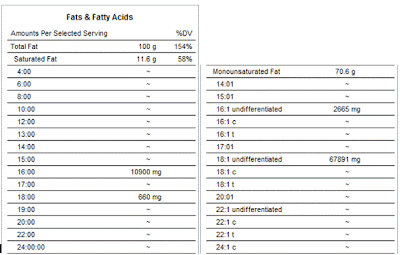
Fatty Acid Content of Avocado Oil

From nutritiondata.com (using 100g) for avocado oil:


Summary:

~71% MUFA, Predominantly oleic acid (>95%)
~12% Saturated Fat, Predominantly palmitic acid (almost 95%)
~14% PUFA  Omega 6:Omega 3 ratio = 13:1

Yes, as sometimes happens with the data from this website, the numbers don't add up exactly.

Saturday, September 25, 2010

Paleolithic Diet Questions

This is an open "question post" to my readers, many of whom I'm aware are followers of Paleo-derived WOE's.   I'm particularly addressing those that advocate limiting protein and eating a very high fat  (60-80%) very low carb (close to zero) diet.

What research am I missing that counters the work of Eaton?  Links to his works that I've blogged on HERE and HERE.  The first work was even referenced in The New Atkins to indicate that a high fat diet is what we evolved to eat.   Seems Eaton mostly points to a diet a little higher in carbs (~40%) and protein (~35%) and much lower in fat (~25% is the highest estimate) than most of the paleo/primal plans I've seen.  I don't see much reason to question this work.  

Where does the very high fat come from?  What am I missing?  

Wednesday, September 22, 2010

Good Science Bad Science ~ Good Schtick Bad Schtick

Note:  This version slightly differs (only at the end beginning with italics) from my original post so I "bumped" the publish date and noted where I made a few changes.

So Jimmy Moore recently posted an interview with Gary Taube$:  Podcast HERE

I have much more to say about this interview, Taubes' most recent lecture and his upcoming book, but that will have to wait for another day.

What I am bothered by is Taubes continued trashing of the scientific community while basically admitting the same for himself (though not realizing it).

I would agree with Taubes that one of the problems with scientific research in general these days is the funding process/stream.  Been there, done that.  If you're a nobody with big ideas, good luck.  If you're a big name trying to get another MS or PhD thesis on some minor topic, it shouldn't be a problem.  There's ALWAYS a lag between funding, research and publication -- several years is more the norm than the exception here.  

But Taubes' premise is that scientists develop a "schtick" -- the PhD thesis or whatever puts them on the map -- that keeps them from ever correcting themselves or pursuing the research they obviously really want to do if only they were independently wealthy.  All the old science is golden because it was done by rich folks who funded their own work and didn't need to answer to anyone.  These were folks of high character and principle and beholden to no one.  I have one name for you on that note Gary:  Michael Bloomberg.

But Taubes goes on to lament that he really would like to get back to writing on other science (e.g. that which he has the background and qualifications to write about), but he has kids to put through college.   He rambles on and on about mistakes in GCBC as pertains to the whole G3P issue (again, I have a post in the hopper on this but have a bit more work on that before I'll publish it).  Mea culpa?  Hardly, IMCO.  For starters, he further laments not having a public forum on which to correct himself.  NONSENSE.  But he failed in 2007 in a far more critical manner than the scientists he lambastes do in publishing their research.  He was wrong, but won't acknowledge that this point is the absolute KEY to all of his theories on how fat miraculously accumulates irrespectively of calories.  He also keeps calling for metabolic ward studies to test his theories, when these WERE done long ago.  

No doubt the worst of his transgressions, to me, is that he claims that in 2007 (or in the intervening years of  writing the NYT & the book) the science of GlyNG was still rather vague and he presented only the current knowledge in GCBC.  Try again Gary.  The two papers I referenced in this post were to 2002 and 2003 REVIEW papers -- IOW papers that summarized older research, most or all of which predated even the NYT article.

The paragraph below has been edited slightly from the original after re-listening to the interview.

Open query to Gary Taubes:  Care to name names?  Who was this "biggest expert in the country" whom you consulted in prepping your book in 2007, the "smartest guy" around at the time, who vetted 3-4 versions of this section in your book to make sure it was accurate?  I doubt it was Hanson's group (AND YET ANY CURSORY LOOK INTO THE REFERENCES FROM THE 2003 PAPER WOULD HAVE LED YOU TO CONTACT THEM!!!).  And what 2008 paper did he inform you of to let you know all the textbooks (hint:  scientific research should perhaps begin with texts, but never end with them) were wrong?  Who is the English guy who confirmed you were wrong?  Newsholme?  And who, pray tell, are these anonymous two biophysicists who informed you that you were wrong on G3P, but supposedly said *it doesn't matter* because "insulin so fundamentally drives fat accumulation"?  Any reason why you painstakingly identify the authors of various statements in your book and lectures, but won't name names now????  (I know ;-) )


Yep.  Taube$ has his $cience and his $chtick.  Proven wrong on a key component of this theory, he's chosen to simply leave it out and hope insulin is enough to snow people.

If carbs drives insulin drives fat accumulation, then protein drives insulin drives fat accumulation.

(Or, consuming fat and/or carbs and/or even protein in chronic excess of energy needs does.)

Tuesday, September 21, 2010

Resistance to Weight Loss

I just can't lose weight no matter what I try.  I went on WW and ate 1000 cal/day and didn't lose weight.  Or even, I've cut out all carbs, dairy, gluten, omega 6's, etc. from my diet and I still can't lose weight.  

How many times have we heard statements like these?   Can they be true?  Are we destined to be fat?  It seems to me that any number of overweight and obese folks have uttered something like this at one point or another and/or flirted with the notion that they are just destined to be so for the rest of their lives.  These people seem to be convinced that they have "messed up" or "broken" metabolisms that cannot be fixed.   Is that true?  As regards obesity and metabolism, the only thing that can't be reversed is a certain point in the progression of T2 diabetes -- that being beta-cell damage.  (The popular belief that this occurs because we exhaust or wear out our beta cells with excessive insulin requirements is probably not the case.  Rather, my research leads to lipotoxicity of the pancreas leading to death of the cells being the primary cause).    

Presuming your condition has not progressed to this stage, it appears that your metabolism CAN indeed be fixed.  In most cases it boils down to insulin RESISTANCE, not insulin per se.  Taubes' would tell you that high insulin levels (both basal and post prandial) are the reason you can't lose weight, because insulin has you fats "locked" away in your fat cells unable to escape.   True?  Nope!  As I've posted several times before, insulin resistance is not caused by eating a lot of foods that trigger its release, it is caused primarily by an accumulation of lipids and/or lipid metabolites in the cells as a result of chronic positive energy balance and/or stuffed adipose tissue.  The way things are supposed to work, we metabolize mixed fuels at all times, but carbs and proteins are given preference.  Therefore lipid oxidation (fat burning) rates go down when we eat carbs and go up when we're in a fasted state.  Whether we burn carbs or fats doesn't seem to alter the total fuel requirements by much if at all (the whole metabolic advantage thing).

But Taubes and Atkins (and New Atkins authors Westman, Volek & Phinney) would have you believe that if you are obese and hyperinsulinemic due to being insulin resistant, you don't have a lot of fats available to your cells for fuel.  These would be those free fatty acids (NEFA/FFA).  One problem with this.  Obesity and insulin resistance are associated with both elevated insulin levels AND elevated NEFA!!  How can that be?  It's all about the insulin resistance that seems to develop in the fat cells FIRST ... not last.  Insulin's role in adipose tissue is to suppress lipolysis.  When adipocytes develop IR, lipolysis is suppressed less, the body has a hard time keeping fat stored where it belongs.

The thing that is needed to lose fat mass -- e.g. deplete the fat cells -- is a chronic caloric deficit.  Improved insulin sensitivity will improve one's metabolic profile, but it's not likely to have much effect on weight loss per se, except indirectly how the deranged BG, NEFA, etc. may effect mood and energy levels and appetite signaling.  

Sunday, September 19, 2010

Influence of human obesity on the metabolic fate of dietary long- and medium-chain triacylglycerols

Influence of human obesity on the metabolic fate of dietary long- and medium-chain triacylglycerols


ABSTRACT
The metabolic fate of an oral long-chain-triacylglycerol (LCT) load and of a mixed oral LCT and mediumchain-triacylglycerol (MCT) load was followed for 6 h in eight control and eight obese subjects with normal postabsorptive triacylglycerol concentrations. Labeled triacylglycerol and indirect calorimetry were used. Results showed that LCTs were less oxidized in obese than in control subjects (3.2 ± 0.5 compared with 6.0 ± 0.4 g, P < 0.01). Moreover, the amount of LCT oxidized was negatively correlated with fat mass (r = 20.77, P < 0.01).   Appearance in plasma of dietary triacyglycerol-derived long-chain fatty acids was blunted in obese subjects and it was negatively related to fat mass (r = 20.84, P < 0.01) and positively to LCT oxidation (r = 0.70, P < 0.01). On the contrary, MCT oxidation was not altered in obese subjects compared with control subjects. Furthermore, the proportion of MCTs oxidized was higher in both groups compared with LCTs (x – ± SEM: 57.5 ± 2.6% compared with 15.± 1.6%, P < 0.01, n = 16). Our conclusion is that obesity is associated with a defect in the oxidation of dietary LCTs probably related to an excessive uptake by the adipose tissue of meal derived long-chain fatty acids. MCTs, the oxidation of which is not altered in obesity, could therefore be of interest in the dietary treatment of obesity. Am J Clin Nutr 1998;67:595–601
It is important to remember that correlation does not equal causation.  The obese tend to have higher circulating lipids and elevated NEFA, and, of course, more fat tissue into which dietary fat can be cleared.  It is also important to note that it is the oxidation of diet-derived LCT's that is lower in the obese, not necessarily the oxidation of all endogenous fatty acids.  Since the obese also tend to have higher levels of ectopic lipid accumulation (lipids stored in the cells of skeletal muscle and organs such as the liver), these combined observations would seem to be adaptations to the obese state rather than the causes of the obese state.


One can see that chylo-trigs and VLDL responses are similar between obese and non-obese controls.  But the free fatty acid levels (the squares/middle curve) rise considerably less in the obese.    So it seems that the obese sequester away more dietary fat than the non-obese.  Makes sense as the obese have more endogenous fat to "burn".  

Since dietary MCT oxidation is not altered, these researchers suggest that they may be of interest in dietary treatment of obesity.  Replacing LCT's with MCT's has been shown to promote weight loss in some studies, but I don't believe this is due to differences in utilization of dietary fats for energy.  MCT's have slightly fewer calories than LCT's (8 cal/g vs. 9 on average) and MCT's have a higher TEF, so these two combined can improve the caloric balance.


GCBC Fact Check!!   This study also demonstrates, yet again, that fat CAN accumulate in the absence of carbohydrate.  Interestingly, there was a small but significant insulin spike in the non-obese (those that exhibited MORE lipolysis of dietary fat and subsequent oxidation of those fatty acids), while the insulin response was absent in the obese, who deposited more of their dietary fat intake in their adipose tissue.  Exactly the opposite of what Taubes' theories would predict.


Chylomicrons and HDL

Another one of those mostly bookmark posts with no commentary

Metabolic Fate of Chylomicron Phospholipids and Apoproteins in the Rat

The researchers injected radiolabeled chylomicrons into rats to determine the fate of the components.  The results:
Catabolism of chylomicrons is associated with a rapid transfer of phospholipid, apoA-I, and possibly apoA-IV into HDL. Chylomicron phospholipid appears to give rise to vesicles which are probably incorporated into preexisting HDL. Chylomicron surface components may be an important source of plasma HDL.

Wednesday, September 15, 2010

What to think when "experts" get it wrong ... repeatedly??

So let me start by saying that I've gleaned a lot of useful information over at Dr. Davis' Heart Scan Blog.  But one thing I've noticed is that he rarely responds to comments left at his site.  Now, obviously, he's under no obligation to do so, but when the comments are corrective in nature, not doing so leaves the impression that he didn't even bother to read the comments and/or take them under advisement.

The first time I noticed this was in this post.  
Carbohydrates in the diet trigger formation of small LDL particles. Because carbohydrates, such as products made from wheat, increase triglycerides and triglyceride-containing lipoproteins (chylomicrons, chylomicron remnants, VLDL, and IDL), LDL particles (NOT LDL cholesterol) become triglyceride-enriched. Triglyceride-enriched LDL particles are "remodeled" by the enzyme, hepatic lipase, into triglyceride-depleted, small LDL particles. 
I'll leave the rest of that alone and deal with just the bolded part.  Chylomicrons are the circulating form of dietary fat and have nothing to do with carbohydrates.   Chylomicron remnants, are literally the remnants of chylos once stripped of most of their triglyceride load.  Therefore, these lipoproteins have nothing to do with carbohydrates as well.  Hans Keer from Cut the Carb corrected Davis on the posting date (7/9/10) here.
As far as I'm concerned, you cannot say enough bad things about carbohydrates, but unfortunately they are not responsible for the formation of chylomicrons and chylomicron remnants. Chylomicrons consist mainly of dietary fat.
Now, everyone can make mistakes and after reading I was going to post a correction of my own until I saw Keer had beat me to the punch.   But I fully expected Davis to correct the record and move on, especially since I had seen Keer comment rather frequently on the site, yet over two months later he has failed to do so.  This might seem like nit-picking, but when someone claims and/or is seen as an authority on certain issues, it would behoove them to get the little things -- those we know with certainty -- correct. 

A month or so back, Davis made another somewhat glaring error in misrepresenting visceral fat in this post as the "hang-over-the-belt" fat.  This time I posted a corrective comment that was ignored.  (I've recently become very interested in the visceral fat/estrogen link due to my early menopausal state).  Again, this may seem to be nit picking, as Davis did post a picture characteristic of visceral adiposity in his 2007  Wheat Belly post.  It is often difficult to tell whether central adiposity is visceral, subcutaneous or both.  But given the metabolic and disease-risk implications of the distinction, it is important, IMHO, to be clear what visceral fat is.  To that end, Davis' most recent post really struck me as off the mark.  In Let go of my love handles, Davis is now equating the fat pictured below with visceral fat.

Now, such fat may well be associated with body types that have bellies containing a lot of visceral fat, but "love handles" are clearly subcutaneous fat.  Just an observation, but the low-cut jeans (women) and hanging off the butt showing the boxers (men) fads have given most of us an (unwanted) peek at way more love-handle regions than I think we really need -- particularly in young ladies and men.  While this has exposed more than a fair share of belly rolls, I've seen a LOT of rather lean examples of both genders with bounce-a-quarter flat bellies sporting little love handles.    So I'm not quite sure where Davis can even imply fat deposition here even correlates with visceral -- aka the dangerous kind -- fat deposition.  This was just posted yesterday (9/14/10), but Jenny of Diabetes Update fame already corrected the record here.  

Will Dr. Davis correct the record?    UPDATE: I see now that Davis has addressed the love handles not being visceral fat dated 9/15.  I still let the rest of this post stand because he states that love handles are an INDICATOR of visceral fat.  True??  

So the following originally followed Will Dr. Davis correct the record? ... Do you care?  Do I?  I do for the following reason.   One of the reasons for all my research is that very quickly I've become jaded and skeptical of all manner of experts around the internet -- some with genuine credentials, others who peddle credentials in related areas into purported expertise on matters, and some with no credentials at all.  Oddly enough, it is sometimes the latter who are most accurate, and the most credentialed who disseminate factually incorrect information.  Not always, but sometimes.  When Davis makes such fundamental errors on issues that are not controversial (e.g. there's no controversy over what visceral fat is or the origin of chylomicrons), it makes me skeptical of every statement he makes.  I do still follow his blog, but more and more I find myself using his topics as a "jumping off" point for my own research rather than, as I would like to see them, as informational with at least the opportunity for discussion.  Davis is certainly free to run his blog as he wishes, but when he doesn't participate in the commentary and respond to related questions from reasons, this comes off as lecturing from a point of authority.  I can no longer take any of his posts at face value as being factually (to the extent of current level of scientific knowledge) correct.  So, re: UPDATE -- is there any research linking love handle fat to visceral fat?  

Sunday, September 12, 2010

Lip-ocabulary

This post will seem out of context, but I wanted to post some definitions to be able to link to in the future for when some of these terms are used incorrectly.  (Note, let's ignore for simplicity diacylglycerides etc.)

Lipolysis:  This is the breakdown of a TAG/triglyceride, three fatty acids attached to a glycerol backbone -- into the component parts, e.g. glycerol + free fatty acids.  Lipolysis is often referred to in the context of mobilizing stored fats, but is also involved in the digestion of dietary fats.

Free Fatty Acids / Non-Esterified Fatty Acids (FFA/NEFA) :  Usually used to refer to the long chain fatty acids (LCFA) consisting of a carbon-hydrogen "chain" with a carboxyl (COOH) terminal end (sometimes referred to as the "head") .   FFA's can pass through cell membranes by facilitated diffusion (often get some "help" and move from areas of high concentration to low concentration).  FFA's are also the form of lipids that are fed into metabolic pathways to produce energy.  If the CH "tail" of the molecule contains only single bonds, this is a saturated fatty acid (SFA), if it contains one double bond it is a monounsaturated FA (MUFA), and if it contains multiple double bonds it is a polyunsaturated FA (PUFA).

Triglycerides / Triacylglycerols (TAGs):  This is the esterified or "bundled" lipid form consisting of three fatty acids attached to a glycerol backbone.  This form is too bulky to pass through cell membranes.  It is the form that fats are stored in adipose and other tissues.  This is therefore the form of most dietary fat, be it animal fat or fruit or seed oils.

Lipases:  Enzymes that facilitate lipolysis.
   1. Lipoprotein Lipase (LPL) acts outside the cells in capillary beds
   2. Hormone Sensitive Lipase (HSL) acts within the cells (adipose and other types)

Esterification:  The "packaging" of fatty acids into triglycerides by attaching 3 fatty acids to a glycerol backbone.

Acyl Transferases:  Enzymes that facilitate triglyceride synthesis

Acylating Stimulating Protein:  Protein that stimulates/facilitates esterification in adipose tissue.

Lipogenesis:  The synthesis of a lipid from smaller precursor molecules.  In the metabolic context this refers to de novo lipogenesis (DNL) from acetyl CoA.

Acetyl CoA Carboxylase:  The first enzyme in the DNL pathway.

Lipid Oxidation:  (aka beta-oxidation, the Fatty Acid Spiral - FAS)  The breaking down of fatty acids to produce energy.  Each "turn" of the cycle/spiral produces an Acetyl CoA molecule and a shortened fatty acid moiety.

Thiolase:  The enzyme actually involved in the oxidation step (there are other enzymes involved in getting a FFA into the FAS, etc.)

{last updated 12/14/2010 7:45am EST}

Saturday, September 11, 2010

The Lipidome

I would like to give a shout out to Colby Vorland over at Nutritional Blogma for posting about this here:
The Complex Lipidome Quantified

Lipidome = a play on words presumably derived from genome to describe the spectrum of lipids in human circulation.

Please do go visit Colby and share with him your comments.  I will, however, share two direct links with you here:

The full text article:  Lipidomics reveals a remarkable diversity of lipids in human plasma
The research consortium that generated the article:  Lipid MAPS

No doubt I'll be spending some time at the Lipidomics Gateway in the near future!

Shai and Diabetes

I thought I would post the following graphic from the Shai Study that compared Low Fat, Low Carb and Mediterranean diets over 2 years.  Just to refresh regarding weight loss, when one compares LC to MDTN, at around 1 year the average weight loss was comparable and essentially the same at the 2 year mark.  Therefore the changes in diabetic markers are (at least on average) independent of weight loss.  As a limitation, although there were roughly 100 participants in each group, only 11-13 of them were T2 diabetics, so the sample size here is quite small.  Also, to refresh, the LC group reduced carb intake by around 125g and caloric intake by ~550 cal on average while the MDTN group's intakes were reduced by around 45-50g and 350 cal respectively.


The legend doesn't give stats for the non-diabetics, but there was no difference between the three diets for FBG, there does not appear to be much difference for HOMA-IR (measure of insulin resistance), but a fasting insulin does appear to have been significantly reduced by LC.  I'll leave that result for another post.

Many people believe carbohydrate restriction is superior for treatment of T2 diabetes.  Remember, the purple triangles are LC and the orange squares are MDTN.  At the 2 year mark the MDTN diet beats LC for all three markers.  What MAY be going on is that with improved insulin sensitivity, the MDTN's produced less basal insulin, and the insulin they do produce is "seen" by the liver suppressing gluconeogenesis resulting in lower fasting blood glucose levels.  I wish they assessed NEFA's!

Friday, September 10, 2010

Gary Taube$, Shai-ster

 So there's a new series of YouTube videos available of yet another Taubes lecture.  I haven't had the time (nor stomach) to listen to it all yet, but what caught my eye (or ear) was his invoking of the Shai study.   He does so first towards the end of his formal "tele lecture".

FF to ~ the 6:30 mark in THIS VIDEO where Taubes discusses the weight loss and caloric intake that supposedly supports his theories.

Just to remind you, here is the weight loss graphic for 2 years on the 3 diets:
As you can see, yes, the LC group did sustain statistically significantly more weight after 2 years than the low fat diet, but as you can also see,  there is an insignificant difference between LC and Mediterranean (I'll use MDTN) diet compared to LC after about the 1 yr. mark.

Now Taubes does his typical (intentional?) misrepresentation by implication of calorie restriction.  He notes that both LF and MDTN are CRD's, while LC is not restricted calories.  As I've noted before ad libitum does NOT mean eating more calories or eating to your heart's content and then some.  Taubes even goes so far as to state "you can't eat carbs, you can basically exercise as much gluttony as you want as long you're eating fat and protein" 

GOT THAT?  The next time anyone tells you that Taube$ has never claimed you can eat all the fat and protein you want without gaining and/or perhaps losing, link to this video.  He implies that the LC group ate the same or more calories and certainly implied that you can be a fat & protein glutton.  Yep ... that's what some want to hear.  The magic bullet.  *SIGH*  If only it were true.

So anyway, after listening to this, I was left to assume that Taubes simply looked at the weight loss graphic, presumed the LC group consumed more calories than the LF group and didn't bother to look at the "evidence" fully.  By that I mean, the evidence he acknowledges is missing from Foster (that new low carb v. low fat study where actual dietary intakes were not reported) was reported in far greater detail in Shai. 

You can see the full table at my link, but here's a condensed one (I excised the %'s carb/fat/protein as these have limited meaning for comparison when total caloric intake varies).


Contrary to his assertions, the group that achieved comparable (average) weight loss while consuming more calories was the MDTN group!  Their mean restriction was roughly half - 3/4 (depending on time point) that of the LC and (surprisingly) the LF groups.  Indeed the caloric restriction was comparable between the LC and LF groups.  Now Taubes goes on to do his condescending number of "if I had an 8th grade education" (please spare us) that this refutes calorie balance theory.  But does it?  I don't think so.   LOOK at those +/- numbers!!!!!   We're talking almost 1800 calories for the LF group at 6 months.  But more striking is that the MDTN group's +/- numbers are consistently smaller -- about half that of LF & LC.  What does this tell me?  Absent raw data, nobody can know for sure.  But this SIGNIFICANTLY different variability in the outcomes indicates a greater consistency/compliance with the more moderate MDTN diet than either of the extremes.  It is also important to understand that the standard deviation (SD, which is what the +/- values are) can be heavily influenced by outliers and offers no indication as to the distribution of the outliers.  This supposed contradiction to calorie theory -- comparing just LF and LC, groups with comparable caloric restriction -- could be explained by LF outliers being those who couldn't adhere to the diet and consumed more and the LC outliers being those (like me, for instance) who dramatically (spontaneously) cut calories and experienced weight losses WAY more than any of the means reported in this study.  I can't know this, but there's no reason to throw out the thousands of studies where caloric needs have been individually assessed and humans have either maintained or lost weight predictably when caloric intake has been controlled to obtain the desired result based on this study, that's for sure!!!  And it is also important to note that, the mean is a parameter that can be greatly influenced by outliers.  It wouldn't take many 30-50-80 lb weight losses to shift a mean several pounds, which is all we're really talking about here anyway.

Giving him the benefit of the doubt he no longer deserves, I presumed that Taubes was being intellectually lazy, not deliberately deceitful.  IOW, he hadn't taken the time to read all of the results and scrutinize the "evidence".  I was (yet again) proven wrong.  I listened on ..... (Part 8 of 8 seems to be cut off at the end, so there's a bit missing, but the "formal lecture" continues in the "Bonus coverage" video).

You can pretty much listen from the beginning of the next video HERE.  Surprise, surprise!  Taubes DID look at the table of intakes after all!!   Basically he says that whatever the small losses achieved by the LF group, it was ultimately due to the fact that they, too, restricted carbs!  That's right.  Expecting his audience to develop a blind spot for the right hand column (where those without bias induced vision impairment can see that the LC group DID in fact restrict calories, if not purposefully), Taubes puts the graphic on a slide in all its glory.  He focuses on the fact that of the about 60% of the caloric restriction in the LF group (at 2 years) can be attributed to an approximately 80g reduction in carbs.   So Taube$ concludes that the carb restriction is responsible for the weight loss.  If one compares just the LF and LC columns, they might buy into this deception.

But ...

Gary, Mr. Taubes, however you prefer to be addressed.   Do YOU have a blind spot down the center of your field of vision????  There's a center column on that table that you've ignored, and in doing so you you've shot yourself in the foot.  Comparing the MDTN to the LC or LF groups, and applying the very same benchmarks from which you drew your conclusions we find that:
     1. MDTN restricted calories to a lesser degree than LC and
     2. MDTN restricted carbs to a lesser degree than LF and a far lesser degree than LC
And yet .... ta da!!!  They lost the same amount of weight on average as the LC group and more than the LF group.  To repeat:  MDTN restricted BOTH carbs and calories significantly less than the LF group, but lost more weight.  They also restricted the calories similarly less and carbs much much less compared to the LC group, and lost the same amount of weight. (They also didn't have an extended period of weight regain, their trajectory looks far more optimal).  If I had a 2nd grade education ...  (sorry, couldn't resist the sarcasm) ...

I'm not done.

Taubes apparently also has a blind spot down the right side of his field of vision that prevented him from critically reviewing just the LC results.  Before I go into this ... it bears repeating the date of Shai's study:  July 2008.  OK, not in time for GCBC, but certainly predating innumerable $peaking engagement$.


Notice anything??  Supposedly, the LC group FURTHER restricted BOTH calories AND carbs between 6 months and 12 months  (OK, not by much, and admittedly not statistically significantly, but work with me here :) ).  What did this coincide with on the weight loss graphic?   Weight GAIN.  

Also note that the LC group even reduced absolute fat intake (albeit to a very modest degree and with huge variation about the mean).

To be fair, averages obscure actual results.  Perhaps a weight differential/caloric intake ratio for each individual would be a better measure.  BUT,  we need to be consistent.  And, I believe this presents reason to question the intake data.  There's something in statistics called a box-plot (will blog on that when I get a chance).  It's far from perfect but may provide more insight.

In any case.  Taubes is full of Shai-t!  This "evidence" is flimsy at best.

To be continued ....


Monday, September 6, 2010

Mitochondrial H2O2 Emission, Cellular Redox State and Insulin Resistance - Part I

Reader Ryan emailed me this link a while back and I've been remiss in getting around to it.  Better late than never!  Thanks for the link Ryan!

Mitochondrial H2O2 emission and cellular redox state link excess fat intake to insulin resistance in both rodents and humans
Mitochondrial dysfunction and oxidative stress have been implicated in the disease process, but the underlying mechanisms are still unknown. Here we show that in skeletal muscle of both rodents and humans, a diet high in fat increases the H2O2-emitting potential of mitochondria, shifts the cellular redox environment to a more oxidized state, and decreases the redox-buffering capacity in the absence of any change in mitochondrial respiratory function. Furthermore, we show that attenuating mitochondrial H2O2 emission, either by treating rats with a mitochondrial-targeted antioxidant or by genetically engineering the overexpression of catalase in mitochondria of muscle in mice, completely preserves insulin sensitivity despite a high-fat diet. These findings place the etiology of insulin resistance in the context of mitochondrial bioenergetics by demonstrating that mitochondrial H2O2 emission serves as both a gauge of energy balance and a regulator of cellular redox environment, linking intracellular metabolic balance to the control of insulin sensitivity.

The introduction is chock-full of background information (references) regarding the etiology of IR in skeletal muscle.

The accumulation of lipid in skeletal muscle has long been associated with the development of insulin resistance (1), a maladaptive response that is currently attributed to the generation and intracellular accumulation of proinflammatory lipid metabolites (e.g., fatty acyl-CoAs, diacylglycerols, and/or ceramides) and associated activation of stress-sensitive serine/threonine kinases that antagonize insulin signaling (24). Skeletal muscle of obese individuals is also characterized by profound reductions in mitochondrial function, as evidenced by decreased expression of metabolic genes (5, 6), reduced respiratory capacity (79), and mitochondria that are smaller and less abundant (9), leading to speculation that a decrease in the capacity to oxidize fat due to acquired or inherited mitochondrial insufficiency may be an underlying cause of the lipid accumulation and insulin resistance that develops in various metabolic states (10, 11).


H2O2 is hydrogen peroxide.  Dip your finger into even the dilute OTC prep, and we see what it can do.  Obviously we're not talking those concentrations in the cells or we'd all be dead.  But H2O2 is chemically unstable (which is why it is sold in brown opaque bottles with directions to store in a cool place).  H202 is a reactive species (RS) that can cause damage.

Here is a link to but one summary article on H2O2, and another on RS and antioxidants in general.

Back to the article and some more background:

In addition to providing energy for the cell, mitochondria are now recognized as an important site for the generation, dispensation, and removal of a number of intracellular signaling effectors, including hydrogen peroxide (H2O2), calcium, and nitric oxide. In fact, the emission rate of H2O2 from mitochondria, which reflects the balance between the rate of electron leak/superoxide formation from the respiratory system and scavenging of H2O2 in the matrix, varies over a remarkably consistent range across diverse forms of aerobic life (20). Once in the cytosol, H2O2 can alter the redox state of the cell by either reacting directly with thiol residues within redox-sensitive proteins or shifting the ratio of reduced glutathione to oxidized glutathione (GSH/GSSG), the main redox buffer of the cell. Thus, the rate at which H2O2 is emitted from mitochondria is considered an important barometer of mitochondrial function and modulator of the overall cellular redox environment (21).

For the non-chemists in the audience, oxidation involves the loss of electrons from a molecule, reduction involves a gain.  The term "redox" is a contraction of reduction and oxidation and, since electrons do not exist as separate particles (well, in the solution chemistry sense which is what our bodies are) these reactions occur in "redox" pairs -- where one molecule loses electrons picked up by the other -- a species is oxidized when another is reduced.  Which direction these reactions go depends on the relative oxidation potentials (a measure of reactivity) of the chemicals involved.  Rusting iron is a classic example everyone is familiar with.  Put an iron nail into water and come back in a week or so and the water will be brown and there will be rust plumes on the nail.  Add salt and it will go faster.  This is because dissolved oxygen in the water has a higher oxidation potential than the iron, therefore in the reaction, oxygen is reduced while iron is oxidized.  That orange stuff is the product of this reaction.  We can think of this as environmental oxidative damage b/c the result is to convert a bright shiny strong nail into a rusty nail that can eventually degrade to where the head falls off, etc.  In our bodies, O2 is an essential oxidizing agent, and metabolically it serves a key role so we don't consider it damaging.   Reactive Oxidative Species (ROS or sometimes just RS) are molecules with high oxidation potentials.  In our bodies, they can have the effect of "rusting" critical components of cell membranes, signalling proteins, DNA, etc.  Back to my Bill Nye the Science Guy experimentation.  Take two nails and put salt water in two glasses.  In one just put the plain steel nail.  In the other, wrap a similar nail with aluminum foil.  Report back in a week.  What you'll see is that the nail wrapped in foil is virtually free from rust but you might see a bit of white cloudiness around the foil.  Aluminum in this context acts as the antioxidant.  It essentially reacts preferentially with the oxygen (the white stuff is the less aesthetically offensive product) protecting the iron.  While not a perfect analogy (or, for that matter a perfect description of galvanic corrosion which is what the iron/aluminum scenario is), this is the role antioxidants play in our bodies.   Antioxidants "scavenge" ROS and take the hit (are oxidized) so that the ROS won't damage critical molecules.  The oxidized form of the antioxidant is usually harmless and either eventually excreted or "recycled" back to it's reduced form by some biochemical mechanism.

End of chemistry lesson ...

What this article is saying is that H2O2 is one such RS/ROS produced in the mitochondria (under perfectly normal conditions), but that in balance we produce natural antioxidants (glutathione, etc.) that serve to "remove"  these ROS before they can damage critical molecules.

Here's where obesity and high fat diet figure in.  (Summarized from:  Obesity/diet alter mitochondrial H2O2 emission in humans.)  The comparison was between lean insulin sensitive (I'll call these LIS) males and obese insulin resistant males (OIR) in skeletal muscle.

  • H2O2 emission was 4X greater in OIR vs. LIS at basal ("fat burning") rates
  • H2O2 emission was 2X greater in OIR vs. LIS in response to stimulation
  • The difference in H2O2 emission did not correlate with O2 utilization which was not different between the two groups.
  • Maximum stimulated O2 consumption was ~35% less in OIR vs. LIS indicating reduced respiratory capacity in the obese.
Figure 5 from the article:  Caption:  H2O2 emission elevated in obese men and lean men following a high fat meal.


Part II to follow as a separate post.

  
Found something helpful today? Please consider a small donation. Thank you!

Where to now?

align="middle" align="middle"

align="middle" align="middle" align="middle"