Welcome all seeking refuge from dogmatic lifestyle advice!

Please check out the tabs below to learn more about the Asylum, its founding and purpose, and the inmate running this place. Take the light-hearted quiz to see if you should stay for a spell and join us over at the Meeting Rooms for some lively discussion.

align="middle" align="middle" align="middle" align="middle"
______________ last updated 6/28/11 _____________________ last updated 7/29/11 _____________________ last updated 6/25/11 ______________________ Come on Over! _________

Monday, November 29, 2010

Reversing beta cell dysfunction

Mostly a bookmarking post, but indicates the possibility of "curing" type 2 diabetes.

Genipin inhibits UCP2-mediated proton leak and acutely reverses obesity- and high glucose-induced β cell dysfunction in isolated pancreatic islets


  • Summary

  • Uncoupling protein 2 (UCP2) negatively regulates insulin secretion. UCP2 deficiency (by means of gene knockout) improves obesity- and high glucose-induced β cell dysfunction and consequently improves type 2 diabetes in mice. In the present study, we have discovered that the small molecule, genipin, rapidly inhibits UCP2-mediated proton leak. In isolated mitochondria, genipin inhibits UCP2-mediated proton leak. In pancreatic islet cells, genipin increases mitochondrial membrane potential, increases ATP levels, closes KATP channels, and stimulates insulin secretion. These actions of genipin occur in a UCP2-dependent manner. Importantly, acute addition of genipin to isolated islets reverses high glucose- and obesity-induced β cell dysfunction. Thus, genipin and/or chemically modified variants of genipin are useful research tools for studying biological processes thought to be controlled by UCP2. In addition, these agents represent lead compounds that comprise a starting point for the development of therapies aimed at treating β cell dysfunction.
On a related note, claims have been made by Dr. Eades and others, that on low carb diets a metabolic advantage is achieved at least in part by wasting fat calories because high fat diets increase uncoupling proteins in mitochondria.   If true, and this impacts UCP2 in beta cells, this would not be a good thing!  If I'm reading this summary correctly, excessive UCP2 "short circuits" the beta cells and keeps them from releasing insulin.  

Sunday, November 28, 2010

Lipogenesis v. Adipose Mass Gain ~ Fructose

A while back I posted a summary of lipid vocabulary:  Lip-ocabulary.  I had hoped to address this sooner than now.

Another topic on my (rather long) list of how Taubes either misunderstands or misrepresents lipid metabolism and storage involves his use of terms related to "lipogenesis"  (e.g. fructose is the most lipogenic of carbs) to imply that it leads to fat accumulation.  

In his defense, there are any number of scholarly articles and texts that use the term lipogenesis to describe the "genesis" of fat stores.  However they do so in the context of discussions of adipose tissue and do not conflate de novo lipogenesis and fat storage.  Adipogenesis may not be exactly appropriate either, as this term is most correctly attributed to the formation of new fat cells.  But at least the "adipo" implies fat tissue, thus it might loosely apply to the genesis of adipose tissue (whether by proliferation or filling of existing cells) rather than the synthesis of lipids per se.

Where obesity is concerned, we're interested in what causes changes in adipose tissue mass: increases or decreases.

In the past few years, fructose has become the new "saturated fat", to where fructophobes will avoid even carrots!  This is due in large part to Lustig's alarmism, but Taubes weaves this into his lectures as well.   We are to equate fructose with alcohol because it is processed in the liver and consider it particularly fattening because fructose elicits the highest rate of DNL of any carbohydrate.  But just as carbohydrate per se is not uniquely fattening, neither is fructose per se.  It is the processed tasty vehicles either in liquid form and/or packing a caloric whollop that are.  Can you say ice cream?!

But back to the vocabulary, I've posted before demonstrating that lipogenesis does not contribute much to adipogenesis.  See:  Nutrient Fates after Absorption and Excess carbs converted to fat?   But lipogenesis -- the synthesis of larger lipid molecules from smaller molecules -- is not only an energy consuming process, it may also be thermogenic as I posted about here:  Fat Futile Cycling from Carb Excess (or more lay-friendly).

Bottom line, it is misleading to equate lipogenesis with fat accumulation in adipose tissue.


Thursday, November 25, 2010

Happy Thanksgiving

Enjoy this thankful day with your familyand/or friends!   Eat, drink and be merry!!

Tuesday, November 23, 2010

Exercise & Insulin Sensitivity I ~ IR in older populations

Just wanted to share two studies I came across relating exercise and cardiac fitness to insulin sensitivity.  I'm sure to add more to this series as I come across them.

I only have access to the abstracts for these studies.  If any of you have access to the full text, please consider sharing it with me via my email address in my profile.  Thanks!

Study 1:

The purpose of this study was to examine the relation between insulin sensitivity and cardiorespiratory fitness in overweight and obese postmenopausal women. The study population consisted of 127 overweight and obese postmenopausal women (age, 57.7 ± 4.8 years; body mass index, 32.7 ± 4.7 kg/m2).
Subjects were classified by dividing the entire cohort into tertiles (T) based on insulin sensitivity expressed per kilograms of lean body mass (LBM) (T1, <10.9; T2, 10.9-12.9, T3, >12.9 mg/min per kilogram of LBM, respectively). Outcome measures were body composition (dual-energy x-ray absorptiometry), visceral adipose tissue (computed tomography), insulin sensitivity (hyperinsulinemic-euglycemic clamp), cardiorespiratory fitness (indirect calorimetry), lower-body muscle strength (1 maximal repetition), physical activity energy expenditure (doubly labeled water), fasting lipids, and inflammatory profile.
We found a significant positive relationship between insulin sensitivity and cardiorespiratory fitness (r = 0.25, P = .005). Moreover, cardiorespiratory fitness was higher in the T3 group compared to the T1 group (36.2 ± 6.1 vs 33.1 ± 5.0 mL/kg LBM per minute, respectively; P = .028). However, the difference was no longer significant after controlling for visceral adipose tissue or muscle strength.
Finally, cardiorespiratory fitness was an independent predictor of insulin sensitivity. High levels of cardiorespiratory fitness are associated with higher levels of insulin sensitivity in overweight and obese postmenopausal women. Moreover, visceral adipose tissue accumulation or muscle strength may be potential mediators of this relationship.
I'm presuming the more cardiorespiratory fit women got that way through some form of exercise, likely "cardio".  

Purpose: Although data suggest that physical activity is associated with decreased insulin resistance, recommendations for exercise training are not specific for age or level of obesity. Therefore, we examined the influence of moderate-intensity (50% of V̇O2max) exercise training (MI) versus high-intensity (75% of V̇O2max) exercise training (HI) on insulin-stimulated glucose disposal (ISGD) in elderly individuals.
Methods: Following medical examinations, 21 overweight (body mass index = 29 ± 1 kg·m-2) elderly (74 ± 1 yr) subjects were randomized to 1) HI, 2) MI, or a 3) nonexercising control group. Subjects enrolled in HI or MI completed a 12-wk exercise training regimen designed to expend 1000 kcal·wk-1. ISGD was assessed using a hyperinsulinemic, euglycemic clamp pre- and postintervention. ISGD was corrected for hepatic glucose production (glucose Ra) using a constant rate infusion of [6,6-2H2]glucose and determined during the last 30 min of the clamp by subtracting glucose Ra from the exogenous glucose infusion rate. Nonoxidative glucose disposal was calculated using indirect calorimetry. Body composition testing was completed using dual energy x-ray absorptiometry.
Results: ISGD increased by approximately 20% with HI (Δ of 1.4 ± 0.5 mg·kg-1FFM·min-1). However, ISGD did not change (Δ of -0.4 ± 0.1 mg·kg-1 FFM·min-1) with MI and was not different (Δ of -0.2 ± 0.1 mg·kg-1 FFM·min-1) in the control group. Nonoxidative glucose disposal increased with HI (Δ of 1.4 ± 0.5 mg·kg-1 FFM·min-1), but there was no change in nonoxidative glucose disposal with MI or in the control group. No change in body weight or percentage of body fat was observed in any group.
Conclusion: In weight-stable subjects, MI resulted in no change in ISGD, and the improvement in ISGD with HI was completely reliant on improvements in nonoxidative glucose disposal.

This study looked at the influence of exercise on insulin resistance in weight-stable subjects - e.g. changes in IR cannot be attributed to weight loss.  It was the high intensity exercise that improved insulin sensitivity by increasing insulin stimulated glucose disposal, while medium intensity did not.  This is interesting because the activities were "standardized" to equivalent caloric expenditure of 1000 cal/week.  Since they were weight stable over 12 weeks, it is not mentioned in the abstract, but presumably intake was adjusted to compensate. Unfortunately, the abstract contains no details on the duration of exercise, although there's no mention that the HI was also interval training (HIIT).

Insulin resistance is associated with aging and menopause.  These two studies indicate exercise as a good strategy to maintain insulin sensitivity.

Saturday, November 20, 2010

Oats ... More Reader Input Requested

I'm being a bit lazy here because we're hosting Thanksgiving and stupid me decided to tackle some "spring like" cleaning and re-organizing.  So I thought I would ask for your help in answering the following question because my reading around the net has been conflicting.  Do oats contain gluten per se, or is it that most oats are contaminated by gluten from other grains processed by the same machinery or in the same facility (dust?).  

Thanks in advance!

Friday, November 19, 2010

Physiological, Pharmacological, and Nutritional Regulation of Circulating Adiponectin Concentrations in Humans


Get this one while its free folks (until the end of the month)!  Adiponectin is an all-too-often overlooked hormone in the obesity and metabolic syndrome game.  

I haven't had time to read it thoroughly but it contains a wealth of information.  The graphic below summarizes the 17 page paper content:


Hmmmm... cheers everyone!  (booze is adiponectin friendly :) )


Legumes ~ Reader Input Request

I'm trying to reconcile the plethora information I keep coming across regarding the benefits of the Mediterranean Diet and similar with the shunning of legumes in the Paleo community (including peanuts and cashews).  There is a lot of info on toxic compounds in legumes.

I would be interested in any and all input on this topic, links I should check out, etc.  

Lately I've been upping my carb consumption slightly and have always enjoyed such foods as chili with various kidney beans, garbanzo beans (mostly in salads), and Mexican bean dishes.  I've already incorporated some of these into my diet (infrequently) to no ill effect, probably causing many of you to cringe and worry over my imminent demise.  ;-) ... or maybe not {VBG}.

Thursday, November 18, 2010

Insulin Is an Anti-inflammatory and Anti-atherosclerotic Hormone

Insulin Is an Anti-inflammatory and Anti-atherosclerotic Hormone  (full text free until end of the month)


Fasting hyperinsulinemia is associated with an increased risk of atherosclerotic complications of heart attack and stroke. This has resulted in the concept that insulin may promote atherosclerosis in spite of the absence of any evidence that insulin is atherogenic either in the human or in experimental models. Recent evidence shows that insulin exerts vasodilatory, anti-platelet and anti-inflammatory effects at the cellular level in vitro and in the human in vivo. Since atherosclerosis is a chronic inflammatory process of the arterial wall, insulin may be potentially anti-atherosclerotic in the long term. More recent data on experimental atherosclerosis in the mouse shows that (1) insulin administration reduces the number and the size of atherosclerotic lesions in apo E null mice and (2) in IRS-2 null mice, the interruption in insulin signal transduction results in enhanced atherogenicity. Finally, the use of a low dose of insulin infusion in patients with acute myocardial infarction has been shown to markedly improve clinical outcomes, both in diabetic and nondiabetic patients. Our own most recent data show that a low dose infusion of insulin in patients with acute myocardial infarction induces a reduction in nflammation (C-reactive protein and serum amyloid A) and oxidative stress, and promotes fibrinolysis. We conclude that insulin is anti-inflammatory and potentially antiatherogenic and may be of use in the treatment of cardiovascular inflammatory conditions.
It seems that the demonization of insulin has followed much the same path as the correlation = causality logic of LDL and atherosclerosis.  Elevated LDL correlates with CVD, but there is not a whole lot of actual evidence demonstrating that the LDL itself directly causing atherosclerosis.   LDL remains a fairly reliable marker for determining risk (though it must be considered along with other factors), and whatever the flaws (and there are many) in cholesterol theories, this shouldn't be ignored out of hand.  If A causes B, and A causes C, then someone with B likely has C.

So with the insulin, we have hyperinsulinemia correlating with CVD, but as stated in the abstract above, there's little evidence that it causes it directly.  The "A" in this scenario seems to be elevated free fatty acids (NEFA/FFA) leading to "B" = hyperinsulinemia and "C" = atherosclerosis.  But in this case the correlation/causation connection may be even more convoluted.  Because there's an intermediate factor in all this -- the ever-increasingly apparent root of all evil: insulin resistance.  The way I see it is this:  Fat stores exceeding an individual's storage capacity lead to IR of the fat cells and/or excessive release of NEFA.  Elevated NEFA induces IR in peripheral tissues.  It is cellular resistance to insulin's inhibitory roles  in these cells that ultimately lead to metabolic dysfunction and/or cell damage/death.  In this regard, the relationship is not so much one of insulin not being the cause of atherosclerosis, etc., but the resistance masks the fact that it would appear that insulin is actually protective against it!  

Inflammation, shmimflamation!  :
Atherosclerosis is an inflammatory process.7 All the major classical risk factors for atherosclerosis, hypercholesterolemia, diabetes, hypertension, smoking, and menopause are associated with (and probably cause) inflammation. If high insulin levels are atherogenic, one would expect it also to exert part of its negative effect on the vessel wall through inflammatory processes. Recent evidence which we shall now review shows that just the opposite is the case, i.e., that insulin is anti-inflammatory.
The article goes on to summarize such research.  I'll let the more science minded read that for themselves (heck, I'm just too lazy at the moment to do a decent summary), but this section concludes with:
In view of the anti-inflammatory and vasodilatory effect of insulin, insulin resistance may be expected to be pro-inflammatory and a proconstrictor state. This indeed is the case.  Obesity,31 type 2 diabetes,32 and other insulin resistant states, such as polycystic ovary syndrome (PCOS),33 are pro-inflammatory and are associated with abnormal vascular reactivity and platelet hyperaggregability.  (clumping & clotting)
........... Insulin sensitizers have been shown to exert anti-inflammatory43–46 and anti-atherosclerotic effects.47,48  Thiazolidinediones (TZD) exert anti-inflammatory effects at the molecular and cellular levels. 
The article goes on to conclude as follows:

These facts, should encourage us to increase our understanding of these novel effects of insulin so that
(1) we have an improved conceptualization of inflammation in states of insulin resistance and the relationship of these states to atherogenesis;
(2) we explore the potential therapeutic role of insulin in inflammatory conditions, such as acute myocardial infarction; and
(3) we investigate novel potential therapeutic application of insulin sensitizers such as thiazolidinediones as anti-inflammatory agents.
I broke these out in more bullet form to address them.

(1)  I take this to mean the lipid hypothesizers need to rethink as much as the carbohydrate hypothesizers do. Both need to re-think the role of dietary composition (and total intake) in terms of its impact on insulin SENSITIVITY, not insulin per se.

(2)  Insulin is, as Martha Stewart would say, a GOOD thing.  There's much promise in using it.  Insulin therapies have evolved from slow acting secretagogues (substances that enhance insulin secretion), to pumps delivering a more consistent, physiological basal level in T1's etc.

(3)  OK, I'm probably in agreement with many who disdain the whole "this gives us more reason to look into more drugs" angle, but we have to be pragmatic about it.  A Type 1 does not make insulin.  In that regard, whatever technology allows them to mimic insulin levels in a normal person, I would be grateful for it.  Type 2 is a far more varied diagnosis as the degree of irreversible damage (as opposed to suppressed function) cannot be assessed with mere fasting glucose levels or tolerance tests.   If you're hyperinsulinemic, you still have functional beta cells.  Temporarily giving them a rest with LC while you lose weight and reverse the IR that is causing the elevated insulin is a great strategy.  But if you cannot adhere to this, or if LC doesn't result in the desired weight loss, then it may well be worthwhile to at least temporarily look into pharmaceutical intervention that allows for insulin to "do its thing".  I wonder, even, if insulin might be helpful to the hyperinsulinemic T2 -- enough exogenous insulin may keep the pancreas from having to work overtime to produce the elevated levels that your body is telling it to anyway.  There's nothing about the hormone that is deleterious!!!!!!!!

Wednesday, November 17, 2010

Caffeine and Insulin Sensitivity

Caffeine and Insulin Sensitivity  (full text PDF free till end of the month)


A number of reports have observed that acute caffeine ingestion decreases glucose tolerance and insulin sensitivity, and have raised the question whether its increased consumption throughout the world in the form of coffee and cola beverages might be of public health concern in the development of type 2 diabetes. Although some epidemiologic studies have found strong associations between coffee intake and detrimental lifestyle factors that favor obesity and diabetes, it is interesting that in spite of this, they have demonstrated that increased coffee consumption is associated with a decreased risk of developing type 2 diabetes.  When lifestyle confounders are taken into account, individuals consuming 6 cups coffee per day have at least 50% less risk of developing type 2 diabetes than those consuming 2 cups per day. Although it is perhaps premature to recommend increased coffee or caffeine intake to prevent the development of type 2 diabetes, there is little or no evidence to warrant the recommendation that it should not be a part of a normal healthy diet.
This is an interesting summary article.  In the section entitled Caffeine and Carbohydrate Metabolism, a case for acute caffeine consumption impairing glucose tolerance by inducing insulin resistance (decreases glucose uptake) is laid out which goes counter to the results of the coffee study highlighted above.   Perhaps it's something else in the coffee?  
More modest inverse associations were also observed for decaffeinated coffee consumption, caffeine intake from noncoffee sources, and total caffeine intake, as well as the incidence of type 2 diabetes, suggesting that caffeine and other components of coffee contribute to this inverse relationship.
Seems in part the case.  The authors discuss the conflicting short term "laboratory measured" effects and those seen in epidemiologic studies.

... it is very obvious that the results and conclusions of the acute and epidemiologic studies do not agree, and this illustrates the problem of extrapolating shortterm observations to a chronic disease (with an etiology that is influenced by a variety of interacting genetic and lifestyle factors.)
This seems even more surprising given the rather strong correlation between coffee intake and other lifestyle factors that are deleterious such as drinking, poor diet, etc.  Below I've summarized in bullet point fashion how the authors believe increased coffee intake decreases the risk of developing T2:


  • Caffeine stimulates resting metabolic rate.  It could be as simple as fewer coffee drinkers getting overweight?
  • Caffeine increases epinepherine
  • Caffeine + epinepherine act together to promote lypolysis leading to an increase in plasma free fatty acid levels. (<- at first glance this might seem to not be a good thing)
  • C+E have a thermogenic effect.  (thus the FFA's are likely readily oxidized with the boosted metabolism)
  • The combined effects increase lipid turnover (less ROS hanging around??) "which may in the long-term have beneficial effects on body weight, body composition, and substrate use that could help to prevent the development of glucose intolerance, insulin resistance, and diabetes."
They go on:
However, such arguments are very speculative, and it may well be that the observed acute effects of coffee or caffeine on glucose tolerance and insulin sensitivity are suppressed by habituation to its repeated consumption.  Indeed, repeated caffeine consumption over 5 days induces complete tolerance to its effects on blood pressure, heart rate, and, in particular, blood glucose concentrations.52 

They also consider the other components of coffee:

  • Coffee contains many bioactive compounds, most of which have as yet unknown metabolic effects.
  • Coffee contains a quinide that improves insulin-mediated glucose uptake in rats
  • Phenolic compounds in coffee influence GIP (glucose-dependent insulinotropic polypeptide) and GLP-1 (glucagon-like peptide I) levels.  (These two peptides are called incretins and are associated with beta cell proliferation and decreased apoptosis (death) 

"Consequently, the combined physiologic effects of coffee’s many components may well be very different from that of one of the components studied alone."


Posted by CarbSane after her third very large mug of coffee 8*)

Does Metabolic Syndrome hamper weight loss efforts?

This study would indicate that, if anything, it helps (??Say what!!??)


Does the Presence of Metabolic Syndome Influence Weight Loss in Obese and Overweight Women? (PDF full text free until end of the month)
Background: It is known that weight loss is benefi cial for obese and overweight subjects with metabolic syndrome. Very few data exist, however, about whether the presence of metabolic syndrome and insulin resistance (IR) infl uence the response of these subjects to weight-reducing interventions. The current study intends to examine whether the presence of metabolic syndrome and its components could infl uence weight loss in obese and overweight women during a short-term, dietary-based intervention program.

Methods: A total of 107 women aged 49.1 ± 13.5 years old, with a body mass index (BMI) greater than 25 were studied. The subjects were prescribed a low-fat diet plus weight-reducing drugs when necessary.
Results: After 3 months, the subjects with metabolic syndrome lost more weight than those without (6.62% vs. 4.50%; P < 0.05). There was a positive correlation between the percentage of weight loss and the number of the components of metabolic syndrome present at baseline (Spearman ρ = 0.329; P < 0.01). Furthermore, patients in the quartile with the highest homeostasis model assessment index (HOMA-index) lost more weight than the remaining subjects (8.17% ± 3.34 vs. 5.59% ± 3.87; P < 0.05). These results were signifi cant, even after adjustment for the medical treatment prescribed.
Conclusions: Obese and overweight patients with metabolic syndrome showed a greater reduction of their body weight, compared to the patients without metabolic syndrome. The components of the metabolic syndrome present at baseline correlated positively with the percentage of the weight loss. Finally, the patients with the highest levels of HOMA-index at baseline lost significantly more weight than those with lower levels of this parameter.
I find this somewhat surprising.  It would seemingly go counter to what one expects given the effectiveness of low carb diets and how an even higher fat lower carb/protein version (e.g. fat fast, Silver Cloud Diet) is usually advocated for the more hyperinsulinemic.  This study looked at a low fat diet.  One would also think that if insulin resistance (which is the underlying factor in metabolic syndrome) causes obesity then the obese/overweight with IR should have greater difficulty losing weight.  

Things that make you go hmmmmmm.

Aspirin for Insulin Resistance? Part II: Not so fast

A follow-up post to a post a while back:  Aspirin for Insulin Resistance?

I just came across the following article that has me thinking "not so fast":   The effect of salicylates on insulin sensitivity

Although the carefully performed study by Kim et al. provides new insight into the mechanisms of fat-induced insulin resistance, we would like to caution against the preliminary conclusion concerning beneficial effects of salicylates on insulin resistance. First of all, in contrast to the findings of Kim et al. in the triglyceride (TG) infusion model in the rat, earlier studies in human volunteers using hyperglycemic clamp techniques reported increased insulin resistance by salicylate compounds (3,4). These findings suggest that the effects of salicylates may depend on the experimental model, and possibly on the species studied.....
The schematic below summarizes the various actions and possible impact on insulin sensitivity for salicylates, the text under this is the legend from the schematic.

The effects of salicylates on insulin resistance. There is significant overlap between the intracellular events induced by TGs (or FFAs) and TNF regarding the mechanisms of insulin resistance. Both stimuli activate IKK-β and decrease insulin-induced tyrosine phosphorylation of IRS-1; both increase intracellular ceramide concentrations, which leads to inhibition of Akt/protein kinase B activation and inhibition of GLUT-4 translocation. These effects induce a state of insulin resistance. The effects of salicylate compounds on these pathways may be divergent. That is, they may improve insulin resistance by blocking the activation of IKK-β (top), or they may worsen insulin resistance by inhibiting PG synthesis and thus potentiating TNF release (bottom). In addition, inhibition of PG will decrease synthesis of leptin, which is known to improve insulin sensitivity by stimulating IRS-1–associated PI 3-kinase activity. The beneficial effect of leptin on insulin action is thus decreased (bottom)
In conclusion, the influence of salicylate compounds on insulin sensitivity is multifactorial and involves both beneficial and deleterious effects. This should not preclude patients from taking low-dose aspirin to prevent cardiovascular disease (15), but more basal and clinical studies are needed before recommending higher dosages of salicylates for the treatment of type 2 diabetes itself.
Oh well.  Does make you kinda wonder what other meds might do.

Monday, November 15, 2010

Hyperinsulinemia and Anorexia?

In the course of a discussion over at Jimmy Moore's forum I came across something I did not know.  Anorexics -- the thinnest among us! -- can also become hyperinsulinemic!!!!   How can that be??  

If it's all about the insulin causing fat accumulation, one would think this condition would result in any dietary intake getting trapped in the fat tissues, making it unavailable to the anorexic for fat-burning, resulting in voracious hunger.  

But we would expect the anorexic to have very low postprandially-induced insulin levels.  No matter what they eat, they don't eat much.  So, where is this insulin coming from?  

It would seem to be, yet again, a defense mechanism of our bodies.  I've come across quite a bit of contradictory observations on this.

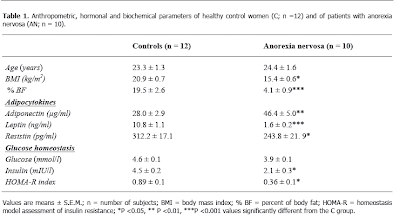
For example, in this article, anorexics had lower postprandial insulin responses and higher metabolic rates of insulin clearance and describe anorexia as being associated with improved insulin sensitivity.  They also have decreased basal insulin levels.  The authors propose this is an adaptive mechanism to protect the anorexic from hypoglycemia.  Here is another article describing improved insulin sensitivity in anorexia.  The hormonal levels from that study are shown below.


However searching on hyperinsulinemia and anorexia yields some interesting hits:

A brief review is made of the role of insulin in satiety and in the control of body weight, and of the newly available techniques to accurately quantify secretion, hepatic extraction, and post-hepatic delivery rates of insulin. Neural, metabolic, and endocrine stimuli affect insulin secretion. The hypothesis is therefore compatible with several etiologic factors leading to hyperinsulinemia in anorexia nervosa and major depression, and resulting in decreased food intake and weight loss.
There's also this case study (can't find anything of this paper)
How does the hyperinsulinemia develop?  Usually it's from insulin resistance, and IR would seem to be a reasonable physiological adaptation to starvation -- so as to preserve glucose for the tissues that need it most.    Elevated cortisol that is associated with anorexia could be the cause.  Perhaps the changes in insulin sensitivity are time/progression dependent, with one occurring early on, the other developing later?

Still, it is interesting that the elevated insulin is associated with further REDUCED intake, not vice versa.  


Saturday, November 13, 2010

GCBC Reference Check ~ Part III of ? ~ Is glycerol phosphate rate-limiting?

In his most recent interview with Jimmy Moore, Gary Taubes did a bit of a mea culpa on the notion that dietary carbs are required to store fat.   He offers up a rather weak description of how he got it wrong for so long in his lectures ("skewed") and claims this wasn't something from the book but rather the lectures.  Strictly speaking, that is true.  Taubes never stated point-blank in the book that dietary carbohydrate was needed for fat storage.  But Taubes repeated in the interview that G3P is "rate limiting" in the esterification process, a claim he made in GCBC.

Here's the relevant paragraph from GCBC:
A single molecule plays the pivotal role in the system.  It goes by a number of names, the simplest being glycerol phosphate.  This glycerol-phosphate molecule is produced from glucose when it is used for fuel in the fat cells and the liver, and it, too, can be burned as fuel in the cells.  But glycerol phosphate is also an essential component of the process that binds three fatty acids into a triglyceride.  It provides the glycerol molecule that links the fatty acids together. †116  In other words, a product of carbohydrate metabolism -- i.e., burning glucose for fuel -- is an essential component in the regulation of fat metabolism: storing fat in the fat tissue.  In fact, the rate at which fatty acids are assembled into triglycerides, and so the rate at which fat accumulates in the fat tissue, depend primarily on the availability of glycerol phosphate.  The more glucose that is transported into the fat cells and used to generate energy, the more glycerol phosphate will be produced.  And the more glycerol phosphate produced, the more fatty acids will be assembled into triglycerides.  Thus, anything that works to transport more glucose into the fat cells -- insulin, for example, or rising blood sugar -- will lead to the conversion of more fatty acids into triglycerides, and the storage of more calories as fat.
In his footnotes, Taubes cites the following book:  Regulation in Metabolism by Newsholme & Start, 1973.  Here are two of the citations because I think their wording would indicate that Taubes feels this text is authoritative, and, presumably if he's recommending it, he has read it himself.

An excellent review of the regulation of fat metabolism and adipose tissue is Newsholme and Start 1973:  195-246.
Glycerol phosphate:  For a review of the role of this molecule, the triglyceride/fatty-acid cycle, and the glucose/fatty acid cycle, see Newsholme and Start 1973:214-34.
OK, so I did go "see" for myself.  I've been somewhat sitting on this one for a while because I think it is particularly damning given specific wording of the excerpts from this text I'm about to share.   I wanted to share it first in my interview with Jimmy (even though that won't air for a few months).

What I transcribe below is the section in Chapter 5 Adipose Tissue and Fat Metabolism entitled "The control of esterification" that deals with this theory:  {} are my comments ;-)

In the case of the hypothetical, primitive animal it has been shown how large changes in blood glucose concentration could automatically cause reciprocal changes in plasma fatty acid concentration.  However, in the rat the blood glucose concentration does not fall by more than 30% during two days of starvation and this would appear to be insufficient to cause the marked increase in fatty acid mobilization that occurs under these conditions.  During the same period the plasma insulin level is decreased by about 80% (ref 41, see Table 7.3) and this hormone is known to regulate esterification.  Insulin stimulates the membrane transport of glucose into the adipose tissue cell and increases the rate of glycolysis and the glycerol phosphate concentration.  During starvation the reduction in the plasma insulin level results in a decreased rate of glycolysis and a lowering of the glycerol phosphate concentration.  This restricts esterification and consequently fatty acid mobilization is stimulated.   {I know what you're thinking ... so far so good right?} 
This theory is supported by the fact that the content of glycerol phosphate in adipose tissue is decreased during starvation and it is markedly increased when adipose tissue from a starved animal is incubated with glucose and insulin.  {Here is where I believe, having heard all he needed to hear, Taubes stopped reading ... but read on dear readers}   There are a number of problems associated with the simple idea that esterification is controlled by the membrane transport of glucose.  First, there is no evidence that the concentration of glycerol phosphate is limiting for the process of esterification (the Km for glycerol phosphate of the first enzyme in the pathway is not known).  Second, since glycerol phosphate dehydrogenase catalyses a reaction which is close to equilibrium, the concentration of glycerol phosphate can be controlled by both the cytoplasmic [NAD+]/[NADH] ratio and the concentration of dihydroxyacetone phosphate. (ref 42)
Dihydroxyacetone phosphate + NADH ↔ Glycerol phosphate + NAD+   
These quantities may vary independently of the glycolytic rate. (ref 17)  Third, the addition of adrenaline, fatty acids or acetate to the incubated fat pad preparation stimulates esterification but does not increase the content of glycerol phosphate. (ref 42)  This experiment suggests that factors other than the glycerol phosphate concentration can regulate esterification.  Such factors remain unidentified at present.  Nonetheless, it must be emphasized that a marked decrease in the concentration of glycerol phosphate could limit the rate of esterification and therefore variations in its concentration must always remain a potential mechanism of control.
The entire first paragraph essentially lays out a hypothesis, and evidence consistent with that hypothesis is included in the opening sentence of the second.  But the gist of the remainder of this paragraph is to lay out the case AGAINST this theory.

I don't know how much more bluntly Newsholme and Start could have stated the first point.  To repeat:  
"there is no evidence that the concentration of glycerol phosphate is limiting for the process of esterification."
Just how does one go from that to:
In fact, the rate at which fatty acids are assembled into triglycerides, and so the rate at which fat accumulates in the fat tissue, depend primarily on the availability of glycerol phosphate.
???????????????????   You'll note I'm picking at Taubes' wording here too.  He uses that word fact, not probably, not "could", etc.

The second point is really the biggie here.  Let me try to explain this to those without a degree in chemistry.  All chemical reactions can theoretically proceed in either direction, so that if A + B → C + D, then C + D → A + B.  Many chemical reactions are considered irreversible because one direction is much more energetically favorable than the other.  The energy requirement to go in revers is simply too high.  Combustion of hydrocarbons is a good example (e.g. burning propane).  But other reactions can go in both directions, we call these reversible reactions, and use the double arrow to indicate this (actually it's usually two arrows in opposite directions on top of each other, often with the length of the arrows reflecting the preferred direction).     If we put compounds A&B, C&D, or three or all four of them into a beaker, initially one reaction occurs at a faster rate but both are occurring until the system reaches a state of equilibrium.  At equilibrium, the concentrations of A, B, C, and D remain constant, and we can define an equilibrium constant (Keq) that represents a ratio of these concentrations.  This makes the system appear static, but it is actually a dynamic equilibrium with the rates of the forward and reverse reactions being equal.  There is a principle called LeChatelier's Principle that applies to systems in equilibrium.  In short, if we do anything to displace the system from its equilibrium state (in chemistry we usually referred to this as perturbing the equilibrium or applying a stress), the reaction rates will temporarily "shift" in order to re-establish the equilibrium.  One way we can do this is to add one or more of the compounds to the system.  The equilibrium constant Keq is called a constant for just that reason.  If I add more A to the system above that is at equilibrium, I have increased the concentration of A and thus altered K (which is a ratio of the concentrations).  The system will react so as to lessen the concentration of A so as to bring K back to Keq.  This would involve a "shift to the right" being an increase in the reaction rate of the forward reaction.  (If you're interested in the math involved, here's one example).

So what they are saying in the second point is that the DHAP + NADH ↔ GP + NAD+ reaction is close to equilibrium and therefore should behave in the manner described above.  If we add DHAP then GP formation should increase.  If there's more NADH, it should as well, and if there's more NAD+ then the reverse reaction should produce decreases in GP.  But the concentrations of these other three components of the equilibrium system vary in ways that are not correlated with how much glycolysis is going on.  Were this system controlled simply by LeChatelier's Principle, then increases in DHAP (an intermediary in glycolysis) would exert predictable changes in the other three components of this system.  Rather, the conversion of DHAP to GP is determined by the activity of an enzyme.

On to point 3 which actually directly addresses whether it is the G3P level (however manipulated) that is rate limiting in esterification.  The addition of adrenaline, fatty acids OR acetate alone can increase esterification rate without a corresponding increase in the G3P level in the cell.   Of course at the time of publication, the text states that the mechanisms of this were not yet known.  I suspect ASP is working it's magic here.  The lack of change in G3P level indicates two possibilities, either basal G3P levels are in sufficient excess of needs that whatever stimulates esterification only depletes the G3P slightly as it is incorporated into triglycerides, or fatty acid uptake (or adrenaline or acetate) stimulates G3P production to meet the needs to esterify FA's but the additional G3P is consumed in the esterification process so that the level remains unchanged, or both.

Bottom line:  This reference DIRECTLY contradicts that which Taubes cites in GCBC and implies is discussed in this text.  At a minimum, Taubes should have done what he says he does  and follow the research forward to present day.  That there were factors unknown in 1973 should have led him to further research and no doubt to discover ASP.  But he clearly didn't want to.  

Throughout this process, I necessarily made judgments about the quality of the research and about the researchers themselves.  I tried to do so using what I consider the fundamental requirement of good science:  a relentless honesty in describing precisely what was done in any particular work, and a similar honesty in interpreting the results without distorting them to reflect preconceived opinions or personal preferences […]  I hope that I, too, will be judged by the same standard.    
~ Gary Taubes in Good Calories, Bad Calories

Just doing my part here.  Taubes' continued silence on these matters "speaks volumes".


Friday, November 12, 2010

GCBC Reference Check ~ Part II of ? ~ Insulin Resistance (again)

I have previously discussed the fact that in 2001, Keith Frayn laid out a progression of insulin resistance diametrically opposed to that proposed by Taubes in GCBC.  (See:  Insulin Resistance ~ Taubes v. Frayn)

This work, however wasn't referenced in GCBC, so this post addresses what Frayn had to say about the topic in the 1995 text that was:  Metabolic Regulation.

Let's review some GCBC excerpts:
The muscle cells become insulin-resistant in response to the "repeated high levels of insulinemia that result from excessive ingestion of highly refined carbohydratesand/or over-alimentation," but the fat cells fail to compensate.  They remain stubbornly sensitive to insulin.  So, as Neel explained, the fat tissue accumulates more and more fat, but "mobilization of stored fat would be inhibited." Now the accumulation of fat in the adipose tissue drives the vicious cycle.

"Over the years, prominent diabetologists and endocrinologists -- from Yalow and Berson in the 1960's through Dennis McGarry in the 1990's -- have speculated on this train of causation from hyperinsulinemia to Type 2 diabetes and obesity. Anything that increases insulin, induces insulin resistance, and induces the pancreas to compensate by secreting still more insulin, will also lead to an excess accumulation of body fat.
Taubes clearly presents the progression of this as follows:
Carb injestion --> insulin secretion --> hyperinsulinemia --> peripheral insulin resistance & fat accumulation --> eventual adipose insulin resistance.

Although not in great detail, Frayn does address insulin resistance on p. 243  of Metabolic Regulation:
Many of the metabolic changes in obesity seem to stem from the associated insulin resistance ...
Why does insulin resistance arise in obesity?  The answer is not entirely clear.  Many changes in insulin action have been shown in animal models of obesity:  a decrease in the number of insulin receptors on the cell surface, decreased activity of the insulin receptor tyrosine kinase, and changes in intracellular metabolic pathways which render them less sensitive to insulin.  To some extent there is a vicious spiral:  for instance, insulin resistance leads to inappropriately elevated non-esterified fatty acid concentrations in the fed state and these impair muscle glucose utilization by the glucose-fatty acid cycle.
OK, now there is certainly some ambiguity in Frayn's statements in this text, but this is on the two pages directly preceding the quoted "dieting is difficult" statement Frayn makes.  The description of IR, at the very least, does not jive with what Taubes presents, and the highlighted statement above would indicate a direction of causality directly opposite.  If Taubes had followed just Frayn's work to present day (being 2007 at the time), he would have come across a deluge of literature that contradicted his own pre-determined conclusion biased by his hypothesis.  Specifically, this 2001 Review:  Adipose tissue and the insulin resistance syndrome.  Taubes did actually look at some research of the 90's (McGarry), did none of that quote any of the references from that Frayn review paper, almost all of which date in the mid 90's or earlier.  

We know Taubes spoke with Keith Frayn sometime recently as regards the G3P part of his theories.  One wonders if he was one of those "clinical investigators and public-health authorities, those still active in research and those retired, who might point me to research I might have missed or provide further information and details on experimental methods and interpretation of the evidence"  Taubes consulted in writing GCBC.

One really has to ask themselves what Taubes did during his five years researching GCBC.  How much of Metabolic Regulation did he bother to read?  If he didn't read the entire book, surely he at least read Chapter 10 Energy Balance and Body Weight Regulation in its entirety?    Did he not bother to pursue contradictory evidence, or worse, did he come across it and simply choose to ignore it, knowingly perpetuating flawed theories?  This inquiring mind would love to know.

Just continuing to do my part in holding Taubes to the high standards he sets for others.

Thursday, November 11, 2010

Mass MUST be conserved ... v. 2.0

Do you ever have those "I wish I said that" moments?  I've been having a few after my recent Jimmy Moore interview.  We discussed the whole insulin thing a bit and I mentioned that you can't gain more than a pound of fat eating a pound of any food.  As time would be used discussing other things, we never really got to Jimmy's initial reaction that he didn't believe that.  I wish I had a chance to suggest this simple experiment to Jimmy to prove this point beyond all doubt.

Here is my experiment for you.  Right now, go get on a scale and weigh yourself.  Then, go get a pound bag of something "evil" ... be it cookies, chips, bread, etc.  Lift it up while still on the scale (for best results, hold close to your body) -- hopefully your scale is accurate enough to register the difference.  You should weigh the initial weight + 1 lb.   If you will need to drink anything to down the food, have that in the other hand -- IOW weigh yourself + 1 lb food + liquid (again, hold close to your body).  Now ... step off the scale.  Scarf down the entire pound of food (with liquid if you weighed that too).  Step back on the scale ASAP after the last bite/slurp (with empty containers if you think they weigh anything significant).  If you don't weigh the same as you did before stepping off, your scale sucks!  

It is physically impossible to move a mass from outside your belly to inside it and have it "weigh" more (or less).  But surely insulin or your biological system does something magical to the food to transform it into something more?  Well, do this just before bedtime and go to sleep.  Weigh yourself again in the morning (before you eliminate or drink anything).  If you don't weigh the same (or slightly less b/c we can lose a bit of water weight and exhale CO2 from metabolized carb/fat/protein as we sleep), again, your scale sucks.  

Your body simply CANNOT gain non-water weight mass (e.g. stored fat and/or fat-free tissues) in excess of the mass of what you've put in it.  This is an indisputable truth.  However junky or wholesome the food you consume is, it is incapable of adding more true mass to YOU than it possesses.  Insulin CANNOT wave some magic wand to override this simple truth either.  Think of the food as a canister of Lego blocks.  Metabolically we can rearrange the blocks into different compounds, just as we can create any number of different structures with our blocks.  But, unless you dump more blocks into a canister, the weight of whatever you can make out of the contents cannot exceed the weight of the blocks to begin with.  


LC Cookbook author acknowledges LC reality!

(Not really a science post, but not really specifically personal either, so posted here).

I have been a somewhat regular follower of Dana Carpender's Hold the Toast blog lately.  Some might consider my occasional mentions of Dana as being critical, but really that is not my intent.  I look to her, as a long-term, seemingly consistent low carber, who is not all that much older than myself, as an example of possible LC outcomes.   Where else should I be looking to move forward from here?  Those who follow other approaches have their Denise Austin's out there.  For better or worse, we don't really have too many such role models.

When I first discovered her, I was looking at pictures of a woman who, frankly, more closely resembled a "before" picture than an "after".  Sorry if that sounds blunt or cruel, but at the time I was coming from the viewpoint of a long stall and/or slightly regaining (or feeling like I was), and Dana had clearly regained some of her weight.  So there I was looking for answers and Dana was but one of the prominent females in the public eye in this realm.

FF to more recent months, I was pleasantly surprised to note that the more recent pictures from JM's LC Cruise early this year and other events evidenced a slimmed back down Dana.  She looks great!   And yet in reading her blog I see some disturbing things.  Comments how one or two glasses of wine really influence her weight are one thing.  But more disturbingly, that she's gained eight pounds while writing her upcoming slow-cooker cookbook.  Say what???  Now, eight pounds doesn't sound like a whole lot, but considering that (and please correct me if I'm wrong) Dana's initial weight loss totaled ~40 lbs, we're talking 20% regain there.    And, were I to gain 8 lbs of "real" mass (I don't count water weight gains) I would honestly begin to panic.

Now, I am aware that many LC critics will point to the "fake stuff" in LC recipes as a potential culprit for why some low carbers (the non-paleo types) seem to be a bit plumper than most.  So I would not be surprised to see her report gains while testing lots of LC desserts.  (Although, still, if LC theory holds, there should be (a) no need to overindulge so (b) small tastes should not contain all that many carbs).  But desserts aside ... slow-cooker recipes should be mostly those sort of "real food" type meals favored by paleo crowds, no?  Meat and veggies ... OK, so perhaps a bit more starch in some of those veggies.  Still, am I the only one who finds this disconcerting?    In a more recent post Dana describes herself as "fighting to keep her weight off" while continuing to develop recipes for this cookbook.   WHY should this require a fight?  

So ... it seems like recently Dana has been searching for a "tweak" to add to her LC base.  She's given IF a try, looked at Sensa, is taking gelatin and growth hormone releasers, and recently posted about the Shangri La diet.  Again, what scares me somewhat is seeing this woman struggle so.  Yes, I think weight control for the formerly overweight/obese will likely always be somewhere more on the front burner of attention, but shouldn't it be somewhat less so for the low carber if all we read is really true?

In her words, however, we see that which so many LC "gurus" vehemently resist admitting:
I am not looking for a reason to stop low carbing; I assume this comes as no surprise. On the other hand, I'm living proof that you can, indeed, eat enough on a low carb diet to actually gain weight. Despite hopeful claims, and clinical evidence of a very real metabolic advantage to low carbing, one cannot eat unlimited quantities of food on a low carb diet and still lose, or even maintain, weight. Sorry.
I don't agree with the "very real metabolic advantage" part, but ... there you have it folks!

What to do ... what to do?  

I wish I had answers to all this.  This is, whether anyone believes me or not, part of the purpose of this blog.  To look at the scientific evidence to find answers.  The more and more I look at those who follow LC (and I mean the <50 or even <20g/day types) lifestyles, the more I become convinced that it can be a self-imposed dietary prison of sorts that makes losing more or just plain maintaining ever the more challenging.  Couple that with the natural slow-downs of aging and, for us women, menopause, and it can be quite frightening.   Often times we're talking about those who have shed their weight years ago and should be somewhat "cruising" by now.  Again, I don't expect to ever take my "weight pot" entirely off the stove, but I have been able to successfully put it on that warming surface I have between the back burners on mine.  Should not an optimal WOE allow most of us to do this?  If not, why?

Thoughts anyone??

The research strategy of Gary Taubes -- In his own words

How Taubes himself describes his research strategy, in his own words, from GCBC:
"My background is as a journalist with scientific training in college and graduate school.  Since 1984, my journalistic endeavors have focused on controversial science and the excruciating difficulties of getting the right answer in any scientific pursuit.  More often than not, I have chronicled the misfortunes of researchers who have come upon the wrong answer and found reason, sooner or later, to regret it.  I began reporting on public-health and medical issues in the early 1990s, when I realized that the research in these critically important disciplines often failed to live up to the strict standards necessary to establish reliable knowledge.  In a series of lengthy articles written for the journal Science, I then developed the approach to the convention wisdom of public-health recommendations that I applied in this book.
It begins with the obvious question:  what is the evidence to support the current beliefs?  To answer this question, I find the point in time when the conventional wisdom was still widely considered controversial -- the 1970s, for example, in the case of the dietary-fat/cholesterol hypothesis of heart disease, or the 1930s for the overeating hypothesis of obesity.  It is during such periods of controversy that researchers will be most meticulous in documenting the evidence to support their positions.  I then obtain the journal articles, books, or conference reports cited in support of the competing propositions to see if they were interpreted critically and without bias.  And I obtain the references cited by these earlier authors, working ever backward in time, and always asking the same questions:  Did the investigators ignore evidence that might have refuted their preferred hypothesis?  Did they pay attention to experimental details that might have thrown their preferred interpretation into doubt?  I also search for other evidence in the scientific literature that wasn't included in these discussions but might have shed light on the validity of the competing hypotheses.  And, finally, I follow the evidence forward in time from the point at which a consensus was reached to the present, to see whether these competing hypotheses were confirmed or refuted by further research.   This process also includes interview with clinical investigators and public-health authorities, those still active in research and those retired, who might point me to research I might have missed or provide further information  and details on experimental methods and interpretation of the evidence.  
Throughout this process, I necessarily made judgments about the quality of the research and about the researchers themselves.  I tried to do so using what I consider the fundamental requirement of good science: a relentless honesty in describing precisely what was done in any particular work, and a similar honesty in interpreting the results without distorting them to reflect preconceived opinions or personal preferences.  "If science is to progress," as the Nobel Prize-winng physicist Richard Feynman wrote forty years ago, "what we need is the ability to experiment, honesty in reporting results -- the results must be reported without somebody saying what they would like the results to have been -- and finally -- an important thing -- the intelligence to interpret the results.  An important point about this intelligence is that it should not be sure ahead of time qhat must be."  This was the standard to which I held all relavent research and researchers.  I hope that I, too, will be judged by the same standard."

Yes, this is all that I've been doing in my various GCBC Fact Check posts here.  Unfortunately, the list of instances (and I have more to share) I have uncovered where you either ignored contrary evidence and/or flat-out misrepresented evidence in citations you did include in your book has become staggeringly long.   


Fat Futile Cycling from Carb Excess - A more lay-person friendly version

I think I misunderstood the confusion many seemed to have over this recent post:

One of my readers posted a link to that post over at Mark Sisson's forum ... the responses were ... erm ... interesting.  Perhaps I'm not worthy of "writting" (<- commenter spelling, not mine) on this subject, but I can tell y'all that I'm definitely not some "poser" with an agenda to oppose low carb.  I'm not sure my diet these days qualifies as low carb in the VLC circles, but it certainly fits in with Sisson's 80/20% primal plan.  And I did lose most of my weight eating VLC most of the time.  

In any case, apparently I presumed a bit more background on this topic than I should have.  So, here goes the laymen's terms explanation.

In LC circles, there are many proponents of a so-called "Metabolic Advantage" of low carb dieting.  According to this theory, people lose more weight eating more LC calories compared to an LF diet.  When carefully controlled studies either disprove this, and perhaps give a slight edge to the carbs, the debate is predictably shifted to the notion of "but you won't gain weight on LC".

Taubes has stated this, Atkins implied this, and in their recent book, the Drs. Eades basically stated this as fact.   Before I get to the study here, I think it is worth stating for the record that, whatever our metabolic behavior in the context of OVERFEEDING (in most studies, gross, sustained overfeeding), it has little relevance to metabolic behavior in the context of underfeeding (which is what any weight loss regime ultimately is).  That when we overfeed 3500 calories that doesn't translate into a full pound increase in fat mass is pretty clear, and to be expected.  But we WILL gain weight.

Our bodies defend rather strongly against starvation, less strongly against gluttony/excess.  Perhaps this is because early humans didn't have to worry about excesses?  A logical evolutionary explanation.  But we do possess a hormonal regulatory system that tries to adapt and maintain homeostasis.  Two that are often mentioned are futile cycling and uncoupling (two mechanisms often confused with one another).  Let's define them:

1.  A futile (metabolic) cycle is one that occurs with no apparent reason to "do work", IOW harness the energy for some "meaningful" purpose.  I'm not a big fan of the "futile" designation, because these cycles do serve an important function -- maintaining body temperature -- but I'm not the one who coined that term.  You can think of futile cycling as riding a stationary bike, you're pedaling away, but not going anywhere.

2.  Uncoupling:  Our mitochondria can be loosely analogized to a rechargeable battery.  The chemical energy produced from the metabolic reaction "charges up" the battery.  However it is conceivable that we could over-charge a battery (yes, most devices these days have built in protection mechanisms to prevent this).  Uncoupling proteins are our metabolic protection.  If our mitochondrial batteries are overcharging because of too much energy used to charge them up, uncoupling proteins essentially open channels to discharge them.  This would be like having a rechargeable battery plugged in but having some sort of shorting device across the terminals at the same time dissipating part of the charge.  

Both of these mechanisms have been demonstrated to exist to SOME degree as an adaptive mechanism to temporary "flooding" of the metabolic works, e.g. in cases of overfeeding.   They both "waste" energy.  From an evolutionary POV, there would seem to be no advantage to such mechanisms kicking in with modest excesses.

In rats and mice, these apparently kick in to a greater degree than has been shown in humans.  Evidence of futile cycling would be an increase in body temperature.  In one human study, subjects eating around 600g fat/day became sweaty ... that's a lot of fat overfeeding.  (FWIW my math on this demonstrates the limits ~ if it's wrong I welcome comments correcting it.  A calorie is the amount of energy required to raise 1 g water 1 degree C.  We're mostly water so it's not a bad approximation.  Food calories are actually kilocalories so burning 1 food calorie will raise 1 kg of your body 1 degree C.  Let's say you weigh 100 kg, this means if you convert an excess 100 cal, your temp goes up from 37 to 38C (98.6 to 100.4 F).  Just another 100 cal and you're up to 102.2 F and 100 more than that (300 total) and you're in danger zone!)

In any case, it is generally asserted in LC circles that both (1) and (2) occur for low carb excesses (e.g. excess fat in the absence of carbs).  What was surprising about this study was that it demonstrated a futile cycle that is initiated by CARB excesses.  The cycle itself is a "fat cycle" -- lipogenesis (synthesis of fatty acids) and lipid oxidation (burning of the fatty acids) -- but it is not initiated by or "wasting" excess dietary fat, but rather dietary carbs. 

This simply pokes yet another hole in the theories of some metabolic advantage of low carb diets as well as further demonstrates what Jequier summarized in Nutrient Fates:  excess carbs do NOT add significantly to fat STORES.  This futile cycle goes a long way to explaining why.

A somewhat related final note regarding the uncoupling:  This occurs in the mitochondria well after the point of Acetyl CoA is fed into the Krebs cycle.  As I've mentioned many times in discussions about "fat burning" vs. "carb burning" for energy, we're talking a small amount of the energy obtained from either macronutrients via fatty acid oxidation and glycolysis.  The majority of the energy (ATP) comes after this through Krebs and even more from the electron transport chain.  I have yet to find scientific support for the claims that uncoupling is enhanced with LC diets vs. HC diets. 

Wednesday, November 10, 2010

That Twinkie Diet Story

By now, most of the LC community has read about this professor who lost 27 lbs eating mostly twinkies and other junk food.  http://www.cnn.com/2010/HEALTH/11/08/twinkie.diet.professor/index.html

This DOES prove that a caloric deficit, consistently maintained, WILL result in weight (and fat) loss.  What else did it prove?   There can be no doubt, really, that when a caloric deficit is achieved and maintained, weight/fat will be lost.  This doesn't "diss" low carb in any way.  For most people, low carb diets make doing so easier (less hunger) with larger spontaneous caloric deficits.  Don't knock that!!

What I think surprised many is the improvements in his bloodwork given the likelihood of a poor O6/O3 ratio, transfats, refined carbs, etc.  Which just goes to show a few things.  Firstly, I know I've read somewhere that a person's LDL level is largely correlated with their weight status.  For me, this has been the case in my life.  He lost >10% of his initial body weight.  Reasonable carb consumption, even refined crappy carbs, does not cause insulin to run amok accumulating fat.  At 1800 calories/day, even though he consumed a lot of carbs, they weren't in EXCESS, hence the drop in triglycerides.  Lastly, the lipid derangement seems to be the result of fat stores that are "full up"  and/or someone who is in chronic positive energy balance.   Reverse that, see improvements.

Beyond that, what does this tell us?  Not much.  But it does also demonstrate that NO food, in and of itself, can be labeled "fattening".   Control portions and you can eat just about anything and stay slim (truly healthy is another story).  But many of these foods are, IMO, "fattening", because eaten ad libitum we'll likely consume too much of them.  Take the Doritos for example.  A package from the vending machine can only do so much "harm".  Opening up a big bag and noshing on them mindlessly watching football, etc., will get you in trouble.  I note the prof made sure to get his protein in with a daily protein shake.  This probably kept him from protein-seeking hunger that likely plagues those eating junky diets causing them to overeat.

One of the commenters on another blog snarked at a Nutrition prof needing to lose 27 lbs.  There are a couple of low carb diet doctor gurus who needed to devise a six week plan to lose weight too.  ;-)  Sorry, couldn't h'ep myself there.  Seriously, though, the world is full of experts and professionals that clearly do not have healthy lifestyles despite knowing what they probably should be doing.  Does that make what they "know" wrong?   I don't think so.   The LC community is not without its fair share of purists in theory, but obviously not so pure in practice.  I'm not condemning these people, just pointing out that what's good for the goose is good for the gander in this regard.  If we're looking for advice/knowledge of what makes for a truly healthy lifestyle it sure helps for the messenger to look like they are walking the talk, but we can't always dismiss a message just because the messenger isn't able to do so.

Tuesday, November 9, 2010

Just finished my interview with Jimmy Moore :-)

I think I got a little animated at times ;-) ... we'll see how it went.  For anyone interested in hearing this, he estimated the air date to be around the Jan 20th time frame (sooner than I thought), but obviously I'll get bumped if some big wig guru agrees to an interview!   Jimmy was a very gracious host and put me at ease.  Hmmm... maybe too much at times?  LOL ... again, we'll see.

When it airs I'll definitely post the link here, and I'll probably put up a post linking to various relevant blog posts and/or studies too -- sorta my own "show notes" since it is obviously difficult to get everything in within an hour phone exchange.

OK ... now I can stop shaking LOL.  Really, it wasn't so bad once we got going, but this was the first time in a long time I had such butterflies!

Thanks to all of you for reading my blog!!  Without you I would have never had such a unique opportunity!

Sunday, November 7, 2010

GCBC Reference Check ~ Part I of ? ~ Metabolic Adaptability & Energy Balance

Ever since I discovered that Taubes had actually cited the 2003 Reshef et.al. paper in GCBC, I've been intrigued by what many of his other references ACTUALLY said.    In that regard, I've picked up a few of these older text books by various authors and experts cited by Taubes in the book.

One such expert is Keith Frayn, who I've dubbed "the English guy" as Taubes previously described him.  I've been sharing some of his more scholarly contributions (e.g. peer review journal articles), and have more to come on that front.  None of these made it into GCBC, however.  I'll leave it to you, my readers, to decide for yourselves what this says about the quality of Taubes' research on the topic.

But this post is looking at the words of Keith Frayn that Taubes DID include in GCBC.  


Chapter 17 of GCBC opens as follows:

Before World War II, the proposition that obesity was caused by overeating - the positive-caloric-balance hypothesis - was one of sever competing hypotheses to explain the condition.  After Hilde Bruch reported that obese children ate immoderately, and Louis Newburgh insisted that a perverted appetite was the fundamental cause of obesity, the positive-caloric-balance hypothesis became the conventional wisdom, and the treatment of obesity, as Jean Mayer observed, became the provenance of psychiatrists, psychologists, and moralists whose primary goal was to rectify our dietary misbehavior.   Any attempt to dispute the accepted wisdom was treated, as it still is, as an attempt to absolve the obese and overweight of the necessity to exercise and restrain their appetites, or to sell something, and often both.
This conviction that positive caloric balance causes weight gain is founded on the belief that this proposition is an incontrovertible implication of the first law of thermodynamics.  "The fact remains that no matter what people eat, it is calories that ultimately count," as Jane Brody explained in the New York Times.  "Eat more calories than your body uses and you will gain weight.  Eat fewer calories and you will lose weight.  The body, which is after all nothing more than a biochemical machine, knows no other arithmetic."
For fifty years, clinicians, nutritionists, researchers, and public health officials have used this logic as the starting point for virtually every discussion of obesity.  Anyone who challenges this view is seen as willfully disregarding a scientific truth.  "Let me state," said the Columbia University physiologist John Taggart in his introduction to an obesity symposium in the early 1950s, "that we have implicit faith in the validity of the first law of thermodynamics,"  "A calorie is a calorie," and "Calories in equals calories out," and that's that.
But it isn't.  This faith in the laws of thermodynamics is founded on two misinterpretations of thermodynamic law, and not in the law itself.  When these misconceptions are corrected, they alter our perceptions of weight regulation and the forces at work.
Taubes then goes into his spiel about how 50 years of "bad obesity research" was spawned based on the notion that overeating and sedentary behavior cause obesity rather than the other way around.  This is but one of many contradictions in this book and his lectures.  On the one hand he makes claims that calories don't count (e.g. his analysis of Shai), while on the other hand, acknowledging that they do, but that thousands of obesity researchers are simply misguided as to the cause.  On the one hand he claims that the obese eat less than the lean, yet in this section of the book he goes on to describe how it is the fat accumulation that drives the obese to eat more.  

I have more to say on some of the ensuing discussion on the direction of causality when I procure some other references, but for now let's fast forward a bit.  Taubes goes on to describe metabolic adaptation, regulation and homeostasis.  The implication he makes in this discussion is that human metabolism is extremely varied and adaptable.  Yes, there are differences due to hormonal levels (e.g. hypothyroidism is a basic example), and different macronutrients elicit different thermogenic effects, but there are limits.  Hormonal signals can downregulate metabolism, lower body temp, etc.  But there's only so far this can go ... or we die!  By the same token, overfeeding studies have demonstrated time and again that whatever signalling and adaptations (futile cycling) may occur in response cannot prevent considerable weight gain.   Taubes basically implies that no matter what we may do consciously to (a) maintain caloric balance, (b) induce positive caloric balance, or (c) induce a caloric deficit, our bodies will adapt, entirely beyond our control, to restore some pre-programmed homeostasis.  (Of course eating carbs throws all of this exquisite regulation out the window because they "singularly" induce an insulin response and cause net fat accumulation regardless of the caloric state).  In any case, I believe Taubes takes this adaptability to his usual extremes.  If our bodies were this adaptable, then almost nobody would get obese (surely there would be no reason for the uptick as the genetically lean would still be wasting away those ~300 cal/day extra they ate, no?).   But also, nobody could ever lose weight by any means, even low carb.    Yes, our bodies do adapt.  Insulin resistance is one such adaptation as is the inevitability of decreases in basal metabolic rate that accompany caloric restriction (on LC too), etc.  

So, here's the whole of Taubes' quotation of Keith Frayn (including the entirety of the paragraph for some context):
Among researchers who study malnutrition, as opposed to those whose specialty is obesity, these compensatory effects to caloric deprivation are taken for granted, as is the fact that hormones regulate this process.  "Changes in ... hormones such as insulin and glucagon (*87) play an important role in this metabolic response to energy restriction," explains Prakash Shetty ... "These physiological changes may be considered as metabolic adaptations which occur in a previously well-nourished individual and are aimed at increasing the 'metabolic efficiency' and fuel supply of the tissues at a time of energy deficit."  We should not be surprised that "dieting is difficult", as Keith Frayn of Oxford University says in his 1996 textbook, Metabolic Regulation, "It is a fight against mechanisms which have evolved over many millions of years precisely to minimize its effects ....  As food in take drops, the level of thyroid hormone fals and metabolic rate is lowered.  Food intake has to be reduced yet further to drop below the level of energy expenditure .  Hunger mechanisms, including the feeling of an empty stomach, lead us to search for food ... ."
IN ALL OF THE PAGES AND REFERENCES AND WHATNOT IN THIS DEFINITIVE WORK, THIS IS THE ONLY MENTION OF FRAYN'S WORK????

OK, I'll quiet back down now and address this text and what it has to say.

First, I'll note two things:  
  1. Frayn says dieting is difficult, not impossible.  IOW, if we are able to override these adaptive mechanisms for long enough, we can and will lose weight.  It's not fair that likely we'll have to continue to do so for a period of time if not all eternity, but Frayn does NOT say, as Taubes implies, that the adaptation is so considerable as to negate any efforts of caloric restriction.  At some point, almost all dieters will have to confront this reality.  (Yeah, I know, it's NOT FAIR!!!!!)
  2. Frayn acknowledges what many many low carbers discover somewhere down the line:  That food intake must be further restricted if we're to move beyond just a reduced girth.  When one considers the caloric deficits we LC'ers are in during our rapid initial losses (personally, I probably lost 85-90% of my weight rather steadily in the first 10 months, I'm now ~40 months into this journey), this "efficiency based" adaptation is likely greater for us than for the "slow but steady" formulaic reduced calorie plan.
The Frayn quote comes from Chapter 10 of Metabolic Regulation entitled Energy balance and body weight regulation.  

The chapter begins with a discussion of Energy Balance including the equation:  Energy intake (food) = Energy expended (heat, work, biosynthesis) + Energy stored.  

On an hourly basis, the energy intake and energy expenditure may not match each other at all... Therefore it is necessary to have short-term storage compounds, such as glycogen and triacylglycerol, which can buffer these mismatches.  In the longer term -- over a period  of months or years -- the glycogen stores, which have a finite and fairly small capacity ..., cannot buffer mismatches between intake and expenditure.  The stores of triacylglycerol in adipose tissue are our long-term buffer.  In other words, if energy intake exceeds expenditure consistently, triacylglycerol accumulates in adipose tissue, which accords with common observation.
The chapter goes on to describe how in most people, this balance is indeed pretty precisely maintained by most people despite the fact that it would seem impossible for us to be able to exactly sense caloric intake to match needs.  Frayn describes how we may be subject to, for example the tightness of one's belt, subconscious signals that alter our behaviors.  The chapter goes on to describe how energy expenditure is calculated and the components of energy expenditure.  There is a graphic on p. 239 that shows basal metabolic rate comprising about 60% of energy expenditure, physical activity about 20%,  diet induced (TEF) about 10% and other factors the remaining 10%.  BMR is highly correlated with fat-free mass.

On p. 240 Section 10.3.2 asks How does obesity develop?
If an individual is overweight or obese, that individual must have been through a period when his/her intake of energy was consistently greater than his/her energy expenditure.  It does not necessarily follow that this is true now; an obese subject may be in energy balance, with a stable weight.  Then we can ask:  if energy intake was greater than energy expenditure, did this arise through (i) an elevated rate of energy intake, compared with people of normal and steady body weight, or (ii) a diminished rate of energy expenditure (again, compared with people of normal and steady body weight)?  The answer may not be the same for all obese subjects.  This question is of interest because if the answer is (ii) -- i.e. diminished energy expenditure -- it implies that the individual will also have a particularly hard job losing excess calories because he/she has a 'biologically' low metabolic rate; it also implies that we might look, in metabolic terms, for the cause of this oddity of metabolism.  
What makes the relatively simple question difficult to answer is that we don't usually get to measure the metabolic rates of obese people before they become so.  And also that long-term energy balance is maintained to a surprising precision of a fraction of a percent, while daily balances are far more variable.  Many, many, folks quite literally wake up one day and realize they are fat and wonder how they got that way.  (As someone who regained 40 or so lbs and gained 60 more over the period of a year or so without binging I can attest to the sort of denial that went on as I seemingly slowly packed the pounds on).  This section goes on to describe the observation that obese have higher levels of EE than lean that can be attributed to higher BMR's correlated with FFM (we don't just gain fat) which would argue against (ii).  The section concludes:

The message from such studies is clear:  for the majority of obese people, the cause of the obesity is not a defect in energy expenditure but a rate of energy intake which is greater than normal.  Of course, if energy expenditure is also lower than normal, perhaps because of lack of physical activity, the situation will be made worse.  The reasons why some people eat more than others are extremely complex and not well understood, and they are outside the scope of this book.
So here is where a follower of Taubes would jump in and say that what he really explains in GCBC is WHY we overeat.  But there is absolutely no evidence in the research Taubes cites to support his notion that energy storage drives excess intake.

Skipping on to Section 10.4  Dieting and metabolic regulation:

Obesity results from an excess of energy intake over expenditure. If the obese or overweight person wants to lose weight, the solution is simple and inarguable: energy expenditure must exceed intake for a suitable length of time. The only alternative is surgery to remove some excess fat.   This message is simple in principle, but extraordinarily difficult to put into practice.  We shall consider why it is difficult, and look at dieting from a metabolic viewpoint.
Remember, Keith Frayn is a TRUE expert in fat metabolism.  It is in Section 10.4.1 Dieting as a battle against adaptation that we find the sole statement attributed to this renowned expert in GCBC.  To refresh:

"dieting is difficult", as Keith Frayn of Oxford University says in his 1996 textbook, Metabolic Regulation, "It is a fight against mechanisms which have evolved over many millions of years precisely to minimize its effects ....  As food in take drops, the level of thyroid hormone fals and metabolic rate is lowered.  Food intake has to be reduced yet further to drop below the level of energy expenditure .  Hunger mechanisms, including the feeling of an empty stomach, lead us to search for food ... ."
This is a typical tactic of Taubes.  Yes, all of this occurs which is why obesity is so difficult to reverse.  But it occurs with LC diets all the same, it is not a rebuke of  "mainstream wisdom" regarding how to achieve weight loss, it is an acknowledgment that once we've accumulated a lot of fat, we are metabolically wired to hold onto it!  The GCBC reader is left thinking Frayn is dissing energy balance based weight loss strategies.  But Frayn has much more to say on this topic as relates to dieting strategies.  Some excerpts:

... A knowledge of metabolism and metabolic regulation enables some common-sense statements about the effects of any particular dietary regimen to be made.  For instance, a diet of grapefruit and bacon is likely to be effective only if its total energy content is suitably low, and if it will be sufficiently satisfying to enable the dieter to eat nothing to supplement it for a suitable length of time.

... A problem with all special diets is that they cannot be maintained indefinitely.  There is a wealth of research on the effects of dieting, with uniformly depressing results when the study is continued beyond the period of the diet.  Almost all studies of dieting show that there is weight gain when the diet is stopped, and the long-term results of dieting are, for the most part, thoroughly discouraging.  It is not the purpose of this book to recommend diets or exercise regimes, but a few statements can be made, based on sound metabolic principles, about sensible approaches to voluntary regulation of body weight.
... On the energy intake side, it has been shown many times that when special diets are stopped the dieter tends to resume his or her previous diet -- which provided an excessive amount of energy.  The long-term solution has to be to change dietary habits.  Again, years of research have shown that simply trying to eat less of the same things is desperately unsuccessful.  Presumably the body or the brain becomes used to a certain bulk of food, and any less is not satisfying.  So the nature of the diet rather than the amount has to be changed.
I know what you're thinking!  Cut the carbs!!  That's the culprit!!  But Frayn continues:
To the metabolically literate, it is obvious that some foods contain more energy than others in the same bulk; like energy stores in the body, fat-rich foods are more energy-rich, whereas carbohydrate-rich foods contain less energy for the amount of bulk -- especially hydrated bulk, which is what they will be by the time they reach the stomach.  Therefore, the metabolically literate eater consumes a diet relatively high in carbohydrate foods and low in fat-rich foods.  By this means, he or she can actually have a very full stomach and yet not ingest excessive amounts of energy, especially if the carbohydrate is largely in unrefined forms (fruit, vegetables, cereals rather than sugar).  The trick may be to be aware of which foods contain fat:  pastry, biscuits, potato chips and red meat are examples of foods which may be thought of as carbohydrate- or protein-rich, but which actually contain a lot of fat.  This is not just a theoretical argument; a number of studies have shown that body weight is related to the habitual fat content of the diet, with those on lower-fat diets aving, on average, lower body weights. 
However misguided one might consider this advice, it IS the totality of the words of Keith Frayn.  One amongst a few true experts in the field who Taubes acknowledges have corrected him on his misguided G3P theory.  And, let us not forget, someone Taubes readily quotes in GCBC to sort-of "prove" his point that our bodies are supposedly mere bystanders to metabolic adaptations.

I suppose Frayn is just another one of those who have spent their lives in search of misguided theories of obesity this last half century or so.


Found something helpful today? Please consider a small donation. Thank you!

Where to now?

align="middle" align="middle"

align="middle" align="middle" align="middle"