Welcome all seeking refuge from dogmatic lifestyle advice!

Please check out the tabs below to learn more about the Asylum, its founding and purpose, and the inmate running this place. Take the light-hearted quiz to see if you should stay for a spell and join us over at the Meeting Rooms for some lively discussion.

align="middle" align="middle" align="middle" align="middle"
______________ last updated 6/28/11 _____________________ last updated 7/29/11 _____________________ last updated 6/25/11 ______________________ Come on Over! _________

Monday, February 28, 2011

NEFA: The discussion with Kurt Harris etc. Part I

It's been a while since this transpired here, but I've been pre-occupied with family issues and have preferred to devote the internet time and energy I have to "projects" of greater interest to me.   At this point this will probably make more of a mountain out of a molehill of this discussion, but I have spent enough time on this here and there to post it up and make good on my promise to repost deleted comments and publish those in moderation limbo.  

So here are the comments regarding NEFA from several threads in one place.

Friday, February 25, 2011

Why We Get Fat ... Lessons from a Cafeteria Rat

Cafeteria Diet Is a Robust Model of Human Metabolic Syndrome With Liver and Adipose Inflammation: Comparison to High-Fat Diet

(Hat tip to Beth for bringing this to my attention)

This study used male Wistar rats

{eek ... I'm having flashbacks to a former career!}

This rat is not a genetic mutant predisposed towards obesity, but is often used in diet induced obesity (DIO) studies, as they will fatten considerably on a high fat diet.

Resistant Starch & Butyrate: Eades' Shmashthematics

While finally finishing off my last post on short chain "fatty" acids, I was reminded of a whopper of a post on Dr. Eades' blog that I came across a long ago on resistant starch and butyrate.  This post, too, has been in my Drafts for a very long time waiting for some finishing touches.

I came across this whilst I was looking into soluble fiber, low carbing and stalling and discovered that for all intent and purposes, SCFA's are carbohydrates metabolically, not fats at all.  On LC forums I was repeatedly told or reading that soluble fiber is not really a carb because it is converted to a fat therefore doesn't stimulate insulin (I've got a fair amount of info on this to summarize in a future post).  So this was one of the first things I began inquiring after.

I had read several highly informative pieces by Eades through links in discussions, etc.  But when I found and read this one, it perked my "fact check" bunny ears right on up.   He seemed to get so caught up in his smug condescension of the RD in the video (unfortunately no longer available)  that he was discussing, that he put out quite a bit of erroneous information of his own.   Don't get me wrong, the misinformation she was putting out deserved criticism and correction.  But Eades only compounded things with his analysis.

Thursday, February 24, 2011

When is Fat a Fat?

Something has not been sitting quite right with me for a while when it comes to the classification of molecules.  I think it's how we define them, or better yet from which discipline/angle we characterize them from.  Is it simply a matter of structure?  Or, is it also about the chemical (e.g. reactivity) and physical (e.g. solubility, "feel") properties?  Or ... is it how the molecule is metabolized by some living creature, humans in particular.  

Behold the common palmitic acid molecule:
The points on the sawtooth "chain" are carbon atoms with 2H's attached, 3H's on the terminal C on the right.  This is a hydrocarbon, which as the name implies is made up of carbon and hydrogens.  The actual atoms shown on the left, however,  compose the "functional group" giving this molecule it's "acid" designation.  That is the carboxyl group often written as ~COOH in chemical formulas, from which the hydrogen can be ionized (dissociated, knocked off) leaving behind the palmitate ion with the ~COO-.   

Monday, February 21, 2011

Adipose Tissue Characteristics in Obese Teens & Insulin Resistance


Yes ... I'm going to be on a bit of a bookmarking post spree here :-)

This study looked at fat cell size and proliferation in obese teens and compared this to IR and fatty liver.  This study seems to be consistent with the whole "critical threshold" or "normal fat capacity" theories on why some obese are relatively "metabolically healthy" while others are not.  I've not, however, had a chance to read thoroughly.

Conclusions:  A reduced lipo-/adipogenic capacity, fraction, and estimated number of large subcutaneous adipocytes may contribute to the abnormal distribution of abdominal fat and hepatic steatosis, as well as to insulin resistance in obese adolescents.

Thinking out loud:  It seems more and more to me these days that abdominal fat - visceral in particular - is our short term buffer as Frayn describes the behavior of fat tissue in the postprandial period (recently fed state).  Overages go into our subcutaneous "overflow tank".  If we have insufficient capacity in that tank, our fat gets "sick".  

Subcutaneous and Visceral Adipose Tissue: Their Relation to the Metabolic Syndrome

Subcutaneous and Visceral Adipose Tissue: Their Relation to the Metabolic Syndrome

Another bookmarking post of sorts.

One interesting statement:

... in a review of 23 published studies of intervention strategies to promote loss of visceral adipose tissue... (32) concluded that individuals with greater visceral fat mass, either through an increase in body weight or the propensity to store fat in the visceral depot, lose more visceral fat when adjusted to the loss of body fat, regardless of the intervention applied (caloric restriction, pharmacological therapy, or exercise) because the visceral adipocyte has a higher lipolytic rate also in the steady state. 
For me, this makes my body fat distribution change all the more confusing, except that it does seem I'm talking more subQ belly fat than visceral in my case. 

Free Fatty Acids (FFA), A Link between Obesity and Insulin Resistance

FREE FATTY ACIDS (FFA), A LINK BETWEEN OBESITY AND INSULIN RESISTANCE


Evidence, gained from human studies, is reviewed showing that elevation of plasma FFA levels produce peripheral and probably also hepatic insulin resistance in obese healthy and diabetic subjects. First, plasma FFA levels are elevated in most obese subjects. Second, physiological elevations of plasma FFA inhibit acutely as well as chronically insulin stimulated glucose uptake in a dose dependent fashion. Responsible for this inhibition is a FFA induced defect in insulin stimulated glucose transport and/or phosphorylation which develops after 3-4 hours of raising plasma FFA and a second defect, consisting of inhibition of glycogen synthase, the rate limiting enzyme of glycogen synthesis, which develops after 4-6 hours. FFA induced inhibition of fatty acid oxidation (Randle effect) does not affect insulin stimulated glucose uptake or glycogen synthesis and thus does not cause insulin resistance.
Elevated plasma FFA levels also modestly increase insulin suppressed endogenous glucose production (EGP) although this effect has not been found by all investigators. The reasons why it has been difficult to demonstrate unequivocal effects of FFA on EGP include 1) the fact that FFA promote insulin secretion which counteracts its effect on EGP (FFA increase, while insulin decreases EGP); 2) the recognition that FFA induced increase in gluconeogenesis may be compensated by intrahepatic downregulation of EGP (i.e., by a decrease in glycogenolysis).
The FFA induced insulin resistance is physiologically important during starvation by preserving carbohydrate for oxidation in the central nervous system and during pregnancy, where the well recognized accelerated starvation pattern provides carbohydrate for the growing fetus. In obesity, however, there is no need to spare carbohydrate and the FFA induced insulin resistance may result in type 2 diabetes and other cardiovascular risk factors.


Mostly a bookmarking post for the time being.  An excellent review by Dr. Guenther Boden of Temple.  That name might ring a bell to my readers as he was one of the researchers Gary Taubes contacted around a year ago to discuss glyceroneogenesis/G3P and such.  Boden, like Frayn, is author to a large body of research in the area of fat metabolism.  

Saturday, February 19, 2011

Free Fatty Acids/NEFA and Arrhythmia

From:  Circulating Nonesterified Fatty Acid Level as a Predictive Risk Factor for Sudden Death in the Population

 In ischemic conditions, concentration of circulating nonesterified fatty acids (NEFA) is increased and has a proarrhythmic effect that is responsible for ventricular tachyarrhythmias. In nonischemic patients, high NEFA plasma concentration has been shown to be associated with frequent premature ventricular complexes and increased familial risk of cardiovascular disease, but its relation to sudden death has not been studied. We assessed the role of circulating NEFA in sudden death in asymptomatic men in a long-term cohort study.
Above is the abstract for the study.  Something that might not be alarming to some.  The association could be due to a co-correlation with insulin resistance, for example.

Thursday, February 17, 2011

Screen Time = Eat More?

Interesting study discussed by Yoni Freedhoff over at Weighty Matters

Playing Video Games Makes You Eat More?

The video game players used ~20 cal more but ate ~80 cal more than simply seated controls in a subsequent lunch.  That caloric excess was not compensated for by eating less later in the day.  Kind of a fascinating result!

Elevated Free Fatty Acids: Detrimental?

As many of my readers know, I've been challenged lately on my beliefs on NEFA.  So I thought I would summarize my thinking on this in a post rather than having several comments scattered amongst a few threads.   I'm not going to be referencing my post here at this time (it's too time consuming to do so at the moment).  If/when I have the opportunity to do so in the future, I'll do a bumped update.  

These are my thoughts based on extensive research of the peer review literature on this topic, in almost all cases, considered review of full text articles including reading as many supporting citations in major reviews as possible.  Over the past year I have read at least a hundred such articles.

Elevated non-esterified or free fatty acids (NEFA/FFA) are a symptom associated with insulin resistance, Metabolic Syndrome (aka Syndrome X) and Type II diabetes.  The overwhelming evidence in the literature points to elevated NEFA being more than just associated with these conditions, but rather the initiating step in their development..   

Sunday, February 13, 2011

Hypertension, Insulin and Free Fatty Acids (Part I)

Obesity Hypertension Is Related More to Insulin's Fatty Acid Than Glucose Action

Although resistance to insulin-mediated glucose disposal has emerged as a link between abdominal obesity and hypertension, abnormalities of nonesterified fatty acid metabolism may play a greater role. ... Fatty acid concentration and turnover were markedly more resistant to suppression by insulin in obese hypertensive than in lean or obese normotensive individuals. ... The data indicate that blood pressure is related to the effects of insulin on fatty acid metabolism. The findings raise the possibility that resistance of hormone-sensitive lipase to insulin participates in elevating the blood pressure of abdominally obese hypertensive subjects by increasing fatty acid concentration and turnover.
I'm C&P'ing the entire Introduction because it contains live links to background references some readers may be interested in.

Up for debate: Diabetes Mellitus or Diabetes Lipidus

In light of recent comments suggesting I'm barking up the wrong tree with my concerns over free fatty acids, I decided to bump this July 2010 post.  I think it is an excellent review.  The rest of the post remains unchanged.

For Debate Diabetes: mellitus or lipidus?

Introduction
Since ancient times the search for causes of diabetes was related to the sweetness of urine and other body fluids. In England, Thomas Willis (1621–1675) was among the first to taste the urine of diabetic patients and declare that “its sweet taste was imbued with honey sugar” with the supposition that it was derived from blood. This finding led to the addition of “mellitus” to the word diabetes.
We should reconsider whether the definition of diabetes as mellitus is justified. The traditional emphasis on the insulin-glucose axis with respect to examining glucose tolerance, although diagnostically useful does not explain the basic pathophysiological mechanisms operating in diabetes. The glucose-insulin axis has been overemphasised, while alterations in the insulin to non-esterified fatty acid (NEFA) ratio and metabolism received much less attention both as diabetes derangement and as diagnostic potential. Perhaps this is partly due to the fact that the techniques for glucose measurements have been considerably simplified for home use, whereas the measurement of NEFA and triglycerides is still encumbered with relative difficulties, being more expensive and time consuming.
This article discusses what happens to post prandial (after eating)  NEFA levels  in normal, insulin resistant, obese and diabetic people.  My research seems to point to the conclusion that elevated circulating NEFA precedes the development of IR and diabetes and is therefore likely the cause of these.  Hyperinsulinemia may well be protective in that insulin controls the release of NEFA from adipose tissue, and VLC diets have been shown to blunt insulin's protective role and increase NEFA levels.  I think this should give pause to those on VLC diets who are obese, insulin resistant and or diabetic.  

Saturday, February 12, 2011

Don't be a Yo Yo! (Effect of weight change on energy expenditure)

Effects of experimental weight perturbation on skeletal muscle work efficiency, fuel utilization, and biochemistry in human subjects

Or in plain English, what happens to your metabolism when you gain or lose weight.

Maintenance of a body weight 10% above or below that “customary” for lean or obese individuals results in respective increases or decreases in the energy expended in low levels of physical activity (nonresting energy expenditure, NREE). These changes are greater than can be accounted for by the altered body weight or composition and are due mainly to altered skeletal muscle work efficiency at low levels of power generation.

Internetiquette II: Big Fat Head, etc.

Warning:  This post contains absolutely no science.  If you are looking for science, please look at 99% of the other content on the blog.  If you are offended by non-science posts on a predominantly science-based blog do not read this.


Yes ... that means you, insert name here , if after reading this anyway, you're compelled to comment on how and what I should write about here. 

Oh the Irony!

Friday, February 11, 2011

Failure of LC/HF Diets to Suppress NEFA Release

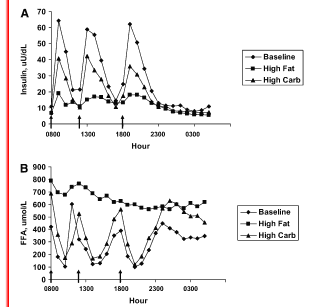
Thanks to reader MM, I have procured a full text copy of the following study that I've discussed a bit previously:  Lack of suppression of circulating free fatty acids and hypercholesterolemia during weight loss on a high-fat, low-carbohydrate diet

A bullet pointed, sometimes paraphrased abstract/summary:

  • This study compared a low carb (less than 20g/day, no fat content provided but "high fat") diet to a high carb diet (55% energy, 30% fat) 
  • Fasting, 24 hour AUC (cumulative exposure) and time courses for metabolites were measured during weight loss.
  • Subjects were healthy, obese adults (n = 32; 22 women, 10 men) - diabetics and those with a history of CVD were excluded.
  • The study lasted six weeks. 
  • A 24-h in-patient feeding study was performed at baseline and after 6 wk. Glucose, insulin, free fatty acids (FFAs), and triglycerides were measured hourly during meals, at regimented times. Remnant lipoprotein cholesterol was measured every 4 h.
  • Results:
  • Patients lost a similar amount of weight in both groups 
  • There was no difference between groups on fasting triglycerides or on remnant lipoprotein cholesterol, which was the main outcome. 
  • Fasting insulin decreased, and both fasting and 24-h FFAs  increased within the High Fat group. 
  • Twenty-four-hour insulin decreased for both groups. 
  • Fasting LDL cholesterol decreased in the High Carb group only.
  • In both groups, the differences in fasting and 24-h FFAs at 6 wk were significantly correlated with the change in LDL cholesterol.
  • Conclusions: Weight loss was similar between diets, but only the high-fat diet increased LDL-cholesterol concentrations. This effect was related to the lack of suppression of both fasting and 24-h FFAs.

Wednesday, February 9, 2011

Non-esterified fatty acid metabolism and postprandial lipaemia


Yet another gem from ... who else? ... Keith Frayn!

Non-esterified fatty acids (NEFA, or free fatty acids) are an important metabolic fuel. Both the concentration of NEFA and their flux through the circulation vary widely from hour to hour, reflecting nutritional state and physical activity. Inappropriately elevated plasma NEFA concentrations may have a number of adverse effects on both carbohydrate and lipid metabolism.
As my regular readers know well, this is a focus of my research.
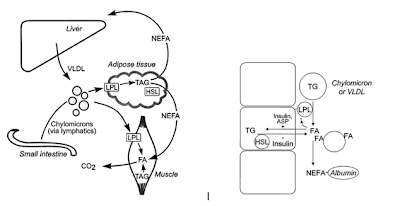
These adverse effects are likely to be most marked in the postprandial period, when NEFA release from adipose tissue is usually suppressed. Although the regulation of NEFA release in the postabsorptive state is well understood in molecular terms, the predominant pathway for release of NEFA in the postprandial state is the action of lipoprotein lipase (LPL) in adipose tissue capillaries on chylomicron-triacylglycerol (TG). Fatty acids released by LPL may either be sequestered in the adipocytes by esterification, or released as NEFA into the plasma. The regulation of this branch-point, which may be of crucial significance for postprandial metabolism, is not well understood. Factors stimulating tissue retention of fatty acids include insulin and acylation stimulating protein.
1998 Keith Frayn

Internetiquette & The Full Email Exchange with Gary Taubes

Warning:  This post contains absolutely no science.  If you are looking for science, please look at 99% of the other content on the blog.  If you are offended by non-science posts on a predominantly science-based blog do not read this.

UPDATE  2/9/11 ~1:30 EST:   I somehow chopped out the emails!  Have edited them in.  Thanks MM for the alert!

Monday, February 7, 2011

IDE (Insulin Degrading Enzyme): Insulin & Glucose

Glucose inhibits the insulin-induced activation of the insulin-degrading enzyme in HepG2 cells

This was an in vitro study done with human liver cells (HepG2 cell line).  The cells were incubated with either a normal glucose solution (1g/L = 100 mg/dL common units for blood glucose) or a high glucose solution (4.5g/L = 450 mg/dL) and treated with insulin for 24 hours vs. untreated cells.  The activity of insulin degrading enzyme, IDE, was measured.  (For those not familiar with IDE, here's the Wikipedia entry on it)

Here are the results for one insulin concentration studied: (as always you can click to enlarge)

Note:  cytosol = fluid inside the cells

So we see that at normal glucose levels insulin markedly stimulates IDE inside the cells while mildly suppressing it in the membrane.  The total effect is a marked stimulation of IDE by insulin.  This effect is almost nullified by hyperglycemia with an insignificant uptick in cytosolic activity and an uptick in membrane activity for only a small total stimulatory effect.
The observed increase in IDE activity after insulin treatment in human hepatoma cells under normal glucose concentration obviously switches off the action of insulin:  insulin induces an increase in IDE activity which leads to increased insulin degradation and decreased insulin signalling.

Insulin stimulates its own proper degradation and disposal under normal conditions.  

Saturday, February 5, 2011

Question on Gastric Bypass Surgery

I'm not talking lap band here but the ones where you detach and reattach further down on the intestines like here.

Does some sort of digestive tract flush/cleaning or fasting/cleansing like for a colonoscopy precede these procedures?  

Thanks :-)

Free Fatty Acids & Sudden Cardiac Death

I finally found the paper I've been alluding to here for a while, but have some other things in the works both for this blog and in my "real life" so that I'll just do a bookmark for now.  Keith Frayn's Metabolic Regulation is just a gift that keeps on giving as in re-reading some parts that led to a blurb on FFA's citing one author of this review.

Sudden cardiac death: the lost fatty acid hypothesis

Friday, February 4, 2011

More Todd Becker (Getting Stronger blog) on Insulin

I am really enjoying the back and forth that has ensued between Todd and I following my Insulin Wars installment on his commentary on James Krieger's series on insulin.  For those who are unfamiliar, here are the links to content on this blog:


I received an email from Todd that he will be responding once again so stay tuned for version IV.2 and continued discussion!  Todd certainly gets the old gray matter working.  Reading a bit more at his blog I think we have some areas of agreement regarding this beleaguered hormone.

In the meantime, Todd has posted a discussion of his own at his blog:  Does insulin make you fat?  
I have some comments on that to add over there, hopefully soon.  

Also, don't miss Todd's interview with Jimmy Moore.  I haven't listened to this one yet, but I will be!

Wednesday, February 2, 2011

Of Mice & (Wo)Men: When's the last time you saw an 5'4" 130 pound fat woman?

I'm always amused when a rodent study that seemingly counters the calorie-based theories on obesity comes down the pike.  In predictable fashion, someone in the LC webosphere will pick up on it and use it as an example to counter calorie-based theories on weight/obesity.   A recent example of this is brought to us by low carbers' favorite comedian edutainer, Tom Naughton:  Fat Mice & The Laws of Thermodynamics that referenced the following study:  Mild calorie Restriction Induces Fat Accumulation in Female c57BL/6J Mice.  

Now Tom starts out misrepresenting things by picturing a fat mouse, likely an ob/ob.  This study actually involved females of the strain pictured below:

Kind of a cute little critter, no?   The study was also conducted in the context of calorie restriction and it's demonstrated increase in longevity of mice.  They are not a mutant strain genetically predisposed to obesity.

Found something helpful today? Please consider a small donation. Thank you!

Where to now?

align="middle" align="middle"

align="middle" align="middle" align="middle"