Posts

Showing posts with the label Blood Glucose

β-Cell lipotoxicity in the pathogenesis of non-insulin-dependent diabetes mellitus of obese rats: Impairment in adipocyte-β-cell relationships

Image
BUMP NOTICE:  I'm bumping this post due to some recent discussions on social media regarding the reversibility of Type 2 Diabetes and the role of low carbohydrate diets in the growing "curing diabetes" paradigm.  Recently Dr. Roy Taylor (the investigator I most closely associate with the crash diet, though this is an extensive group) and colleagues, who implemented a "crash diet" to cure diabetes -- by reducing pancreatic and hepatic (liver) fat concurrently with rapid weight loss -- published the following in BMJ:   Beating type 2 diabetes into remission .    The criteria are non-diabetic markers for a period following reversal of the progression.  Here is where various low carbohydrate interventions "fail", as many are able to maintain normoglycemia only by avoiding carbohydrates.  The question remains if this is effectively the same as other reversals.  I contend it is not, as normal pancreatic function -- specifically GSIS -- has not ...

Bump: The Diabetes "Crash" Cure & Pancreatic Fat

Bumping Again! New Article in BMJ:   Analysis: Beating type 2 diabetes into remission * The original posting of this was shortly after the first papers published on the success of a very low calorie diet -- essentially a 6-800 calorie protein-sparing-modified-fast, protein shakes + non-starchy veggies -- in curing diabetes in relatively short order.  You may also be interested in the following posts: The Diabetes "Crash" Cure Revisited  (a follow-up to this one) Diabetes "Crash" Cures: VLCal vs. VLCarb Check Featured Comment (if any) for further updates from me. *In light of commentary below, I'll add that I am not a fan of using the term remission here.  Cancer does seem to strike at random most times and recurrence seems to be equally random.  At best we have few if any ways to predict who will see cancer return etc.  But Type 2 diabetes doesn't work that way in most.  The source of the beta cell dysfunction is pretty well k...

Insulin Caused Cerebral Stress - And THANK YOU! I'm baaaaack :-)

Image
Dateline:  March 26, 2016 Helloooo Inmates!! A quick update, but first a sincere thank you to each and every one who participated in my 40 Day Lenten Lentil Fast post.  As of this morning -- two months after publication -- we stand at just over 2700 comments.  No that's not a typo.  Who knew all I had to do was stop blogging?    It fills my heart to have such great interaction here at any time.  It especially filled it these past two months, months that have been more tumultuous than time-constrained, and some of the most difficult of my life.  So THANK YOU, and especially for much needed laughter along the way!  What more is there to say? I may or may not elaborate further on some unintended blog-related whys for the unplanned hiatus, but surely one of them has to be that old saying "the more things change, the more they stay the same".    While there are many examples of low carb antics I could use, there seems to be somet...

Insulin Doesn't Regulate Fat Mass

Image
Sixteen post bumps for 2016 ... No. 4 While I'm way beyond behind in my post bumping for the new year, I still plan to finish out a total of sixteen at some point. This one doesn't need much in the way of summary, but quick points: In terms of energy homeostasis, the main role of insulin in the body is as a signaling molecule in the regulation of the circulating levels of energy substrate, the two primary ones being glucose and free fatty acids. This post models this for just the fatty acids using a room temperature/thermostat feedback analogy. In the case of fatty acids, circulating levels are controlled mainly at the release point from the fat tissue.   The role of insulin is to keep total amount of circulating free fatty acids at appropriate levels, and not to regulate the amount of fatty acids stored in the fat cells, and thus overall fat tissue mass. Original post date: 12/13/14 Insulin doesn't regulate fat mass.  This is a bold statement.  M...

Thirty Years of Glycemic Index Dogma, and The American GI Man

Image
Sixteen post bumps for 2016 ... No. 3 I think this post from around a year ago, in light of the new book by David Ludwig is a necessary bump. It's not every diet guru that is a principal investigator on a "groundbreaking" study that directly debunks the thesis of their book.  In this regard, Ludwig is, if not one of a kind, the leader of the pack. Originally published on January 19, 2015 The former British colonies/territories may be known for a lot of things, but in the nutrition world, I'm going to go out on a limb here and state that the Glycemic Index - GI - is the trifecta. In Canada, David Jenkins pioneered the concept, for applications in diabetes treatment.  This cause was picked up and concurrently championed in Australia by Janette (Jenny) Brand-Miller.  A little late to the party, in one of the original Thirteen, David Ludwig took up the cause in the USofA.  Are these the men and woman who made us fat? Adapted from Adele Hite's Eat...

The Cause of Hyperglycemia in Type 2 Diabetes

Image
Sixteen Post Bumps for 2016 ...  No. 1 Post Summary The main role of insulin in the body is to inhibit processes that release energy substrates into circulation on an otherwise "always on" continual basis.  Insulin plays a stimulatory role in the clearance of glucose from circulation, but this is secondary to its inhibitory role, and may not even be physiologically important.  The generally accepted progression of "insulin resistance" -- beginning with impaired uptake of glucose in response to insulin stimulation, leading to a "backing up" of glucose into circulation, and requiring more and more insulin to clear the glucose -- is almost certainly incorrect. Radiolabel studies have demonstrated that in both T1 and T2 diabetics, glucose uptake is not impaired , and indeed may even be greater than normal. Hyperglycemia is due to  relative insulin deficiency even if overall insulin levels are high .  This deficiency is due to failure of the pa...

The Frassetto High Carb Paleo Diet in Diabetics - Part II

Image
Part I Metabolic and physiologic effects from consuming a hunter-gatherer (Paleolithic)-type diet in type 2 diabetes U Masharani, P Sherchan, M Schloetter, S Stratford, A Xiao, A Sebastian, M Nolte Kennedy and L Frassetto {Apologies in advance:  No idea if this is truly as scattered as I think it might be, but I'm currently working on a number of projects, including "real job" stuff.  So rather than hold this up for perfecting, I'm hitting the publish button!} The Take-Aways, Such as they are ... In this three week trial, researchers used food questionnaires to assess usual intake prior to the study.   ... on the basis of our intake questionnaire and food recall responses, we expected the parameters of the subjects on the ADA recommended diet to remain unchanged from baseline, but in fact they also improved reducing the differences observed with the two diets. I'm going to go out on a limb and suggest that the baseline reporting was, as has b...

The Circulating "Food" Supply and The Failed Internal Starvation Hypothesis

Image
There are several recurring themes, mostly from low carb advocates of the "fat burning is best" bent, that keep ... well ... recurring!  Perhaps foremost among these is this concept of "internal starvation".  From Gary Taubes in Good Calories, Bad Calories :   "F or the past century, the conspicuous alternative to the positive-caloric-balance hypothesis has always been, as Pennington, Astwood, and Hilde Bruch suggested, that obesity is caused by a defect in the regulation of fat metabolism. At the risk of repetition, it is important to say this is, by definition, a disorder of fat accumulation, not a disorder of overeating. For whatever reason , the release of fat or its combustion is impeded, or the deposition or synthesis of fat is promoted, as Astwood said, and the result is obesity. That in turn will cause a deficit of calories elsewhere in the body— Astwood’s “internal starvation”— and thus a compensatory hunger and sedentary behavior.

The Mechanisms of the Glycemic Index: A Fatty Acid Roller Coaster?

Image
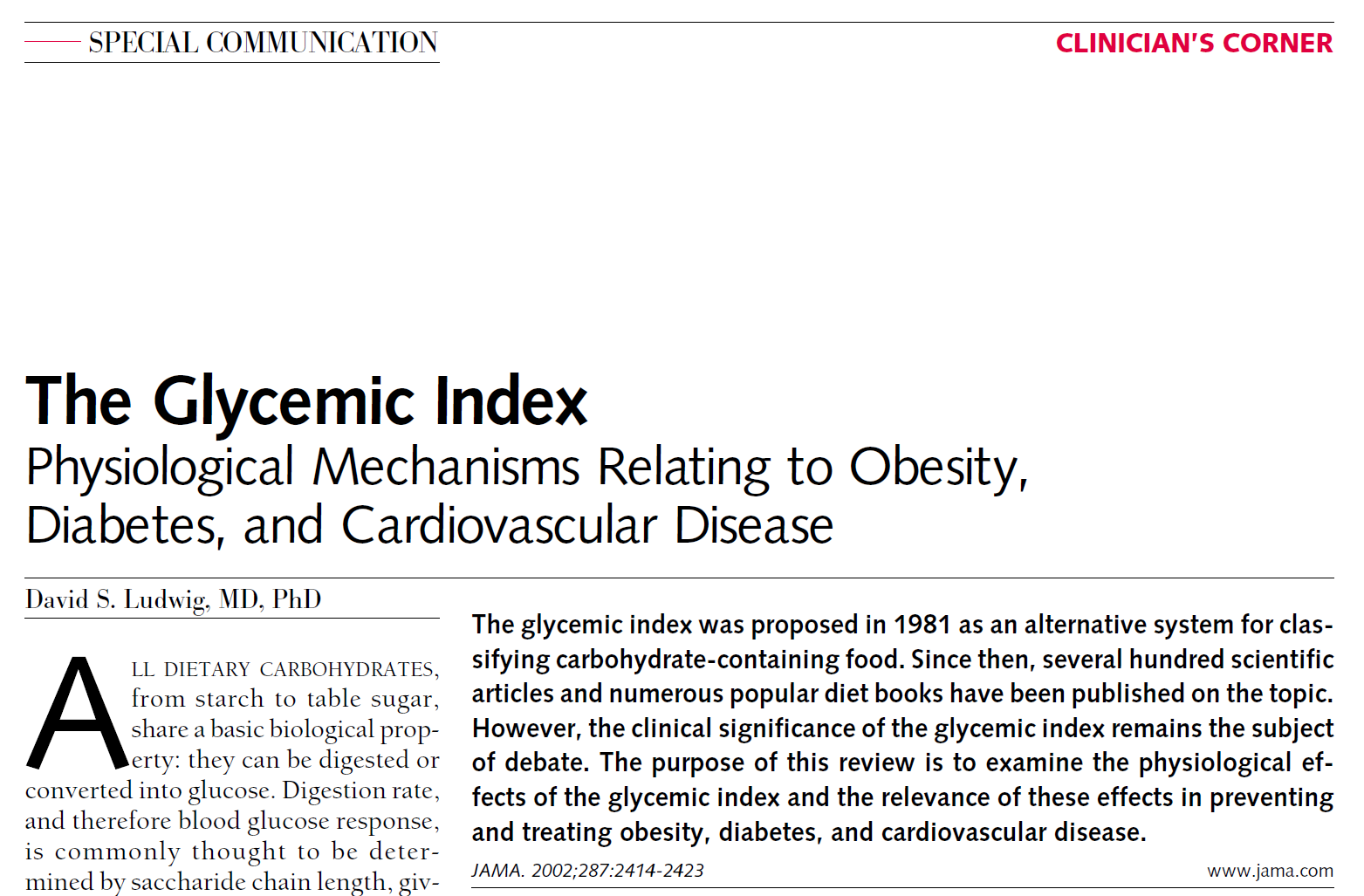
This post will focus on some statements made by a researcher who I've dubbed "America's GI Man", Dr. David Ludwig, in this review: The Glycemic Index: Physiological Mechanisms Relating to Obesity, Diabetes and Cardiovascular Disease , JAMA , 2002. A Note Regarding Definitive Statements in Review Papers As I found myself getting sucked down the Pubmed rabbit hole that is the GI, it was really this paper that took me past that point of no return.  I have taken a screenshot of the top of the PDF format of the article to convey a few things, and at this point I'm beginning to understand how it is that doctors can get sucked into bad paradigms when their "prestigious journals" put out "SPECIAL COMMUNICATION"s from their "CLINICIAN'S CORNER"

The Glycemic Index ~ It Was Supposed to Be About Carbs!

Image
As I have quite a few tangential thoughts going on, in search of a cohesive theme here, I've decided I'd just throw up a few short posts, and perhaps come back and put them together at some later date. The Glycemic Index is credited to Canadian researcher David Jenkins, and originated, near as I can tell, with this paper:   Glycemic index of foods: a physiological basis for carbohydrate exchange . INTRODUCTION :   Recent work has suggested that the carbohydrate exchange lists that have regulated the diets of many diabetics for over three decades may not reflect the physiological effect of foods. Such factors as food form, dietary fiber, and the nature of the carbohydrate have been shown to have a marked influence on the postprandial glycemia and allowances cannot be made for these in lists which take into account only the available carbohydrate content of foods. Currently, very good blood glucose control has been advocated for diabetics to reduce the incidence of lo...

A Ma Pi Meta

Image
Hello all!  A quick follow-on post to yesterday's offering on the Ma-Pi2 diet for diabetes.  This diet is vegan, grain based (brown rice, millet, barley), includes legumes and copious veggies, and "macrobiotic" foods like seaweed and green tea.   Recent Post:   Vegan Ma-Pi Diet Bests "Conventional Treatment" for Diabetes in Recent RCT Previous Posts:   Carbohydrate and Diabetes , Carbohydrate and Diabetes II I want to make clear that my purpose for blogging on this particular diet is not one of advocacy.   I don't believe there is any evidence for humanity avoiding all animal derived sustenance and, sorry, but the Ma-Pi diet does seem a rather austere one to me.   Furthermore, I am offering no comment on the "macrobiotic" claims and whether the inclusion of some of these special foods is integral to the success of these programs.  When looking at the success of programs such as native Hawaiian diets (discussed here ), and others, which...

Vegan Ma-Pi Diet Bests "Conventional Treatment" for Diabetes in Recent RCT

Image
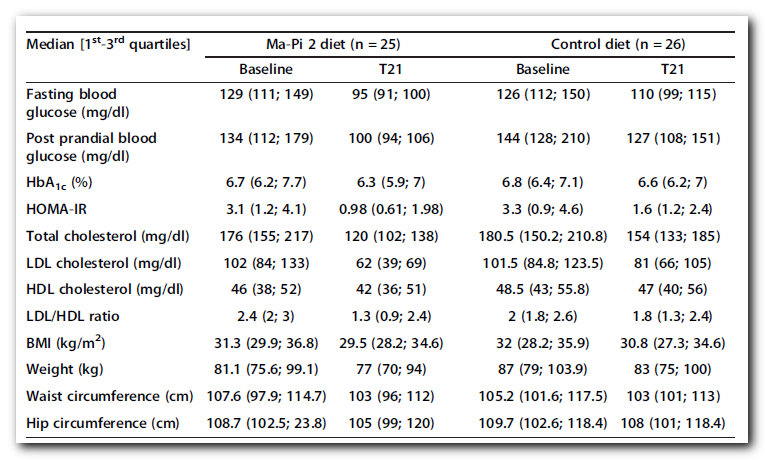
What happens when you take 25 overweight-to-obese, type 2 diabetics and: increase their carbohydrate intake by around 100 g/day   increase their absolute carbohydrate intake by 45%  increase their carbohydrate percentage in the diet by over 25% of total calories have them consume over 300 grams of carbohydrate in a day decrease their caloric intake modestly (< 200 cal/day*) cut 50 g/day of fat from their diet reduce absolute fat intake by over 60% reduce fat to only 15% of total calories cut protein by almost 40 g/day cut absolute protein intake by roughly 40% accomplish all of this on a grain-heavy vegan diet What happens?  Do they get fatter?  See their glucose spiking and soaring and fear imminent amputation and blindness?   No.  What happened is this: This after only three weeks.  Oh ... and 70% of the Ma Pi group dieters taking oral diabetes drugs at onset were able to get off their drugs.

Announcing Limited Edition Keto Clarity Commemorative Teaspoons!

Image
Links to scientific background and calculations below.   Oh ... and more teaspoons :-)

Some Questions ...

1.  It is known that the adult human brain consumes roughly 23% of total daily caloric expenditure for the "average person".  Glucose utilization by the brain has been determined to be at least 100 g/day, the most common figure I've seen is 125-130 g/day, and I've seen up to 150 g/day.  In light of this (and absent rare brain GLUT transporter deficiency disease), wouldn't EVERY human have a "carbohydrate tolerance" of at least 100 g/day?   2.  Low carb advocates like to focus on the fact that there are approximately 1 to 2 teaspoons or somewhere between 4 to 10 grams of sugar (glucose) dissolved in circulation at any given time.  However normal individuals "clear" several times that amount in fairly short order (an OGTT runs 50 to 100 grams of glucose).  The "insulin resistance" paradigm implicates a backlog of glucose in the blood stream due to cells with filled up glycogen stores.  This sounds like common sense.  Why, then, do...

Is Glucose Toxic to Cells? Answers from the LIRKO Mouse and More ...

Image
I briefly interrupt Thermodenialgate reports to revisit the LIRKO mouse.  But first, a little fun blast from the past.   A few years ago now I did a series on fat tissue regulation that involved various receptor and gene knockout mice.  I had a little fun making (low graphics tech) characters out of Star Wars Lego figures.   First came C3KO , a mouse deficient in acylation stimulating protein, ASP, production.  Shortly thereafter came Obi No Leptinobi .

The Glycemic Index, Carbs & Protein, and Weight Loss

Image
Hey all ... just a quick note. It's been one of those weeks and all where I've started like a half a dozen blog posts and gotten distracted or needed to do some "cleanup" on them so I've held them in the draft bin. Lots going on in real life in addition to the online side. But as often happens when I'm writing about a topic, a related paper pops up and something catches my eye. Such was the case when I looked into some of Dr. David Ludwig's work on the glycemic index for background on a post, and another study was mentioned along with his work. Studies such as this one from Ludwig --  High Glycemic Index Foods, Overeating, and Obesity  -- and, frankly, common sense to a degree -- paint high glycemic index foods as "bad" because: The rapid absorption of glucose after consumption of high-GI meals induces a sequence of hormonal and metabolic changes that promote excessive food intake in obese subjects. And this makes sense, and i...

Yet another LC vs. "Low Fat" Dietary RCT Making the Rounds

Image
A Randomized Pilot Trial of a Moderate Carbohydrate Diet Compared to a Very Low Carbohydrate Diet in Overweight or Obese Individuals with Type 2 Diabetes Mellitus or Prediabetes We compared the effects of two diets on glycated hemoglobin (HbA1c) and other health-related outcomes in overweight or obese adults with type 2 diabetes or prediabetes (HbA1c>6%).  We randomized participants to either a medium carbohydrate, low fat, calorie-restricted, carbohydrate counting diet (MCCR) consistent with guidelines from the American Diabetes Association (n = 18) or a very low carbohydrate, high fat, non calorie-restricted diet whose goal was to induce nutritional ketosis (LCK, n = 16). We excluded participants receiving insulin; 74% were taking oral diabetes medications. Groups met for 13 sessions over 3 months and were taught diet information and psychological skills to promote behavior change and maintenance. At 3 months: mean HbA1c level was unchanged from baseline in the ...

Insulin Dynamics II: Insulin Secretion & Clearance During Weight Gain

Image
Previous post:   Insulin Dynamics I - Secretion vs. Sensitivity in Health & Disease/Decline This post will discuss the following paper:   Development of hyp erinsulinemia and insulin resistance during the early stage of weight gain  (Erdmann). This was yet another paper I came across thanks to this recent review: Body Weight Regulation and Obesity: Dietary Strategies to Improve the Metabolic Profile .  I'm efforting the full text of this that I can share here, but in the mean time, here's the context in which the Erdmann paper is introduced in that paper: Overweight and obesity represent a worldwide increasing health problem that seriously raises the risk for the development of severe metabolic disorders such as type 2 diabetes (T2D) mellitus and cardiovascular diseases (Erdmann et al. 2008, Klein et al. 2004). As with increasing obesity, insulin action decreases, and the system usually compensates by increasing β-cell function and consequently insul...

60 Teaspoons of Sugar in 150 Minutes ... and STILL no sustained hyperglycemia

Image
I've got the teaspoon gang on the mind after my last post, and I'm making my way through some 1960's diabetes research at the moment.  In a study older than me (that's more than a half century old!) two of Taubes' oft-cited diabetes researchers, Solomon Berson and Rosalyn Yalow, reported in the peer review literature something that might be of interest. You know the drill by now,  That's a little more than 1 teaspoon of sugar:  1 teaspoon  = 4 grams    (that would be 80 mg/dL).  

There's no dietary need for saturated fat ...

Image
Random Bump! Original Publish Date:  6/15/12 There's no dietary need for saturated fat ... ... or monounsaturated fats, MUFA, for that matter.  Therefore low fat diets, where most of the fat is essential PUFA, are optimal.  The body can make all the SF and MUFA we need from carbohydrates.  Furthermore, relying on this metabolic pathway as a source of body fat is metabolically advantageous for weight management as making fat from carbohydrate is an energy intensive process.   Sounds a little silly, right?  I think so.  But so, too, is the ridiculous mantra from low carbers citing the fact (true) that there's no dietary necessity for carbohydrate.  You know the drill, we can make all the glucose we need by gluconeogenesis (just saying that makes me feel smarter) therefore LC diets are optimal.  There is a metabolic advantage built into LC diets because gluconeogenesis requires energy to convert protein to glucose.