Posts

Showing posts with the label DNL/de novo lipogenesis

The Great Cholesterol Con-Artist: Malcolm Kendrick

Image
There has been a spate of studies and commentaries coming out of late related to plasma saturated fatty acid content, dietary sat fats and carbohydrates.  It gets mightly frustrating to hear the same arguments made over and over, when some basic calculations and critical radiolabel-tracer studies have shown otherwise for over 15-25 years now (and longer, I'm talking major summary papers and supporting studies).  And still .... What Happens to the Carbs Kendrick is a Scottish physician, author of The Great Cholesterol Con , hence my title.  He's also a card carrying member of  and spokesman for THINCS:  THe International Network of Cholesterol Skeptics.    Sadly, his skepticism and paranoia have turned him into quite the con artist ... feet planted firmly in denial. Professors, who shall be nameless, appear unable to admit how basic human physiology works. For example, they may concede a few steps here and there, but they will never...

GCBC Reference Check ~ Part IX of ? ~ Every Woman Knows Carbs Are Fattening

Image
  Every woman knows that carbohydrate is fattening  Most wouldn't even need to do a search on that phrase and Taubes to recall how frequently Gary Taubes mentions this quote.  Here is the highlight in Good Calories, Bad Calories . {Kindle Location 7624} Taubes repeated this quote in relatively recent editorials in the New York Times , and even the British Medical Journal .   Innumerable others have dragged it out in their own iterations of Taubes' so-called Alternate Hypothesis.   It was indeed a quote published in the British Journal of Nutrition.  So far so good.  What is not featured prominently, per usual for Mr. Taubes, is the nature of the source:   Observations on the respiratory quotients and weight gain of man after eating large quantities of carbohydrate .

That New Volek (& Phinney) Study: Part II ~ More on Journal Choice, Funding and Thoughts on Press Quotes

Image
Previously ... Part I: The Journal Article & The Headlines T here is so much about the recent study from principal low carbohydrate advocate Jeff Volek, that this may well be the subject or impetus for several posts here as we close out 2014 -- it is so much more than just the study, but more what it embodies vis a vis the whole low carb/keto schtick.  Along with Stephen Phinney and ten -- count them, TEN! -- others who claim to meet the PLOS One standards to be designated as authors, we were brought the following study: Effects of Step-Wise Increases in Dietary Carbohydrate on Circulating Saturated Fatty Acids and Palmitoleic Acid in Adults with Metabolic Syndrome In a way this tops off a year of disgraceful behavior on the parts of just about everyone in the IHC who seem hell-bent on deceiving people into adopting their extreme lifestyles. If the science were really so clear, then why can they not address it honestly? There is nothing, N.O.T.H.I.N.G. in ...

De novo Lipogenesis to Palmitoleic Acid ~ Teaspoon? Might as Well Measure with a Cup!!

Image
This is a minor side thought prompted by the recent Volek saturated fat - turns out to be monounsaturated fat - paper and comments Volek has made to the press.  The same general comments have been repeated in various outlets.  In  the study , subjects were first put on a VLC (< 50 g/day) diet (six weeks including half that of "run in") and then carbs were exchanged for fat incrementally every three weeks until the final carb levels were roughly equivalent to starting levels at around 350 g/day.  I'll definitely have something to say about the study itself, but the "major" groundbreaking result of the study was that the levels of the 16 C monounsaturated fatty acid -- that is produced by desaturating the palmitic acid product of de novo lipogenesis -- dropped with carb restriction and gradually came back up as carbs were re-introduced.   An increase in this fatty acid indicates that a growing proportion of carbohydrates is being converted into fat instea...

There's no dietary need for saturated fat ...

Image
Random Bump! Original Publish Date:  6/15/12 There's no dietary need for saturated fat ... ... or monounsaturated fats, MUFA, for that matter.  Therefore low fat diets, where most of the fat is essential PUFA, are optimal.  The body can make all the SF and MUFA we need from carbohydrates.  Furthermore, relying on this metabolic pathway as a source of body fat is metabolically advantageous for weight management as making fat from carbohydrate is an energy intensive process.   Sounds a little silly, right?  I think so.  But so, too, is the ridiculous mantra from low carbers citing the fact (true) that there's no dietary necessity for carbohydrate.  You know the drill, we can make all the glucose we need by gluconeogenesis (just saying that makes me feel smarter) therefore LC diets are optimal.  There is a metabolic advantage built into LC diets because gluconeogenesis requires energy to convert protein to glucose.

Where do triglycerides come from? Part I (Updated)

Image
This post contains sufficient updates from the original (dated 5/11/11) that I consider it more of a fully updated version vs. a bump.   This began with my intent to link to this post in an upcoming discussion of triglycerides, when I noticed that Dr. Ronald Krauss was amongst the authors.   This study originally caught my eye because of    Marc Hellerstein 's name, he of  DNL not a major pathway in humans fame , that I've  blogged on  previously. Now I have excerpted copiously from the discussion because the authors make several points relevant to the discussion of what comprises a healthy lipid profile.  As part of updating, I am breaking those excerpts up a bit more and adding some/more emphasis and additional commentary.

Partial inhibition of adipose tissue lipolysis improves glucose metabolism and insulin sensitivity without alteration of fat mass.

Image
{shhhhhhhhh .... don't tell Gary Taubes, this might just upset his 21DaySugarDetox approved green apple cart!} You know how the story goes by now, right? In more recent lectures, Taubes is fond of using the slide below. source These are two quotes that Taubes cites from Lehninger's Principles of Biochemistry and he juxtaposes them to convince you how misguided such textbooks are.  How can, on the one hand fat cells "fatten" according to the action of insulin, but human beings get fat due to positive energy balance?   The simple answer is that insulin is not some renegade hormone and your pancreas is not a master organ in the body placating your rebellious adipocyte's every whim. Yes, tis true that insulin has a stimulatory role in the storage of fatty acids by acting on LPL on the intake side, and yes, tis true that insulin "traps" those fatty acids in the adipocytes by suppressing HSL mediated lipolysis and release of same.  Sounds like a sl...

July 4, 2013 Over the Hump Bump: Where does insulin resistance start? The adipose tissue

Image
The readership in this blog continues to grow and it is not lost on me that a vast majority of current readers are unfamiliar with the bulk of my work here on this blog.  I think I'm closing in on 1000 posts which would make me one of the more prolific bloggers around ... for better or worse!  As such, I more than understand that it would be darned near impossible to catch up, etc.  So a few comments in that vein.  

That 5000 Calorie Jokesperiment

Image
Note:  I started this article with the intent of it being a single stand-alone before Smash the Fat's Sam Feltham had done his final summary of his overeating stunt.  Since then, however, he has written said summary and I've written two posts discussing this disconnect between the you-can-eat-all-the-calories claims and the current uber-restrictive low carb plans many long time low carbers are actually following themselves.  See:   Fast or Feltham and Fast or Feltham II Apologies in Advance :  I wrote this with updates/edits over several days and with "new information" coming in the interim.  It could probably use a good bit of editing and crunching down, but as this is just a blog, I'm going to publish it up w/o wasting time on that.  Please forgive the length, repetitiveness, etc.  Thanks!

De Novo Lipogenesis Again (and Science and Science Reporting)

Image
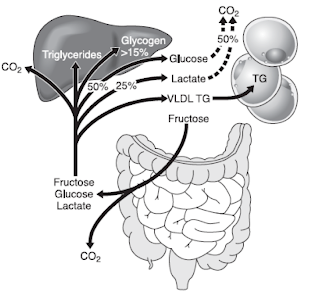
In my last post, I just posted a graphic taken from an "FYI" inset by a scientist, Marc Hellerstein, whose work I've blogged on quite a bit here. (Anyone wanting to refresh can click on the image and enlarge.)  One good post to begin with if you are not familiar with that name is Where do Triglycerides Come From? I would say that between Marc Hellerstein's No common energy currency: de novo lipogenesis as the road less traveled and the works of Eric Jequier such as Nutrient effects: post-absorptive interactions , the case that hepatic DNL is quantitatively insignificant in human energy balance/fat accumulation is strong and has not been refuted by some newer scientific findings.     I do hope to expand on the role of adipose DNL at some future point -- teaser: I have a paper showing that reducing WAT lipolysis upregulates adipose DNL and improves glucose homeostasis in the IGT irrespective of body weight  -- but adipose DNL had not been central to the argu...

Do Carbohydrates Turn into Fat?

Image
From Discovering Nutrition Insel, Turner & Ross,  copyright 2010 20

The Problem with Science in the Incestral Health Community

Image
I've been discussing lately the entangled web of relationships and referencing in this community, and I have decided that henceforth I'm going to call it on this blog what I've called it in my head for a very long time:  The Incestral Health Community.   This is because everyone has ties to everyone else (or enough) and apparently nobody feels even the slightest bit interested in vetting one another, let alone any professional obligation to do so before slapping the affiliate logo on their website or inviting fellow IHC members to speak at their events.   I've also been highlighting credentials of late, and will continue to do so when I feel that it is pertinent.  I want to make sure that everyone reading here understands that I am not passing judgment on anyone's academic record, highest degree held, etc.  Fer crying out loud, two of the smartest women I've had the privilege of knowing both dropped out of high school in the 9th grade.  And sadly, the...

Obesity Related Diabetes & How Gary Taubes has it all Bass Ackwards

Starting sometime in April, I started coming across a deluge of new information related to diabetes -- the classic obesity related T2 diabetes (roughly 80% of T2's are obese, those are the ones I'm talking about here).  There's so much, and by research groups I'd "researched" before, I'm simply amazed I somehow never came across it before.  It's frankly sidetracked me quite a bit from where I was going before the first light bulb over head find, because it all just seemed to fall in place like dominoes fall in some of those intricate arrangements that I'm always intrigued by.   The first discovery was not in a journal article, however.  It was that I finally got my paws on Lehninger Principles of Biochemistry, 4th Ed (2004) and 5th Ed (2008).    This book is cited frequently by low carbers due to the fact that in recent years Taubes snickers at how stupid the scientists who wrote the book are with two short excerpts he claims are in conflict....

Insulin Injection Effect on Fat Tissue

Image
I'm sure most of you are familiar with the picture of the unfortunate woman below from Gary Taubes repeated use of this picture in lectures.    The top is a screenshot from Google Books of Endocrinology:  An Integrative Approach , 2001, Nussey & Whitehead, page 31.  At the lower right, I've copied the discussion of Box 2.8 from the previous page.

Review & Critique: The Skinny on Obesity ~ Part II Sickeningly Inaccurate

Image
Previously:   Intro & Part I The second installment of the University of California production, The Skinny on Obesity, featuring Dr. Robert Lustig and colleagues is entitled Sickeningly Sweet .  I've embedded the video at right.  I've entitled this installment of my Review & Critique Sickeningly Inaccurate.  That is, frankly an understatement about the information presented in this episode.  This video epitomizes what's wrong with many of the "anti-establishment" nutritional experts.  You do not counter bad science with more bad science.  This is what Lustig does here.  And it's not controversial -- at least there's some evidence supporting the lipid hypothesis -- but the "science" here is counter to known basic biochemistry and in opposition to the vast majority of the evidence of metabolism such as de novo lipogenesis.

Fructose, Fat & Obesity

Image
The other day, Stephan Guyenet shared some of his own thoughts on David Despain's can't-say-enough-nice-things-about-it interview with Dr. John Sievenpiper.  In case you missed it, Stephan discusses his post looking at the links or lack thereof  between sugar consumption per se and obesity.  See:   Is Sugar Fattening?   At the end of the current post is the following footnote: ** If fructose is fattening due to its ability to become fat, then dietary fat should be even more fattening because it doesn't have to undergo an inefficient conversion process-- it's already fat. Excellent point!  I might add that if saturated fat is such a healthy fat for your body, fat produced by de novo lipogenesis -- mostly palmitic acid in the liver -- would be an even better source of that fat as it would give you a "metabolic advantage"!   It takes almost no calories to digest and store dietary fat in body fat.  It is highly energy intensive to convert fruct...

Great Interview on Fructose ~ The "Other" Side

Image
This one is too good just to tweet.  One of those gems I mentioned the other day is David Despain's Evolving Health blog.  He's been posting quite a bit of late on fructose.  His latest:    Fate of fructose: Interview with Dr. John Sievenpiper . It's definitely worth reading the whole thing, but I'll excerpt a few things that address the problems with many of the fructose studies and problems with them, and some nice correcting of Lustig & Co.: The 50th percentile for intake in the United States is 49g per day, which is just a little less than 10 percent per day of energy from fructose. ... the 95 percentile for intake for NHANES for fructose consumes 87g of sugar or little less than 20 percent energy. It seems to me that sugar consumption in the US is often inflated, and the inflation is done by those who seem to have an "crisis agenda" -- by that I mean looking to whip up a crisis for the purpose of enacting legislation or finding a new tax revenue str...

Intermittent Fasters might be interested in this.

METABOLIC ADAPTATIONS TO A "STUFF AND STARVE" FEEDING PROGRAM. I. STUDIES OF ADIPOSE TISSUE AND LIVER GLYCOGEN IN RATS LIMITED TO A SHORT DAILY FEEDING PERIOD This is quite an old study, published in 1962, and it's in rats who are known to have greater DNL in adipose tissue.  This was a fairly short study, wherein rats were put on a 2 hr/day ad libitum eating schedule for one week.  Intake was 60% lower on day 1, but back up to 95% of normal ad libitum intake by the second day.  Thus the rats lost weight early on, but were back within 10% of their start weight by week's end.   Essentially it appears that in short order with a switch to such a regime, adipose tissue storage and DNL in adipose tissue is upregulated considerably (10 fold).  Normally a 24 hr fasted rat will have depleted glycogen stores as some is burned along with fatty acids.  Rats adapted to this regime had full liver glycogen after the 24 hr fast indicating that they likely use fats prefe...

De Novo Lipogenesis ~ Another Case of an Undeserved Bad Reputation?

OK, let's get back to some science here :-)  In comments on my recent query for evidence that insulin blocks leptin in the brain, Kindke posted a link to the following article:   Yin and Yang of hypothalamic insulin and leptin signaling in regulating white adipose tissue metabolism .   ABSTRACT:   Fatty acids released from white adipose tissue ( WAT) provide important energy substrates during fasting. However, uncontrolled fatty acid release from WAT during non-fasting states causes lipotoxicity and promotes inflammation and insulin resistance, which can lead to and worsen type 2 diabetes (DM2). WAT is also a source for insulin sensitizing fatty acids such as palmitoleate produced during de novo lipogenesis. Insulin and leptin are two major hormonal adiposity signals that control energy homeostasis through signaling in the central nervous system. Both hormones have been implicated to regulate both WAT lipolysis and de novo lipogenesis through the...

Fat Tissue Expansion: Part II ~ Overview of How it Can Happen

In Part I , I laid out some terminology that we'll use in the discussion of how we get fat.  In this installment, I'm mostly going to list the various means by which fat tissue can expand, emphasis on the word can.  Because as future installments will lay out, while some of these mechanisms are plausible, some of these mechanisms contribute very little if at all to the fattening process.  So what mechanisms might be involved in the expansion of fat tissue?  It is not controversial that fat tissue expands by two means: Adipocytogenesis:  The growth of new fat cells, increased fat cell number Adipocyte growth:  Increased size of adipocytes