Posts

Showing posts with the label Lipotoxicity

β-Cell lipotoxicity in the pathogenesis of non-insulin-dependent diabetes mellitus of obese rats: Impairment in adipocyte-β-cell relationships

Image
BUMP NOTICE:  I'm bumping this post due to some recent discussions on social media regarding the reversibility of Type 2 Diabetes and the role of low carbohydrate diets in the growing "curing diabetes" paradigm.  Recently Dr. Roy Taylor (the investigator I most closely associate with the crash diet, though this is an extensive group) and colleagues, who implemented a "crash diet" to cure diabetes -- by reducing pancreatic and hepatic (liver) fat concurrently with rapid weight loss -- published the following in BMJ:   Beating type 2 diabetes into remission .    The criteria are non-diabetic markers for a period following reversal of the progression.  Here is where various low carbohydrate interventions "fail", as many are able to maintain normoglycemia only by avoiding carbohydrates.  The question remains if this is effectively the same as other reversals.  I contend it is not, as normal pancreatic function -- specifically GSIS -- has not ...
Bump: The Diabetes "Crash" Cure & Pancreatic Fat

Bumping Again! New Article in BMJ:   Analysis: Beating type 2 diabetes into remission * The original posting of this was shortly after the first papers published on the success of a very low calorie diet -- essentially a 6-800 calorie protein-sparing-modified-fast, protein shakes + non-starchy veggies -- in curing diabetes in relatively short order.  You may also be interested in the following posts: The Diabetes "Crash" Cure Revisited  (a follow-up to this one) Diabetes "Crash" Cures: VLCal vs. VLCarb Check Featured Comment (if any) for further updates from me. *In light of commentary below, I'll add that I am not a fan of using the term remission here.  Cancer does seem to strike at random most times and recurrence seems to be equally random.  At best we have few if any ways to predict who will see cancer return etc.  But Type 2 diabetes doesn't work that way in most.  The source of the beta cell dysfunction is pretty well k...

Aug. 1 Over the Hump Bump: Baby your Pancreas? Part I: The Tired Pancreas

Another two-fer for the Thursday post bumps again this week.  More explanation for why this set in the next bump. Original Publish Date:  7/26/11 In the comments on  a recent post on beta cell lipotoxicity , Ned Kock (of Health Correlator blog) posted a link to a post he made a while back entitled:   Lipotoxicity or tired pancreas? Abnormal fat metabolism as a possible precondition for type 2 diabetes .  This article deals with the concept of the "tired pancreas" in the development of diabetes.  It seems that (and hopefully he corrects me if I'm wrong here) Ned and I agree that this is not a likely explanation for diabetes.   Ned summarizes the progression of obesity induced T2 diabetes from  Unger & Zhou, 2001 .  It is worth mentioning that Unger is often summarily dismissed from the "scientific discussion roundtable" by low carbers because of the unfortunately titled "Gluttony and Sloth" paper, that, even more unfortunatel...

Why We Get (Sick) Fat (and Sick Livers) - Lessons from a Cafeteria Rat

Image
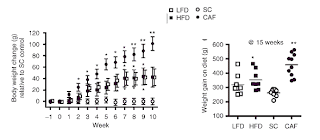
Since we're talking about fructose and the liver of late, I thought I'd bump this post.  In this study groups of rats were fed one of four diets.  The "low fat" diet is better described as a high sucrose diet as 35% of the diet was sucrose.  This replaced 35% of the fat in the 45% "high fat" diet.  While the LF and HF rats gained a little more weight than the standard (also LF at 12%) chow rats, it is clear that the high fat has rather more negative metabolic effects.  I don't think the 35% sucrose diet was beneficial, rather the contrary, but that level of sucrose consumption, every single day for 10-15 weeks (which is quite a long time for a rat) is also hardly indicative of even SAD consumption. Original Posting:  3/8/11 It seems fairly generally accepted that whatever the cause or progression, the so-called Metabolic Syndrome, Syndrome X and Type 2 Diabetes are associated with a dysregulation of adipose tissue metabolism, and fat tissue that ...

Lessons from LIRKO

Image
The LIRKO mouse has no insulin receptors in its liver.  It's one pretty sickly mouse.  In most studies it becomes hyperglycemic and hyperinsulinemic very early in life, but by six months or so of age is either normoglycemic or hypoglycemic.  Despite the concurrent hyperglycemia and hyperinsulinemia, the LIRKO remains normal weight, it is even a bit underweight if anything.  This is despite the fact that  circulating free fatty acids (FFA, or my preferred acronym, NEFA)  are suppressed by 40%.  {Here are the two papers I've discussed in previous blog posts: Loss of Insulin Signaling in Hepatocytes Leads to Severe Insulin Resistance and Progressive Hepatic Dysfunction , High Circulating Leptin Receptors with Normal Leptin Sensitivity in Liver-specific Insulin Receptor Knock-out (LIRKO) Mice both links are to free full texts} LIRKO presents two problems for the TWICHOOB: 1.  Chronic hyperinsulinemia does not cause rampant fat accumulation...

Physician Phollies ~ II: Dr. William "Wheat Belly" Davis

Image
Next up in our "how can he/she even say that?" series of blatantly erroneous things said by practicing physicians in furtherance of the carbophobic agenda ... I bring you, an Asylum favorite, Dr. William "Wheat Belly" Davis.  In the most recent post on his WB blog , Wheat Belly trips over himself trying to implicate wheat, specifically, in the diabetes epidemic.   But can we blame diabetes on wheat? Yes, absolutely, as much as you can blame poor oral hygience for toothlessness in West Virginia. Wow!  Gratuitous slam on WVa's aside, Dr. Wee Bee goes on  to list all the ways wheat causes diabetes: –Any food that increases blood sugar to high levels (i.e., high glycemic index) also increases insulin to high levels. Repetitive high insulin leads to insulin resistance, which leads to visceral fat deposition, more insulin resistance, inflammation, etc., eventuating in diabetes. –High blood sugar, such as that resulting from eating two slices of whole wheat bre...

You're as Hyperinsulinemic as You Need to Be †

Image
Recent comments by Todd Becker (Getting Stronger blog) have prompted me to write yet another post on the (infamous on this blog) Grey & Kipnis study.  Perhaps, part of the problem in discussing these issues is a failure to define what it is we're talking about.  For instance with IR, we have chronic/pathologic IR, glucose-sparing IR (physiologic, fasting/carb restriction), and postprandial IR (usually impaired glucose clearance following a high fat meal or large fructose load).  With hyperinsulinemia we can talk about basal insulin levels vs. postprandial insulin levels.  It appears to me, that if we combine the observations in G&K with those of the long term fasting study, with the hypothesis of G&K -- that diet can play a role in basal hyperinsulinemia and therefore contribute to obesity -- perhaps basal insulin levels are comprised of both a chronic component (I would suggest related to NEFA) and a more transient component due to the diet of the previo...

Intracellular Fatty Acid Metabolism ~ Background Discussion

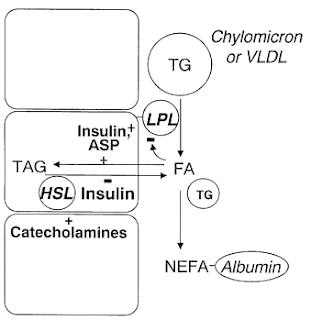
Before some of the recent commotion around here, a blog post entitled Let's Play Concentration   caught the eye of Paul Jaminet over at Perfect Health.  His commentary then inspired me to write  Glucose and NEFA: From Dysfunctional Metabolism to Toxicity .   In the comments section Paul and I got into a discussion about free fatty acid (NEFA) clearance from circulation.  It seems that this is a subject of a lot of uncertainty.  Indeed when I first started looking into this stuff, way back when, I kept coming across statements like that insulin was required for fatty acids to be taken up by fat cells (three guesses where that traced to and the first two don't count ...).  My inner geek was prompted to look back into this.   This topic is of interest to me as my regular readers are well aware of my near-obsession with NEFA.  {grin}

Glucose and NEFA: From Dysfunctional Metabolism to Toxicity

Image
This post started out as a comment in response to Paul Jaminet's mention of a post on this blog in his Around the Web   post yesterday.  It got rather long so I decided to move it here.  In the interest of more rapid publication, I'm not going to be doing a whole lot of referencing in my discussion here, but if you're interested in a particular statement please indicate so in the comments section and I'll try to track down the reference(s) I have in mind.  Paul writes: Every once in a while someone writes to ask me if they should fear a high-fat diet because of CarbSane’s writings on lipotoxicity. I reply that lipotoxicity only appears after metabolic syndrome has developed and, while it may drive the transition from obesity to diabetes, it is not a cause of obesity, and not a danger to people who don’t have metabolic syndrome. Also, the implications for diet are not obvious, since carb intake suppresses NEFA clearance from the blood and enhances glucotoxicity. The l...

Free Fatty Acids and Cytokines Induce Pancreatic ß-Cell Apoptosis by Different Mechanisms

Free Fatty Acids and Cytokines Induce Pancreatic ß-Cell Apoptosis by Different Mechanisms (I've scrubbed the distracting reference numbers from some excerpts of the introduction and I'm also going to try to cite only the information pertinent to T2) Hypercaloric diets containing large amounts of fat, also called the Western diet, contribute to a major extent to the increasing prevalence of obesity and type 2 diabetes mellitus (T2DM). T2DM is characterized by peripheral insulin resistance, pancreatic ß-cell dysfunction, and decreased ß-cell mass associated with increased rates of ß-cell apoptosis. Elevated levels of circulating free fatty acids (FFAs) contribute to the pathogenesis of T2DM. High concentrations of FFAs lead to both impairment of insulin action and ß-cell dysfunction.  Moreover, FFAs have been shown to cause ß -cell death, mainly by apoptosis.  Of note, increased adiposity is associated not only with increa...

Join a discussion on: Saturated fatty acids and insulin resistance

Hi gang!  I'm going to try something a little different here with my blog.  Mirrorball had the idea to start a Scientific Discussion Group of sorts over at the Meeting Rooms, but we're not getting much in the way of takers.    So I thought I'd try a few things. The first is this post per se, because I know far more people read feeds, etc., to see if we can't snag a few more interested takers for such a thing. The second is that the really cool thing about my discussion board system is that I can embed a topic right here in this blog post for everyone to talk amongst themselves without going anywhere, yet this thread will be over in the Scientific Discussion sub-forum at the Meeting Rooms.  This should also give those who have trouble logging into blogger the ability to join in as well.  The default is a flat style display, but this should also allow for greater ease in following discussions that have, at times, become very difficult to follow in the comme...

Elevated Free Fatty Acids Further Impair Glucose Tolerance in IGT but not NGT

Elevated plasma nonesterified fatty acids are associated with deterioration of acute insulin response in IGT but not NGT High concentrations of nonesterified fatty acids (NEFA) are a risk factor for developing type 2 diabetes in Pima Indians. In vitro and in vivo, chronic elevation of NEFA decreases glucose-stimulated insulin secretion. We hypothesized that high fasting plasma NEFA would increase the risk of type 2 diabetes by inducing a worsening of glucose-stimulated insulin secretion in Pima Indians. The subjects were 151 Pima - 107 with normal glucose tolerance (NGT) and 44 with impaired glucose tolerance (IGT) at the outset of the study.  At the outset none of the subjects had been diagnosed with frank diabetes.  These subjects were part of a study on pathogenesis of diabetes in the Pima and returned for annual visits to have various tests performed.  Of note, offspring of diabetic mothers were excluded from the analysis, thus the NGT group did not include this "at r...

Fatty Acid Trafficking

This post discusses:   Downregulation of Adipose Tissue Fatty Acid Trafficking in Obesity, A Driver for Ectopic Fat Deposition? Fats are continually being cycled in and out of our fat cells.  In the obese, circulating free fatty acids (or non-esterified fatty acids), NEFA, are often elevated.  These are often accompanied by deposition of fat in non-adipose tissues, aka ectopic fat deposition.  This ectopic fat is implicated in various impairments of cell function and even cell death (apoptosis) that result in insulin resistance, beta-cell dysfunction, etc.  This is often referred to as lipotoxicity.   This study sought to determine if this lipotoxicity is due to excessive release of NEFA from adipose tissue or from impaired trapping by adipose tissue of the NEFA released from dietary fat.  This work is from Keith Frayn's group.  It might be worthwhile to read my blog post on  Frayn's paper on adipose tissue as lipid buffer. ...

Adiposopathy

Presented without comment on the content per se: Role of the Adipocyte, Free Fatty Acids, and Ectopic Fat in Pathogenesis of Type 2 Diabetes Mellitus This is probably the most exhaustively referenced review article I've ever come across on the etiology of MetS and T2 Diabetes and the role of adipose tissue.  Too extensive to quote w/o copying the whole darned thing, although I may revisit it at some point to do a bullet point summary type post.  

Adipose tissue as a buffer for daily lipid flux ~ Keith Frayn 2002

Image
Adipose tissue as a buffer for daily lipid flux Insulin resistance occurs in obesity and Type II (noninsulin-dependent) diabetes mellitus, but it is also a prominent feature of lipodystrophy. Adipose tissue could play a crucial part in buffering the flux of fatty acids in the circulation in the postprandial period, analogous to the roles of the liver and skeletal muscle in buffering postprandial glucose fluxes. Adipose tissue provides its buffering action by suppressing the release of non-esterified fatty acids into the circulation and by increasing triacylglycerol clearance. In particular, the pathway of ‘fatty acid trapping’ (adipocyte uptake of fatty acids liberated from plasma triacylglycerol by lipoprotein lipase) could play a key part in the buffering process. If this buffering action is impaired, then extra-adipose tissues are exposed to excessive fluxes of lipid fuels and could accumulate these in the form of triacylglycerol, l...

Adipose Tissue Characteristics in Obese Teens & Insulin Resistance

Cellularity and Adipogenic Profile of the Abdominal Subcutaneous Adipose Tissue From Obese Adolescents: Association With Insulin Resistance and Hepatic Steatosis Yes ... I'm going to be on a bit of a bookmarking post spree here :-) This study looked at fat cell size and proliferation in obese teens and compared this to IR and fatty liver.  This study seems to be consistent with the whole "critical threshold" or "normal fat capacity" theories on why some obese are relatively "metabolically healthy" while others are not.  I've not, however, had a chance to read thoroughly. Conclusions:  A reduced lipo-/adipogenic capacity, fraction, and estimated number of large subcutaneous adipocytes may contribute to the abnormal distribution of abdominal fat and hepatic steatosis, as well as to insulin resistance in obese adolescents. Thinking out loud:  It seems more and more to me these days that abdominal fat - visceral in particular - is our short term bu...

Failure of LC/HF Diets to Suppress NEFA Release

Image
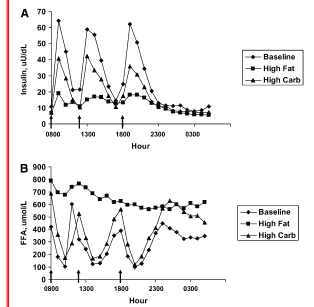
Thanks to reader MM, I have procured a full text copy of the following study that I've discussed a bit previously:   Lack of suppression of circulating free fatty acids and hypercholesterolemia during weight loss on a high-fat, low-carbohydrate diet A bullet pointed, sometimes paraphrased abstract/summary: This study compared a low carb (less than 20g/day, no fat content provided but "high fat") diet to a high carb diet (55% energy, 30% fat)  Fasting, 24 hour AUC (cumulative exposure) and time courses for metabolites were measured during weight loss. Subjects were healthy, obese adults (n = 32; 22 women, 10 men) - diabetics and those with a history of CVD were excluded. The study lasted six weeks.  A 24-h in-patient feeding study was performed at baseline and after 6 wk. Glucose, insulin, free fatty acids (FFAs), and triglycerides were measured hourly during meals, at regimented times. Remnant lipoprotein cholesterol was measured every 4 h...

Deleterious Effects of NEFA II: Panceatic beta cell impairment

Non-esterified fatty acids are deleterious for human pancreatic islet function at physiological glucose concentration Progression from normal glucose tolerance to Type 2 diabetes results from a gradual deterioration in beta-cell function, in the presence of insulin resistance [1]. Over the past 10 years, the role of excess glucose in the alteration of beta-cell function has become increasingly clear and has led to the concept of glucotoxicity [2, 3].  At the same time, the deleterious effect of increased NEFA was suggested by studies on Zucker diabetic fatty (ZDF) rats, an animal model of Type 2 diabetes combined with obesity. The authors showed that altered beta-cell function was preceded by an important increase in the plasma concentration of NEFA and subsequent triglyceride (TG) accumulation in pancreatic islets [4, 5] . This hypothesis, also referred to as lipotoxicity, was confirmed by in vitro exposure of isolated islets to NEFA [6, 7, 8]...

Fat Futile Cycling ~ From Carb Excess??!!

Image
This post may well make heads spin.  It sure did mine. A common claim in LC circles is that we "waste" excess fats through futile cycling.  Although this has not been demonstrated in any significant amount in humans except in massive fat overfeeding, it is still incorporated into books and blog posts by the likes of Dr. Mike Eades (futile cycling to "blow off" low carb excesses is stated as if fact in The 6 Week Cure). Inherent in these statements is the implication that this only happens for excess dietary fat when carbs are low ... insulin would be trapping the fats in the cells as the theories go.  Well ... Substrate cycling between de novo lipogenesis and lipid oxidation: a thermogenic mechanism against skeletal muscle lipotoxicity and glucolipotoxicity   (2004 Review Article,  PDF)

Comparative Fatty Acid Toxicity on Macrophages

Image
Comparative toxicity of fatty acids on a macrophage cell line (J774) In the present study, the cytotoxicity of palmitic, stearic, oleic, linoleic, arachidonic, docosahexaenoic and eicosapentaenoic acids on a macrophage cell line (J774) was investigated. The induction of toxicity was investigated by changes in cell size, granularity, membrane integrity, DNA fragmentation and phosphatidylserine externalization by using flow cytometry. Fluorescence microscopy was used to determine the type of cell death (Acridine Orange/ethidium bromide assay). The possible mechanisms involved were examined by measuring mitochondrial depolarization, lipid accumulation and PPARγ (peroxisome-proliferator-activated receptor γ ) activation. The results demonstrate that fatty acids induce apoptosis and necrosis of J774 cells. At high concentrations, fatty acids cause macrophage death mainly by necrosis. The cytotoxicity of the fatty acids was not strictly related ...