Posts

Showing posts with the label Metabolic Syndrome

Manheim Steamed-over Paleo: The Shai'ning of Mellberg

Image
The controversy should serve as a warning about meta-analyses, Willett adds. Such studies compile the data from many individual studies to get a clearer result. "It looks like a sweeping summary of all the data, so it gets a lot of attention," Willett says. "But these days meta-analyses are often done by people who are not familiar with a field, who don't have the primary data or don't make the effort to get it. " And while drug trials are often very similar in design, making it easy to combine their results, nutritional studies vary widely in the way they are set up. "Often the strengths and weaknesses of individual studies get lost"   "It's dangerous." Walter Willett MD Speaking about Chowdhury, et.al. (HT: Colby Vorland of NutSci.org ) Yes.  This.  
That Paleo Meta Analysis

Image
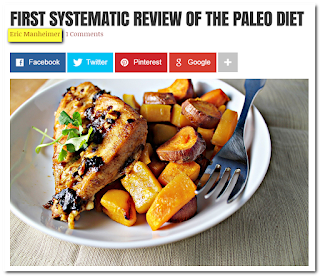
Screenshot of Meta-analysis lead author Eric Manheimer's article on Cordain's ThePaleoDiet commercial website. Is it that time already?  For systematic review and meta-analysis?  Apparently someone thinks so and managed to get some time at or off of work to do one on the paleo diet.  Seriously?  What even is the paleo diet?  I have asked that question many times here myself.  If a premier expert in paleolithic nutrition cannot provide an answer, then who can? I've also written on this many times.  I believe that THIS POST   is a great place to start as it contains links to the various studies and blog posts I've done on those studies.  I'll repeat some links here in a bit. These were the clinical trials (not all randomized-controlled) to date as of January 2014.   I've included the purported composition of "paleo diets" as well. Direct links to blog posts:   Frassetto , Lindeberg & J ö n...

Revisiting the Fatty Diets & Diabetes Study ~ How to Make Mickey Fat or Fattier

Image
High Fat Diets!  I'm going to continue bumping up some of the hundreds of blog posts I've written on studies that support the role of dietary fat in obesity and diabetes.   As I do this I'll make some formatting changes for ease of reading, may fix a typo or awkward wording here or there, but won't alter the content meaningfully.  Instead, I'll insert Ed. Notes where I feel an update or clarification is needed. ORIGINAL POST 8/31/2011 In her piece over at MDA on the How Fatty Diets Cause Diabetes , Denise Minger spent a bit of time discussing the strain of mouse used in the study.  That being the not-uncute fella you see pictured here:  A C57BL/6J mouse.   Denise describes these mice as:   "uber-susceptible to obesity, high blood sugar, insulin resistance, leptin resistance, and all that other fun stuff plaguing modern humans."   This didn't really square with my memory from when I blogged on a study involving this crit...

Insulin Resistance ~ Taubes v. Frayn aka Adiposopathy 101

Image
I thought in the interim of doing something more formal, I'd bump this post from October of 2010.  Keith Frayn, for newer readers, is recently retired prominent Oxford scientist who wrote one of the books Gary Taubes likes to use pictures from these days in his lectures (you're welcome Gary, if only you'd read the book more thoroughly).     Metabolic Regulation.    {as textbooks go this one is relatively economical though I probably wouldn't recommend it unless you've got some scientific background in the subject ... or a lot of patience, because it should be manageable if tackled in smaller doses } He lays out the basics of Adiposopathy - pathological fat - sick fat - though doesn't use the term.  The evidence for this is overwhelming, and although this is just an outline of sorts, it only needs some clarifications and fleshing out with evidence of various components and the mechanisms involved.  In that regard, much progress has been made enfor...

Does Metabolic Syndrome hamper weight loss efforts?

Image
BUMP:  This post is over four years old (original publish date:  11/17/10).  It came to mind a day or so ago when someone linked me to Sam Feltham's latest DISinfographic and accompanying video. If what Feltham is saying (and I can't for the life of me understand how he "borrows" this from Bailor w/o any complaint from Bailor ... even his book title is similar to Bailor's former one!), the results in this study shouldn't have occured. So the original (short) post, unedited, and some commentary afterwards in how some things have changed in my knowledge, understanding and thinking about all of this.

A Ma Pi Meta

Image
Hello all!  A quick follow-on post to yesterday's offering on the Ma-Pi2 diet for diabetes.  This diet is vegan, grain based (brown rice, millet, barley), includes legumes and copious veggies, and "macrobiotic" foods like seaweed and green tea.   Recent Post:   Vegan Ma-Pi Diet Bests "Conventional Treatment" for Diabetes in Recent RCT Previous Posts:   Carbohydrate and Diabetes , Carbohydrate and Diabetes II I want to make clear that my purpose for blogging on this particular diet is not one of advocacy.   I don't believe there is any evidence for humanity avoiding all animal derived sustenance and, sorry, but the Ma-Pi diet does seem a rather austere one to me.   Furthermore, I am offering no comment on the "macrobiotic" claims and whether the inclusion of some of these special foods is integral to the success of these programs.  When looking at the success of programs such as native Hawaiian diets (discussed here ), and others, which...

Here I come to save the day ....

Image
.... it means that Mighty (Meta)Mouse is on {cue record scratch sound} A couple of years ago I wrote the following blog post:   Mighty Metabolism Mouse   discussing this study:   A high-fat, ketogenic diet induces a unique metabolic state in mice .  

Why We Get (Sick) Fat (and Sick Livers) - Lessons from a Cafeteria Rat

Image
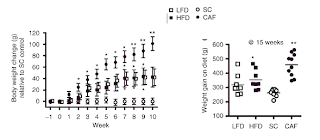
Since we're talking about fructose and the liver of late, I thought I'd bump this post.  In this study groups of rats were fed one of four diets.  The "low fat" diet is better described as a high sucrose diet as 35% of the diet was sucrose.  This replaced 35% of the fat in the 45% "high fat" diet.  While the LF and HF rats gained a little more weight than the standard (also LF at 12%) chow rats, it is clear that the high fat has rather more negative metabolic effects.  I don't think the 35% sucrose diet was beneficial, rather the contrary, but that level of sucrose consumption, every single day for 10-15 weeks (which is quite a long time for a rat) is also hardly indicative of even SAD consumption. Original Posting:  3/8/11 It seems fairly generally accepted that whatever the cause or progression, the so-called Metabolic Syndrome, Syndrome X and Type 2 Diabetes are associated with a dysregulation of adipose tissue metabolism, and fat tissue that ...

Chronic Exposure to Free Fatty Acid Reduces Pancreatic β-Cell Insulin Content by Increasing Basal Insulin Secretion That Is Not Compensated For by a Corresponding Increase in Proinsulin Biosynthesis Translation

Image
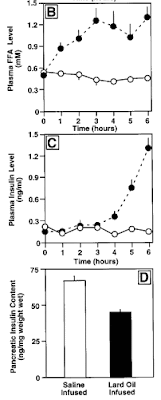
Coming next in the discussion of diabetes I am going to discuss insulin secretion in greater detail.  I was reminded of this post in the writing process.  So ... Bump! Original Publish Date:  4/4/11 Chronic Exposure to Free Fatty Acid Reduces Pancreatic β-Cell Insulin Content by Increasing Basal Insulin Secretion That Is Not Compensated For by a Corresponding Increase in Proinsulin Biosynthesis Translation JD McGarry contributing author. {Please note:  Excerpts from the text will be edited somewhat to avoid "cluttering" references, statistical values, and some rounding of numbers.  Text will sometimes be presented in bullet form or with paragraph breaks to ease reading.  It is not my intent to plagiarize nor to alter the content.  If anyone feels I've altered the content in any meaningful way, do please let me know!}  Direct quotes will be indented. FFA are an important physiological fuel for islets, and act as a sup...

It's official. Jimmy Moore & Co. aren't interested in solving metabolic mysteries after all

Image
UPDATE 9/14/13:  I am in the process of deciding exactly how to deal with one Dr. William L. Wilson, discoverer of the imaginary CARB Syndrome.    This appears to have been the only post of mine he links to in his unsolicited diagnosis of yours truly with this made up mental illness.   Further he offered treatment in the the form of his Carb-22 supplement.   My purpose for this update is that some have -- rightfully, IMO -- taken him to task for making this bizarre diagnosis on the internet, of someone he has not only not met in person, but apparently knows very little accurate information about based on skimming a few blog posts.  After the fact he emailed me a link to the post, and posted one on another post on this blog.  He is busy answering many challenges to his post on his FB page at the moment.   Rather than re-evaluate the prudence of his actions, he seems to be digging a hole.  One way he is doing that is claiming I am so...

Dysregulation of Glucose Handling: Underlying Defect, Permanent Damage or Fixable Milieu?

How many times have you heard some version of the following? Sure starches are OK for 20-something CrossFitters My body just can't tolerate carbohydrates If I hadn't damaged my metabolism, maybe I could eat carbs now, but I can't I used up my carb allotment as a kid so I can't eat them now (I blew out my pancreas) Type II diabetes is a disease of carbohydrate intolerance The list could go on.

Is Low Fat & High Fructose Causing Metabolic Syndrome?

Via Twitter, Beth from Weight Maven blog asked me if I read That Paleo Guy and a recent paper he blogged on .  The answers would be no and no, but I have now ;-)    The title of the study is:   Is the metabolic syndrome caused by a high fructose, and relatively low fat, low cholesterol diet?   The following stuck out at me from the conclusion of the paper: In conclusion, we would urge medical practitioners to encourage individuals exhibiting MetS to strongly limit the consumption of dietary fructose [ 75 ] and other high-glycemic-index carbohydrates, and to stop discouraging them from consuming foods rich in cholesterol [ 76 ]. Now I don't know what medical practitioners are out there pushing fructose on people, but the recommendations to consume fruit are a far far cry from endorsing the consumption of sugar sweetened beverages and lots of juice.   I do think it's a crime that fruit juices are considered the equivalent of a piece of fruit to ...

The Latest LC Beats Other Diets Study

I'm hesitant to discuss this one, because we don't even have an abstract of a published paper.  But since it's going to be bantied about the LC web anyway, I might as well comment on what information we have. Here's the press release from the conference at which it was presented: Intermittent, Low-Carbohydrate Diets More Successful Than Standard Dieting, Present Possible Intervention for Breast Cancer Prevention Here's an article that provides some additional info:   Cutting carbs just 2 days a week can spur weight loss Piecing together the information provided together it appears that they compared weight loss and changes in biomarkers for breast cancer risk in women over a four month period.  The diet details are sketchy, but it seems they compared the following diets:

Gary Debunks Taubes ~ It's the Fructose Stupid!

Image
In his second blog installment in a series that says nothing about its purported purpose (to debunk the food reward hypothesis so we can all return to eating our high reward Science Krispies ), Gary Taubes cites the following study: Consumption of fructose-sweetened beverages for 10 weeks reduces net fat oxidation and energy expenditure in overweight/obese men and women C L Cox, K L Stanhope, J M Schwarz, J L Graham, B Hatcher, S C Griffen, A A Bremer, L Berglund, J P McGahan, P J Havel* and N L Keim Background/Objectives: The results of short-term studies in humans suggest that, compared with glucose, acute consumption of fructose leads to increased postprandial energy expenditure and carbohydrate oxidation and decreased postprandial fat oxidation. The objective of this study was to determine the potential effects of increased fructose consumption compared with isocaloric glucose consumption on substrate utilization and energy expenditure following sustained consumpt...

Glucose Assessments, Safe Starches and Interpretations

Before I serve up any more leptinade here at the Asylum, I wanted to share some broader thoughts on the analyses and implications of various measures of blood glucose levels as relates to normal and non-T1 diabetics. The Common Measures: 1.  Fasting Blood Glucose (FBG):  Usually after at least a 10 hr or 12 hr fast.  The implication of this is that it is a measure of basal glucose levels.   Probably more than any other parameter, this one is subject to any manner of fluctuations and can vary 10-20 points mg/dL or more from just one aberration in eating the day before.  Also the degree of activity and length of time since awakening can dramatically alter FBG as can one's stress levels, medications (even an aspirin) and sleep patterns.  This is not going to make as much of a difference with an untreated frank diabetic as their overactive glucose production by the liver likely dominates.  But for the non-diabetic, it is easy to have a "bad day" exceedin...

Some Spiked Leptinade with My Science Krispies Please!

Image
Well, Jimmy Moore is out with another installment of his crusade against "safe starches".  Yeah, I know, I know.  He's all about learning and helping people get to the truth, moving the debate forward constructively, and above all else protecting people from potentially bad advice such as that a major staple macronutrient for 99.99% of the human population for at least the past 10 millenia and more can actually be "safe".  Sorry, but I call things as I see them, baaayybee!    It's another long piece, and I just can't stomach reading much of Jimmy's self-delusions anymore.  But I am interested in this whole notion that somehow we're all somewhere on a diabetic spectrum and our carb-induced post-prandial glucose spikes are lining our rat poison sprinkled paths to an early grave.   The post includes a long response by Dr. Ron Rosedale, pastor at the Church of the Not-Too-Late-in-the-Day Spiked Leptinade Drinkers .   I'm going to address a few...

Where do triglycerides come from? Part III

Image
If you haven't done so already, you may want to read Part I and Part II first.  Part II, especially, discusses the sources of fatty acids for VLDL triglycerides manufactured by the liver and two secretory pathways - an immediate one and a delayed one.  In this part I'll discuss the results of that study: Delayed secretory pathway contributions to VLDL-triglycerides from plasma NEFA, diet, and de novo lipogenesis in humans This group uses different radioactive tracers to identify the source the fatty acids in VLDL-triglycerides.  This study differed from the study in Part I in that it looked at prolonged triglyceride levels - fasting and postprandial - rather than just fasting.  For one week prior to the study all subjects were provided a standard diet (outpatient basis) of 50% carb, 35% fat, 15% protein*, at weight maintaining levels.  I would note that this would mean the obese study groups were likely ingesting significantly more than the lea...

How Fatty Diets Cause Diabetes

How Fatty Diets Cause Diabetes This was the provocative title of the Science Daily piece that made a minor splash across the LC web recently.  Perhaps overshadowed by the AHS drama and fallout, but nonetheless picked up on by a number of people.  The article begins with: Newly diagnosed type 2 diabetics tend to have one thing in common: obesity. Exactly how diet and obesity trigger diabetes has long been the subject of intense scientific research. A new study led by Jamey D. Marth, Ph.D., director of the Center for Nanomedicine, a collaboration between the University of California, Santa Barbara and Sanford-Burnham Medical Research Institute (Sanford-Burnham), has revealed a pathway that links high-fat diets to a sequence of molecular events responsible for the onset and severity of diabetes.

Glucose and NEFA: From Dysfunctional Metabolism to Toxicity

Image
This post started out as a comment in response to Paul Jaminet's mention of a post on this blog in his Around the Web   post yesterday.  It got rather long so I decided to move it here.  In the interest of more rapid publication, I'm not going to be doing a whole lot of referencing in my discussion here, but if you're interested in a particular statement please indicate so in the comments section and I'll try to track down the reference(s) I have in mind.  Paul writes: Every once in a while someone writes to ask me if they should fear a high-fat diet because of CarbSane’s writings on lipotoxicity. I reply that lipotoxicity only appears after metabolic syndrome has developed and, while it may drive the transition from obesity to diabetes, it is not a cause of obesity, and not a danger to people who don’t have metabolic syndrome. Also, the implications for diet are not obvious, since carb intake suppresses NEFA clearance from the blood and enhances glucotoxicity. The l...

Elevated Free Fatty Acids Further Impair Glucose Tolerance in IGT but not NGT

Elevated plasma nonesterified fatty acids are associated with deterioration of acute insulin response in IGT but not NGT High concentrations of nonesterified fatty acids (NEFA) are a risk factor for developing type 2 diabetes in Pima Indians. In vitro and in vivo, chronic elevation of NEFA decreases glucose-stimulated insulin secretion. We hypothesized that high fasting plasma NEFA would increase the risk of type 2 diabetes by inducing a worsening of glucose-stimulated insulin secretion in Pima Indians. The subjects were 151 Pima - 107 with normal glucose tolerance (NGT) and 44 with impaired glucose tolerance (IGT) at the outset of the study.  At the outset none of the subjects had been diagnosed with frank diabetes.  These subjects were part of a study on pathogenesis of diabetes in the Pima and returned for annual visits to have various tests performed.  Of note, offspring of diabetic mothers were excluded from the analysis, thus the NGT group did not include this "at r...