Posts

Showing posts with the label Fructose

Swan Song

Image
[no I'm not retiring the blog] TLDR:  Rather than dragging things on by dismissing more black swans, Gary Taubes could eat crow and go quietly into the night. After a long hiatus from any meaningful new content, and monumental blows to TWICHOO (Taubes Wrong Insulin Carbohydrate Hypothesis Of Obesity -- c'mon, it has a much better ring to it than the Ludwigian version), , Gary Taubes has gotten back to blogging a bit.* He has apparently been reading (in fits and starts, in other words, probably not really reading) obscure books about obscure cultures from long, long ago.  Mind you, that in five years plus of arduous and comprehensive research put forth in Good Calories, Bad Calories , there was no mention of the Yahgan people he's about to discuss.   One wonders why not.  Heck, this is right in his time period of excellence for nutritional research and reporting!  ( Uttermost Parts of the Earth , this is to a 2007 version of a book Taubes...

A Collection of "Accidental Experimental Evidences" Against Sugar/Fructose Addiction

Image
This post may be added to from time to time, to collect in one place evidence against the concept of sugar/fructose addiction.   When added to it will be bumped, and the "skip to using browser search" table of contents below will be updated.   Accidental Experimental Evidences Mice Fed 18% Fructose Mice Fed 60% Sugar or Starch Unmotivated Fat Rats

Weight Loss on a Very Low Fat High Sugar Diet

Image
A Facebook friend recently posted a screenshot of some papers he'd been reading this past month.  Being the geek that I am, I of course scanned the titles to see if there was anything I might be interested in, and I was shocked to discover this study for the first time!  Shocked in that I'd never seen it before or seen anyone reference it.  Read on and discover that this isn't quite true ...   (As of this post, full text available   HERE . ) Metabolic and behavioral effects of a high-sucrose diet during weight loss  ... 1997  ← Almost two decades ago!!

Sugar Addiction & Minerals ... Accidental Evidence Countering Addiction

Image
Blogstress Note: I wrote most of the analysis in this post around a year ago when I was looking for some additional examples of what I call "accidental evidences" against the concept of sugar addiction (and food addiction in general), just never got to tidying it up.  Therefore this post will be formatted a little oddly as it's what I have time for.  I'll do some general conclusions as regards sugar addiction, and then include the detail afterwards.  Whatever conclusions one might make vis a vis the minerals involved in this study are welcomed in comments, with the understanding that I'll likely not engage on those points due to time constraints.  In the end it seems difficult to arrive at any consistent conclusion  from the study I'll discuss, as results often contradicted themselves from one of the three experiments to the next. While perhaps not as striking as the image I've chosen here, I believe the size (and thus age) differentials of the animal...

Revisiting the Fatty Diets & Diabetes Study ~ How to Make Mickey Fat or Fattier

Image
High Fat Diets!  I'm going to continue bumping up some of the hundreds of blog posts I've written on studies that support the role of dietary fat in obesity and diabetes.   As I do this I'll make some formatting changes for ease of reading, may fix a typo or awkward wording here or there, but won't alter the content meaningfully.  Instead, I'll insert Ed. Notes where I feel an update or clarification is needed. ORIGINAL POST 8/31/2011 In her piece over at MDA on the How Fatty Diets Cause Diabetes , Denise Minger spent a bit of time discussing the strain of mouse used in the study.  That being the not-uncute fella you see pictured here:  A C57BL/6J mouse.   Denise describes these mice as:   "uber-susceptible to obesity, high blood sugar, insulin resistance, leptin resistance, and all that other fun stuff plaguing modern humans."   This didn't really square with my memory from when I blogged on a study involving this crit...

With Fructose, Context is Everything

Image
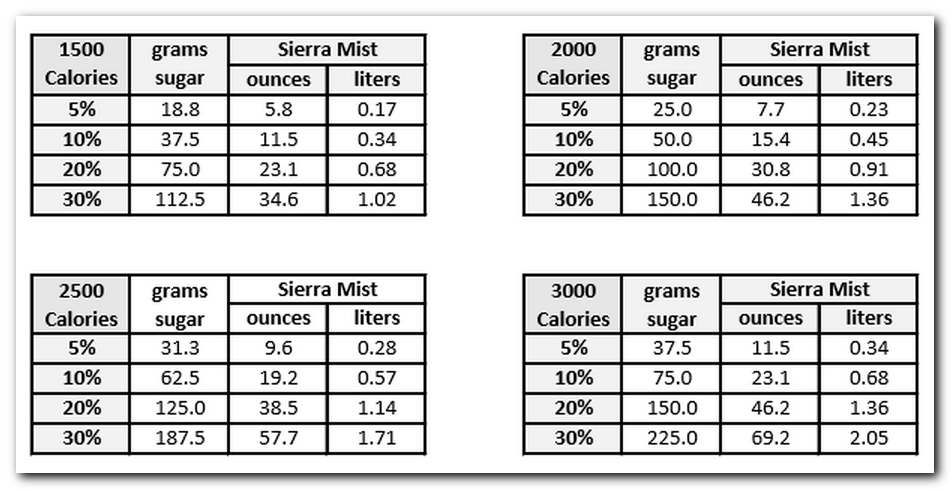
Context is important ... always.  But never so important, it seems, as when we're talking about fructose.  The vast majority of studies used to demonize fructose involve either: Very high doses, and/or An increase in energy intake or overall energy surplus Doing some math, let's use some 500 cal/day increments, a few percentage levels, and  a traditionally sugar sweetened beverage, Sierra Mist ( 26g sugar in 8 oz , or 3.25 g/oz).

Oh Rats!! II: Usefulness of Rat Studies & Unmotivated Fat Rats

Image
An important result was that motivation to lever press was impairednot only in food-restricted rats working for food reinforcement (sucrose), but also in water-restricted rats working for water reinforcement.  The non-specificity of the impairment suggests that the REF diet affected general mechanisms of motivation rather than those specific to the feeding behavioral system. Taken together, these findings lend support to the hypothesis raised by scientists [28,29] and journalists [30] that obesity may not be the result of impaired motivation (lethargy).  Rather, an obesogenic diet, such as that consisting of highly processed, refined foods, may induce obesity and disrupt motivational mechanisms of the central nervous system.   This hypothesis awaits further empirical  scrutiny and does not necessarily rule out the lack of will power as a contributing  factor to obesity. Three guesses who/what reference 30 is, and the first two don't count.  Oh my. ...

Oh Rats!! I: Usefulness of Rat Studies & Sugar Addiction

Image
Over the past several months I have fallen down more PubMed rabbit holes than I care to admit to ... and that's just for the Restriction Addiction book (which, by the way, I'm putting the finishing touches on for republishing the updated and expanded version). Research for that book was overwhelming at times because of the sheer volume of studies out there on food addiction, dopamine, food reward, obesity, eating disorders, etc.etc. A ton of them in rats. No ... my book is not a lengthy compendium with 1000 references. There are a few seminal reviews that illustrate key points. One of these is the following from Nicole Avena PhD. :   Evidence for sugar addiction: Behavioral and neurochemical effects of intermittent, excessive sugar intake.   The PDF for this is more like a mini-book, complete with sections and content navigation.  So when I was perusing the schedule for the upcoming New Age Paleo CONference and MLM Expo (aka PaleoFX) and saw her name among th...

Fruit Restriction isn't Paleo

Image
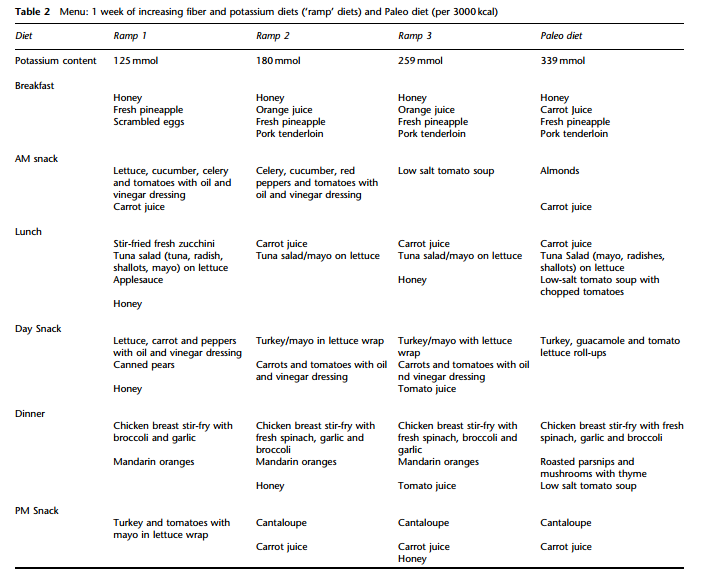
It's January 18th, and that means if you went with the packs, you are almost 2 weeks into your 21 Day Sugar Detox or, I believe, roughly half way through the torturous Whole30 ®  ... or maybe you took up Amy Kubal's invite to drag the paleo yo-yo out of sleeping dog with Robb's 30 day plan (upon which Whole30 is based). Ya know, if you don't think there's science behind paleo, just ask Robb!  He'll shoot you a Lindeberg or a Frassetto .  Let's look at that latter one for just a bit more than I did HERE .  The Frassetto paleo diet is an outlier in that all of the others ended up spontaneously reducing calories (~1400 to ~1900 cals) while this diet modestly increased calories from baseline to ~2700.   Furthermore, in Frassetto, total carb intake before and after the diet was roughly equal at around 250 grams per day.   They ramped up in three phases for 7 days and then followed the paleo diet for 10 days.  Here are the menus:

Sugar Addiction and Prelude to a Review of The 21 Day Sugar Detox

Image
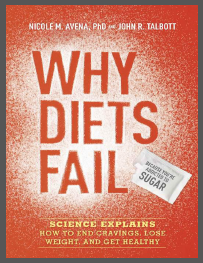
With apologies in advance for some tangent going ons ... As a popular paleo ( for marketing purposes  anyway) author released a paperback version of her 21 Day Sugar Detox this week -- yes, I'm talking about a $400-will-buy-you-a-certificate-that-says-so "holistic nutritionist" aka Certified Nutritional Consultant courtesy of 501c3 Bauman "college" -- I thought this journal article might be of enough interest to the inmates here to warrant a post. The plausibility of sugar addiction and its role in obesity and eating disorders

Why Fructose is NOT Like Alcohol

Image
Where did this come from? Beginning with his viral YouTube video (I won't link to it, every additional view is one view too many!), and continuing on, Dr. Robert Lustig has been making the claim that fructose is metabolized like alcohol by the liver.  You cannot make your misinformation more clear than to title a section in your book as Lustig did in Fat Chance --   Fructose versus Ethanol:  Pick Your Poison. Before Lustig, I don't think I'd ever heard anyone equate sugar to alcohol on a metabolic level.  A few may have made an addiction analogy, but it was Lustig who "taught" us the "science" that the liver processes sugar just like alcohol. It is shocking to me that his video was produced and distributed by an institution of higher learning as a "Mini Medical School for the Public" presentation.  This implies to me that the content has been somewhat vetted.  Apparently it has not been, and also, nobody within that establishment has...

De Novo Lipogenesis Again (and Science and Science Reporting)

Image
In my last post, I just posted a graphic taken from an "FYI" inset by a scientist, Marc Hellerstein, whose work I've blogged on quite a bit here. (Anyone wanting to refresh can click on the image and enlarge.)  One good post to begin with if you are not familiar with that name is Where do Triglycerides Come From? I would say that between Marc Hellerstein's No common energy currency: de novo lipogenesis as the road less traveled and the works of Eric Jequier such as Nutrient effects: post-absorptive interactions , the case that hepatic DNL is quantitatively insignificant in human energy balance/fat accumulation is strong and has not been refuted by some newer scientific findings.     I do hope to expand on the role of adipose DNL at some future point -- teaser: I have a paper showing that reducing WAT lipolysis upregulates adipose DNL and improves glucose homeostasis in the IGT irrespective of body weight  -- but adipose DNL had not been central to the argu...

Scientific Review of Lustig's Fat Chance

Scientific Review of Lustig's Fat Chance I don't often put blog posts up on someone else's works of this nature, but I'm going to make an exception because Mark Kern has done a thorough job of looking at some of the "science" Lustig puts forth in his book.  {I await the predictable dismissal ;-) }

Memes & Infographics

Image
I don't know how many of my readers do the Facebook thing here.  So called infographics (perhaps should be better termed disinfo graphics in most cases) and memes are big in that social media venue.  These have, IMO, both good and bad aspects to them.  They are a reflection of just what a sound bite world we live in, which on balance I believe is a bad thing because two things happen with sound bites -- effective summarization of a larger theme or camouflaging misinformation.  On the good side, and to the former point, many people are reached at an intellectual level more by visuals and short phrases than by a sea of text.   In any case, I thought I would share a couple of these here from time to time.  Many of these cannot be tracked back to an originator or are posted in "friends only" places so linking/attribution is difficult, so I won't be doing that here.  If anyone recognizes their work and would like attribution (or recognizes someone els...

What's wrong with food in the Incestral Health Community

Image
A little trifecta for you here of things are responsible for the evolution of the term "paleotard" through neolithic times and flourishing in the present.  Some examples of dietary dogma to chew on the next time you consider what foods are *OK*  to eat. Mark Sisson First up, the man himself, the guy with the advice column "Is it Primal?"  I've read these for years now and they seem to get evermore ridiculous.   I vividly recall reading my first installment before the IIP roundups became more the rage, a "Dear Mark" about buckwheat.    At first glance, buckwheat certainly looks promising . Unlike grains, it’s not a grass, but rather a flowering pseudocereal. The triangular seed from the buckwheat plant, called a groat, is harvested and can be milled into flour or used whole in cereals. Seed? Seeds work, right? Not necessarily. While I love most seeds for their high fat content and protein, they do have to be low in carbs to pass the test. ...

LIRKO vs. TWICHOO X.0

Image
from this study , image from this post It occurred to me as I was thinking again about LIRKO, that this little mouse not only countered TWICHOO 1.0, but it pretty much puts the lid on TWICHOO X.0.  This profoundly hyperglycemic and hyperinsulinemic liver insulin-receptor knockout mouse, is not fat.  Though not statistically significant, the trend is to eat a tad less, be a tad smaller, and pack on fewer fat grams  than controls.  But let's just call it a wash. For any newer readers, TWICHOO stands for Taubes Wrong Insulin-Carbohydrate Hypothesis Of Obesity.  Version 1.0 was that which was put forth in Good Calories Bad Calories .  In this version, Taubes put forth four ways by which the carbohydrate could promote obesity: 1.  Carbohydrates stimulate insulin which stimulates fat storage and/or traps fats in our fat cells so fat accumulates. This was pretty much the "lead singer" of his Barbershop Quartet singing the TWICHOO jingle.  ...

If you drink OJ, might it just as well be Orange Crush?

Image
I'm sure you've heard it many times -- fruit juices, even unsweetened ones, are still just glasses of sugar, and you might as well be drinking a soda or Tang (remember that?). According to nutritiondata.com, a cup of orange juice contains 21g sugars .  They don't "itemize" in the OJ entry, but if we look at the ratios  oranges we can calculate that of those 21g, roughly 11 g are sucrose, 4.5 g are glucose and 5.5 g are fructose.  Thus for each cup (8 oz) of OJ, you get around 11g of the dastardly fructose poison.  This is roughly the same as you would get in the same amount (small can!) of  orange soda .

Gary Debunks Taubes II ~ It's the Frucose Stupid, revisited

Image
Gary Taubes had a problem on his hands for his "Alternate Hypothesis" on the cause of obesity. While Why We Get Fat was in the writing stage, a couple of NIH biophysicists remained pesky thorns in Gary's side having challenged him on a lynch-pin of TWICHOO ( Taubes Wrong Insulin-Carbohydrate Hypothesis Of Obesity ).   Not to mention an equally pesky then-anonymous bunny-eared blogger who posted some pretty damning stuff on the subject , especially when she looked at his seminal reference on the subject from GCBC .  Downplay as he might, try to move on and have everyone forget, as he eventually relented and did, Taubes' original WWGF remains enshrined in the first journalistic effort on the topic: Good Calories Bad Calories . It wasn't all that long ago that people were shouted down in forums and comment sections of the low carb persuasion for daring to suggest that people could gain weight on low carb.  Remember the meme?  At least you won't gain weigh...

The Sugar Twins step in it ... or almost. Part I: Lustig Eats Crap

The Rock'em Sock'em battle of the gurus in Carblandia continued last week as both Lustig and Taubes took to the media airwaves.  I'll now call them the sugar twins because ultimately both hinge their arguments on sugar/fructose.  Lustig says that because fructose is converted to fat in the liver, sucrose is the one food on the planet that is both fat and carb together and that makes it fattening.  That combo is particularly insulinogenic and insulin blinds your brain to leptin so you don't know when to stop eating cheesecake.  Taubes is making his last stand at TWICHOO Bunker Hill by saying that all the bad things he's been telling you for years about carbs -- fat cells going wild, spontaneous horizontal growth spurts, starving cells, etc. -- you may be spared of this forever and eternity so long as you never bathed your liver in fructose.  Fructose causes insulin resistance and sets the wheels in motion for fat accumulation.  Both (misguided) positions hin...

The Men Who Made Us Fat

Image
Here's the YouTube playlist for the whole thing: The Men Who Made Us Fat    Jacques Peretti A few questions/comments: 1.  Does bread today have more sugar in it (corn syrup), than breads of yesterday?  Talking hamburger buns.  How or why would adding corn syrup to rolls make them last longer as Peretti claims? 2.  Are soft drinks the largest single source of calories in the American diet?  How do we define "source"... 3.  If HFCS (55% fructose/45% glucose vs. 50-50 for sucrose) is sweeter than sugar, is it true what Lustig claims?  If sweeter they should use less in substitute.  Lustig claims they use more.  True?