Posts

Showing posts with the label Diet Comparisons

SuperStar(ch) -- Or does something stink here?

Image
image link UPDATE 8//23/2021 The company class action law suit regarding scientific claims made about this product. UCAN Class Action Suit I wonder if Peter Attia will get any payout?  LOL ORIGINAL CONTENT published 11/19/2012    How on earth did SuperStarch fly under my radar?   Thanks to Lerner, I was made aware of the connection between Jeff Volek -- of nutty ketosis and Atkins Nutritionals fame -- and the UCAN Company marketing a new type of sports drink containing SuperStarch (TM and all that near as I can tell, though the term is not unique to the company).    When I think of SuperStarch, the image of Molly Shannon's Mary Katherine Gallagher character from SNL just popped into my mind complete with her "superstar" exclamation.  Suparstarch(aching?)  Methinks so! The bottom line of what I'll abbreviate as SS, is that it is supposedly better for performance -- presumably specifically in endurance activities -- because it effectively ...
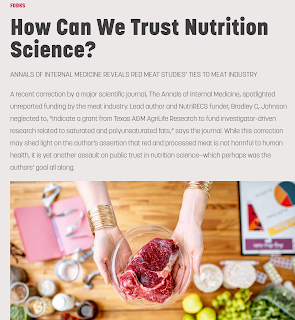
What's the Problem with Nutrition Research? Is it True Health Iniative or NutriRECS?

Image
Hello World .. and anyone still reading this blog!! Yes, it's been forever.  I've been generally pretty well.  Knocking about on social media (Facebook and some Twitter) ... occasionally getting the urge to blog, write something, get to 80% then lose the mojo.   What has turned into a long hiatus wasn't planned, but it happened due to running out of steam and still seeing the same old, same old.  I may or may not discuss more at some point, but if I don't just jump back in and blog, I probably never will again! And so, with that said ... 𐩘𐩘𐩘𐩘𐩘𐩘𐩘𐩘𐩘𐩘𐩘 The following editorial in JAMA has been making the rounds on my Facebook feed, and I have a bit of a different take and reaction to it ... one that comes from roughly a decade now of delving into dietary recommendations wars from where I "stand". The Editorial:   Backlash Over Meat Dietary Recommendations Raises Questions About Corporate Ties to Nutrition Scienti...

The $12M NuSI/Ludwig Study ~ Part V: Intake, REE and TEE Measures

Image
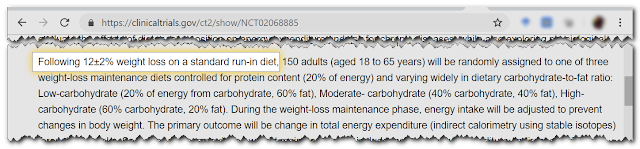
S ummary: Continuing on with discussion of:   Effects of a low carbohydrate diet on energy expenditure during weight loss maintenance: randomized trial Previous posts in this series: Part I: Critique of the Study Design Part II: $12 Million for 12% Weight Loss? Part III: Some "Early" Lessons Part IV: Insulin Resistance Does Not Hamper Weight Loss This post should perhaps have come first, but it has taken a while to look deeply at the data for the primary outcome -- total energy expenditure measured by doubly labeled water -- and related outcomes of intake and resting energy expenditure. In this study, all participants were paid to participate, AND provided free food for ~8 months.  Said food was professionally and meticulously prepped, weighed, measured, individualized to provide each subject with some pretty exact caloric level and macronutrient composition.  The test phase (in other words, the study proper) involved maintaining a consiste...

The $12M NuSI/Ludwig Study ~ Part IV: Insulin Resistance Does Not Hamper Weight Loss

Image
       C ontinuing on with discussion of: Effects of a low carbohydrate diet on energy expenditure during weight loss maintenance: randomized trial No summary for this post.  Here are links to earlier parts in this series: Part I: Critique of the Study Design Part II: $12 Million for 12% Weight Loss? Part III: Some "Early" Lessons :   In this most recent post, I discussed the relationship between measures of insulin (both fasting and 30 minute OGTT response) and weight loss during the Run-In Phase.  

The $12M NuSI/Ludwig Study ~ Part III: Some "Early" Lessons

Image
S UMMARY Continuing on with discussion of: Effects of a low carbohydrate diet on energy expenditure during weight loss maintenance: randomized trial In Part I , I discussed some issues with methodology, mostly focusing on the reduced Run-In Phase that likely compromised the outcomes irreparably. In Part II ,  I highlighted a serious issue with the Run-In Phase, the purpose of which was to produce a somewhat homogeneous "reduced weight state" to test various diets in maintenance of that state. Ultimately,  randomization to the various test diets occurred after weight loss (PWL) all subjects lost weight on the same 45% Carb / 30% Fat / 25% Protein diet targeting a weight loss of 12% ± 2% initial body weight. The researchers do not appear to have made many adjustments in the weight loss phase to produce a more uniform weight loss.   Rather than 12% ± 2%  (from 10% to 14%)  losses, the actual outcome was roughly 10.5% ± 5% (actual ...

The $12M NuSI/ Ludwig Study ~ Part II: $12 Million for 12% Weight Loss?

Image
U PDATE:   12/17/2018      Original Posting: 12/3/2018    During the writing of a new installment in this se ries, I revisited the following paper: A randomized study of dietary composition during weight-loss maintenance: Rationale, study design, intervention, and assessment Yes, folks, so full of themselves were these researchers, that they felt the need to write an entire paper (submitted approx. one year in advance of the "real study") outlining their amazing study. Regarding this post, focusing on the OUTRIGHT FAILURE TO IMPLEMENT THEIR STUDY DESIGN AS STATED , I stress the following from the previous paper. ONCE AGAIN, the stated goal of the weight loss run in is 12% ... not 10 or 5 or 15 or whatever ... 12%.  I'm just going to quote the relevant part here (cleaned of references, etc. and formatted for readability, all emphasis mine) Energy intake was restricted to 60% of estimated needs to achieve a target weight loss equ...

The $12M NuSI/Ludwig Study: Part I: Critique of the Study Design

Image
S UMMARY The results of the $12 Million Dollar NuSI-sponsored study, headed up by Dr. David S. Ludwig, are finally out.   Effects of a low carbohydrate diet on energy expenditure during weight loss maintenance: randomized trial While the good doctor is making the rounds touting them as evidence in support of the Carb-Insulin Hypothesis (TWICHOO in these parts), a review of the raw data made available to the public casts grave doubts on his victory lap.  This study built upon the "promising" results of the 2012 study:   Effects of Dietary Composition on Energy Expenditure During Weight-Loss Maintenance    This post focuses on comparisons of Study Design between these two studies, some improvements, and the ultimate failure that renders the primary outcome data suspect, if not outright useless.  (And I don't say that lightly!) Improvements: Study size Length of time on one test diet (20 weeks) vs. 4 weeks crossover on each...

Thoughts on Obesity as "Disease" or Choice ~ Part 1: Smoking & Lung Cancer Analogy

Image
R ecently (May 2018) comments about obesity at a Pediatric conference have made the rounds. Specifically: Obesity Is a Disease, Not a Choice, Experts Advise .  Here is link to the full text in   "print version" . The AMA classified Obesity as a disease in 2013. Five years later we've made little to no progress, likely because we've got "experts" pontificating and arguing over semantics and false dichotomies.  The false dichotomy of Disease vs. Choice is right out of whatever master playbook teaches that if you keep the "masses" arguing, they might not notice you're full of it.  It's really the only explanation I can think of for the circular arguments made with nary a tinge of irony on board straight faces. I have a bunch of stuff in the draft pile here on this topic, but cannot seem to organize it. I decided to start a series.  In no particular order.    This installment deals with the following statement from the 2013 R...

Mind over Milkshakes!

Image
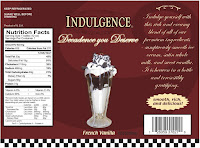
This post was prompted by yet another discussion on Facebook involving cravings and hunger and the supposed magic of keto/LC in fixing this aspect.   As the thought process goes:  it's not about calories (even if they count), it's about how the food impacts us that causes us to eat too much (or just enough).   A hat-tip to Melanie (Mac Smiley) who sent me this study almost three years ago!  TL,DR Summary:   Same people, different days, same shake, different labels.  Hormonal response differed based on expectations.

The Manhattan Project of Nutrition That Wasn't

Image
W ith publication of the results of the second of the "Original 3" NuSI funded studies, I'm finally getting around to publishing up this post (and perhaps a second one shortly) regarding the Nutrition Science Initiative (NuSI), founded in 2012 by Peter Attia, MD and "science journalist" Gary Taubes. Bottom line ... for NuSI, it was "all over but the crying" a couple of years ago now. 

Dietary Energy Density and Incidence of Diabetes in the Women's Health Initiative

Image
Summary: In the Women's Health Initiative, a 2017 analysis of the energy density of baseline diets, stratified to quintiles, revealed several correlative components of an energy dense diet (comparing the top quintile (Q5) to the bottom (Q1).  The energy density, in kcal/gram of food, nearly doubled in Q5 vs. Q1 corresponding to a nearly 50% increase in caloric intake.  The dietary components correlating with this are: Fat:  Fat content is by far and away the greatest contributing factor to consuming an energy dense diet.   Absolute intake more than doubled (2.5X) from Q1 to Q5, and comprised roughly 90% of the increased caloric intake. Animal Protein:  As protein intake from plant sources remained relatively constant, animal protein intake increased by 40% resulting in an increase in total protein of 25%.  Therefore animal foods are a considerable contributor to increased energy density of the diet. Added Sugars:  Added sugar comprised 11...

Maybe the Solution Lies in Making the Food Industry Our Friends

Image
I n our current times of rising obesity and chronic disease rates in the developed world (and spreading globally), I see a handful of "usual suspects" upon which the phenomenon is blamed: The food industries Governments and guidelines The entertainment industries  The general health and beauty industries The diet and fitness industries  By far and away, in no particular order, the two at the top of the list shoulder most of the blame.  You know the story by now.  Ancel Keys .... McGovern Committee ... Low fat dietary guidelines ... we got fat because CARBS and INSULIN!!!

The Insulin Paradox

Image
I think this post has needed a bump for a while.     I also think the data on growing animals eating a keto diet should be cause for at least caution in encouraging such diets for kids, teens or even young adults. ORIGINAL POST DATE 3/20/2012 One of the more difficult things to sort out from the enormous amount of information out there is the actual effect, if any, of dietary composition on resulting body composition.  This is complicated from the get-go by many rodent studies that are done on reproductively mature animals that are still growing.  How to compare this to humans who cease growing vertically once they reach adulthood?  Next we have to sort through the studies that are done, and the implications of them, in the context of weight loss/underfeeding vs. those in the context of weight gain/overfeeding.  Clearly there are compensatory mechanisms at play in both situations that are drastically different.  Lastly, and here's where we probab...

Productive Why-ning

Image
SUMMARY: Back in the early days of the Asylum, there was a commenter who repeatedly fixated on "why do we overeat".  Eventually I coined the phrase "why-ning" for this questioning. This post is about how seeking external whys in the scientific literature is most likely a futile effort.  Science can provide easy answers, it turns out, to how to eat to normalize weight.  Putting that into practice in the *real world*, is a whole 'nother issue!!! If you struggle with weight ... if you're putting all manner of effort in anyway ... this post is a suggestion to alter your "why-ning".  From unproductive questions of why, to more productive, individual and personal questions of yourself as to why. It is emotionally incorrect these days to acknowledge that for many, adult obesity is, indeed, a lifestyle choice.  It may not be conscious.  It may not have started out that way (e.g. if you have always been obese).  Nonetheless, it is far more within o...

Is Metabolic Adaptation Real? Study 1 of ?

Image
I am ( STILL ) working on a comprehensive post addressing "The Biggest Loser Regain" study and fallout.  But as I was going along the way, I'm finding some gems that really just need posts of their own.  This is one of them.  I'm also going to do my best to clean out the draft bin for the remainder of 2016!     [If you haven't seen the previous entry referencing this topic, here is a link .  If it is some time past the publish date of this current post, this link should be active for the TBLR post.]

The #LCHF Weight Loss Industry & Evangelizing Low Carb

Image
I recently stumbled across this video.   It's a tough watch, but *this* epitomizes ALL that is wrong with the low carb weight loss industry.     For starters, diet really is religion for these folks as this get-together, marketing stunt for Dr. Eric Westman's HEAL Clinics/care, was held in a church.  There was prayer, there were references to God, and a collection, and paying it forward.   If you can't stomach too much of it (I don't blame you), I'll list a few time-stamps.  If anyone cares to give time stamps for various gems and ridiculous claims, please do so in comments! 11:35 Prayer ... 17:25 Melanie Miller takes the stage ... 17:33 Introduces Dr. Mark Cucuzzella ... 20:36 Dr. Mark speaks, thanks Jimmy Moore, talks about the movement, calls obese people in audience paradoxes! ... 23:30 Dr. Mark shares analogy that losing weight is like holding a beachball under water, don't try to hold it too far down!  ... 30:00 Success Story parade up on...

Should we worry so much about preserving "Lean Mass" in people who got obese on the SAD?

Image
A few years ago now, researchers led by George Bray of Pennington did a classic overfeeding study, to interesting result.  I blogged on that study in some depth here , but I'll include a brief summary now: Metabolic ward study Determined weight maintaining caloric intake over a period of 13-25 days on a standard diet P/F/C% of 15/25/60% The average maintenance calories for all participants was 2414 cals.  Overfed ~40% of calories or ~950 cal/day for 8 weeks. Carbs in the overfeed were slightly less than absolute amount at baseline, and were 40% of total overfeed calories. Total caloric intake for overfeed averaged 3375 cal/day, where excess calories came from fat and protein only.  The macro ratios of the overfeed diets in P/F/C% were: LP-6/52/42, NP-15/44/41 and HP-26/33/41. Below is the summary table I made for the calories and absolute quantities (grams) of the three macros:

Nina Teicholz Reports in the British Medical Journal ~ The Conflicts & Funding

Image
BUMP! In working on a follow-up to  The Slimey Truth About Sugar Slammers ~ Links & Background , I've received a few tweets that reminded me of this post from almost exactly a year ago.   Eventually we got answers to the questions below, and those will be discussed in the follow-up.  People are going bonkers over a pittance split between three scientists 50 years ago who published an article in a *professional* *peer-review* journal.  This was done at a time when such journals would publish articles countering and debating the findings of previous articles.  So in the intervening years it is the sugar industry that is solely responsible for confusing people?  I am not carrying water for that or any industry here, but I don't think so! This article came before some answers were unearthed by yours truly in  Nina Teicholz, The BMJ, The Nutrition Coalition and nutrition science's George Soros: The Laura and John Arnold Foundation .  Spe...

Recent Podcast Appearance!

Hey all!  Last week I had the pleasure of being a guest on two podcasts.  Will let you know about the second one when it comes out, but for now, I was on the Revolutionary You podcast with Jason Leenaarts.  We chatted about all things carbohydrates and a bit of other stuff.   I met Jason through the fitness peeps I hang out with on Facebook, and actually had a chance to meet him in person at his studio in the Cleveland area a few weeks back.   Just a heads up that the part about medium chain fatty acids was edited together nicely by Jason, but sounds a bit choppy because my headset cut out in the middle of the first response.  So I wasn't sure exactly where it happened, tried to repeat some of it, and got my words mixed up.  When you consume a fat like coconut oil, with a lot of medium chain fatty acids, those dietary fats are preferentially burned as they are not usually incorporated into chylomicrons   (12C lauric is somewhat of a...

Serving Sizes and Visual Schemes

Image
A bit of a random thought post ... one I meant to make at the time, but got distracted.  I've talked a lot about the USDA Food Pyramid, and less so about My Plate, both of which are intended to "translate" dietary recommendations to a visual form.  In this regard, My Plate is a great improvement, but still lacking.   I don't wish to rehash the whole guidelines again in this post, but I believe if certain foods were "properly" classified -- e.g.  potatoes and corn grouped with the grains/starches -- the recommendations are hardly radical.  If Americans actually followed them as intended, we wouldn't be in this pickle, but we don't, and we are. Here is the original food pyramid