Posts

Showing posts with the label Thermogenesis/TEF

Calories ...

Image
B ump! One would think that the calorie or energy-balance denialists would have gotten a clue by now, but apparently this post needs bumping.   If you make it through this post and still believe calories are some non-entity, that somehow insulin or any hormone can trump energy balance, I don't know what to say. Original Post Date July 1, 2013    Calories ... ... or joules or ergs or foot·lbs or BTUs or eV or ... These are all the same thing folks.  They are all units of energy. That we use different terms in different contexts doesn't mean we are talking about different things.  It's like different languages, be it vida or leben or liv or  อายุการใช้งาน  ... they all mean life. The bastardizing of basic science in the Paleo and LLVLC realms is both ubiquitous and unrelenting.  This is what prompted me to start this blog.  I could really care less about the diet fads that come along that are obvious quackery, but this ...
The Latest Metabolic Adaptation Study

Image
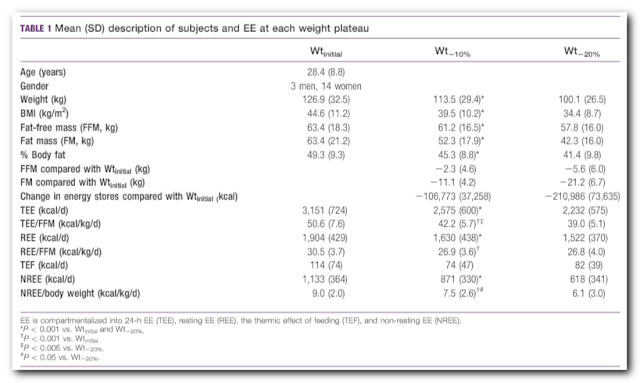
A quick post here just to get it out there, and I'm already a couple weeks behind the curve.  Oddly haven't heard too much about this, or perhaps it's because I've lost the will to deal with the community that would jump on this?  Who knows :-) There is a new NIH funded study out of Columbia (Rosenbaum & Leibel) published this month:   Models of Energy Homeostasis in Response to Maintenance of Reduced Body Weight I'm going to limit this post to just one of the three experiments conducted: In 17 subjects (14 women, 3 men) weight stable energy expenditure and body composition  was determined following a period of 6-8 weeks of weight stability.  They were then put on an 800 cal/day diet until they had reduced their weight by 10% of initial weight.  This took 7-13 weeks, after which their food intake was increased to achieve weight stability at the 10% reduced weight for 6-8 weeks.  Energy expenditure and body composition were measured her...

Women, Athletes & Calories -- Does Tara Lipinski Eat Enough?

Image
Yes. Blogstress Note:  This post has been brewing ... in my head and in the Blogger draft, for a few days now.  This issue really hit a nerve, but every time I started writing, things got even longer than my usual.    I didn't want it to be unmanageably long, but I also didn't want to start a whole series.  I think I may have found a way to cut this to two somewhat manageable parts, without straying too far off of blog topic. This will be a departure from normal events here, and yet ties in with topics I discuss with some degree of regularity, both in general and within the IHC:  Calories and Eating Disorders. click to enlarge Part I will deal with Calories Part II will deal with Eating Disorders This is going to be female-centric.  Sorry male readers! Without further ado: Yes, something got under my skin the other day on Facebook, and since this is my major outlet for sharing thoughts, I'm blogging about it here.   Apparen...

The Second Law in Classical vs. Chemical Thermodynamics

Image
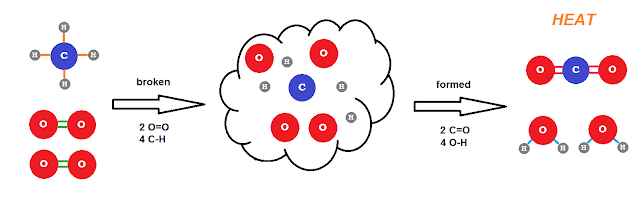
I have blogged quite a bit about how the concept of entropy and heat evolution have been erroneously equated. I'm not going to rehash that here, but rather set that aside and look at how the perspective of the Second Law of thermodynamics can lead to another misconception regarding the loss of energy.  Classical Thermodynamics  Here is a formal definition of thermodynamics . It is the most literal and narrow one I could find. It applies pretty specifically to systems like a combustion engine, where heating a gas causes it to expand, and this expanding gas is contained in such a way as to do mechanical work by moving an object (in an engine this object is the piston). When fuel is combusted, an amount of heat is released equal to the difference between the chemical potential energy stored in the bonds of the reactants and the products. We can think of this "heat in" or "energy in" to the gas.

The Second Law of Thermodynamics in Humans: For Heat's Sake!

Image
On the urgings of a few commenters here on the blog, and even more recently , by Don't-Call-Him-John (Kiefer), I've found myself reading Biological Thermodynamics by Donald Haynie (2nd edition).  [It's #1 on this  Amazon Search  page, just for context that there are others out there.] After reading large chunks of the book -- had a lot of time on my hands without internet access these past couple of weeks -- it has become even more clear as to where some of the biggest misconceptions about thermodynamics in this community come from.  It is not that Haynie is incorrect, however.  There are many statements in the book that read as "off", but on second or third pass through are technically accurate provided one is using his definitions in proper context*.  It is more that his book is so filled with examples that lack relevance to biological contexts as to cloud the picture.  What results is that although somewhere in the text all the relevant "prer...

LC Blogger Answers the Question: Are Alcohol and Carbs Fattening? Part II

Image
Part I Fattening Things: (It's been a little while, sorry) ... Before continuing (and completing) this discussion, let me preface this post by saying that there is no single food or macronutrient that is inherently fattening in and of itself.  For any food -- let's say pizza because that is blamed quite often -- you can find obese people that are not big fans, and you can find bean poles who basically live off of the stuff (and wash it down with Coke).   But I do believe certain foods have demonstrated themselves to be problematic for a large enough proportion of the population so as to be designated:   potentially fattening . Try as some may to rationalize against it, the bottom line is that if you eat too much of anything, the body's long term storage facility for that is fat tissue.   Your most potentially fattening foods, therefore, are: Those (generally fat + carb combos) highly palatable foods that are easy to eat a lot of in and of themselves...

Heat, Entropy & Thermogenesis

A summary post of ideas here, that I've likely stated elsewhere on the blog but wanted to gather in one place.   Last week on Facebook, to the detriment of his credentials and credibility, Jason Boehm posted and deleted a post about calories and the Second Law of Thermo.  I queried what it had to do with the original point which was more of a 500 cals spinach vs. 500 cals Coke type nonsense, so he did address that in a second FB post that stands (minus lots of relevant input from people he deleted , labeled hateful and pretty much had a kitten over  ... nobody called him a moron BTW, that's a clever tactic of those that can't hold up their end of an intellectual debate on the science ... can't leave the self-incriminating evidence).   But I digress.

Quantum Bullshit

Image
I don't follow Jack Kruse's antics much any more.  Every now and then, however, he comes up in a social media or email note.  He's still at it -- though there is no longer an answer at his practice phone number, so hopefully that means he's no longer actively performing neurosurgery.  From a Krusite on FB :   Humans are designed to eat an electron dense diet because they have a shortened gut and expanded brain that steepens their energy needs and restricts their sleep needs to 7.5- 8.5 hours. This implies that humans must have evolved around a diet high in electron density from food and their environment. It is hard to believe Jack has been talking this electron nonsense for going on two years now.  I suppose this is what happens in a community that fails to police itself when it comes to science ... but I digress. In any case, I have apparently missed the first however many incoherences Jack has created in his EMF series but since he's still on the ...

A Fein(man), Fine Mess of Thermodynamics

Image
I was truly baffled beyond all bafflement (is that a word?) that Feinman & Fine wrote  "A calorie is a calorie" violates the second law of thermodynamics , let alone that it passed the peer review process to be published in any reputable journal.  In the abstract they write: Here, we propose that a misunderstanding of the second law accounts for the controversy about the role of macronutrient effect on weight loss and we review some aspects of elementary thermodynamics. Here I propose that it is their apparent misunderstanding of thermodynamics, as put forth in this "study", that accounts for most of the gimmickry surrounding low carb diets in the community.  In the section entitled  "Thermodynamics" , they write:

Cold Adaptation, BAT & Thermogenesis

Lerner posted a link to this study in comments on another post:   Cold-Activated Brown Adipose Tissue in Healthy Men .  A small part of the study where they looked at BAT activity for the three subjects with the most BAT under neutral thermal conditions caught my eye, and I think this is central to some of the confusion Kaptain Konfusion has introduced into this whole discussion.  They tested all subjects lying on their backs in a chamber, first for one hour in thermoneutral temp, next for 2 hours at 17C.  For three subjects they retested in thermoneutral temps for the entire time.   There was no detectable brown-adipose-tissue activity in the three subjects who were retested under thermoneutral conditions. Brown-adipose-tissue activity was recorded in Subject 2 at 856.5 kBq during exposure to cold and 0 kBq in thermoneutral conditions, in Subject 3 at 587.2 kBq during cold exposure and 0 kBq in thermoneutral conditions, and in Subject 4 at 250.0 kBq during...

Some thoughts on cold exposure

Richard Nickoley/Free the Animal has posted a follow-up post entitled  Cold Therapy and Adaptation and Ray Cronise .  Although he comments a few times, this comment  addresses Ray's thoughts on it all.  So far I see no need for a warning label on this one ;-)  In any case, Ray presents some excellent information on the topic and I urge my readers to go take a look before diving into the icy water and trying to work up to hours on end in same.  For my part, after reading Ray, I think I may well get an inflatable pool and some pool dumbells and such and put it up in the back yard to exercise in this summer.  There's a town pool here, but if I have to drive somewhere I know compliance suffers, and although I have access to facilities where I work, no student gets to see me in a swimsuit!! I admittedly don't know much about Ray as, in all honesty, I've only recently heard of him and Wim Hof what with all the recent buzz.  But he sounds knowledgeable ...

Of Mice & (Wo)Men: When's the last time you saw an 5'4" 130 pound fat woman?

Image
I'm always amused when a rodent study that seemingly counters the calorie-based theories on obesity comes down the pike.  In predictable fashion, someone in the LC webosphere will pick up on it and use it as an example to counter calorie-based theories on weight/obesity.   A recent example of this is brought to us by low carbers' favorite comedian edutainer, Tom Naughton:  Fat Mice & The Laws of Thermodynamics  that referenced the following study:   Mild calorie Restriction Induces Fat Accumulation in Female c57BL/6J Mice .   Now Tom starts out misrepresenting things by picturing a fat mouse, likely an ob/ob.  This study actually involved females of the strain pictured below: Kind of a cute little critter, no?   The study was also conducted in the context of calorie restriction and its demonstrated increase in longevity of mice.  They are not a mutant strain genetically predisposed to obesity.

Insulin Wars VIII: Adam Kosloff of Low Carb Survivor's Guide

Let me start by saying I never heard of this guy.  But wonder, if LC is so great, why would one need a "Survivor's Guide"?  But I digress. This is my latest installment in response to Jimmy's roundtable of "experts"  on James Kreiger's series on insulin;   “Insulin…an Undeserved Bad Reputation” ,   Part 2 , Part 3 ,   Part 4 ,  Part 5 . Kosloff starts out with a long "preamble" directed to James as if he were corresponding with him.  I am not privy to their interactions and will defer to James to discuss this part when he has the time to draft his own rebuttals.  I will comment on my observation that Kosloff seems to come at this from the viewpoint of having bought into the carbohydrate hypothesis hook line and sinker, and basically he disagrees with "calories count".

Of Thermodynamics, Complexity, Closed Systems & Equilibrium

Image
In light of this recent post , I've been thinking more and more again on this topic.  And when Adam Kossloff liberally quoted from Entropy Production's author Robert McCleod's rebuttal to rebuttal or whatever in the Taubes/Bray dust-up, I just had to weigh in on this.

The First Law of Thermodynamics

I've been fighting off a cold so begging off housework in favor of goofing off at my blog today.  Lots on my mind so I've been rather prolific! I get tired of hearing this misstated time and again by both people who should know better and those ill equipped to comment on such matters, but who do anyway.  I'll abbreviate The First Law of Thermo as TFLOT. Calories In = Calories Out + Energy Stored is a fact.  This boils down to simple conservation of mass in the end as I discussed in a bit of a rambling post HERE .    From hereon out I'll use CI and CO for calories in and out respectively.

Metabolic Advantage, Obesity and Eric Jequier

Image
Since I had the whole metabolic advantage thing on my mind writing my last post, and "Anonymous LC Author" mentioned Feinman and Jequier, I was reminded of something that's bothered me for a while now regarding citations of Jequier's work.  A calorie is a calorie violates the second law of thermodynamics  argues for the potential of a metabolic advantage in low carbohydrate diets.   Oddly enough, they ultimately make a first law argument for the MA, but that's a subject for another day. It was this paper that introduced me to the work of Eric Jequier after which I stumbled upon the subject of my most popular post to date, Nutrient Fates after Absorption  referencing this Jequier paper:   Nutrient effects: post-absorptive interactions .  But the Feinman & Fine paper cites a different Jequier paper to which the TEF values of macronutrients can be ubiquitously traced in LC circles.  That paper being:   Pathways to Obesity .   S...

Nutrient Fates after Absorption

Nutrient effects: post-absorptive interactions BY ERIC JEQUIER    (1995) After a meal, the metabolic fuel selection at the whole-body level depends on the plasma concentrations of nutrients such as glucose, non-esterified fatty acids (NEFA) , amino acids, and on hormonal responses. Over the last 10 years, there has been great interest in studying the metabolic effects following the ingestion or the intravenous (i.v.) infusion of the three macronutrients, carbohydrate (CHO), fat, and protein (or amino acids for i.v. infusion). The aim of the present brief review  {I'm thinking it's not so brief!}  is to summarize the main mechanisms which determine the post-absorptive interactions between the nutrients. This is an older paper, but still recent enough to provide some good info on the basics.  I'm going to do something a bit different with this one and I otherwise would be quoting huge chunks.  So I'll do bullet point summar...

Brown Fat and the MYTH of Diet-Induced Thermogenesis

Brown Fat and the Myth of Diet-Induced Thermogenesis INTRODUCTION:  The concept that brown adipose tissue (BAT) is a thermogenic tissue initially came from morphological changes in the tissue when animals were exposed to the cold (Smith and Horwitz, 1969). The physiological basis for the enormous capacity of BAT for heat production during cold exposure awaited the ingenious application of radiolabeled microspheres to measure blood flow in BAT and other tissues (Foster and Frydman, 1978). That production of heat occurred by uncoupling mitochondria was firmly established with the elegant experiments of Nicholls on physiology of BAT mitochondria and Ricquier’s identification of a unique cold-inducible protein in the mitochondria of BAT (Nicholls and Locke, 1984). The presence of large amounts of differentiated BAT in human neonates and species like sheep that require active thermogenesis at birth to protect the n...

Effects of aerobic exercise and dietary carbohydrate on energy expenditure and body composition during weight reduction in obese women

Image
Effects of aerobic exercise and dietary carbohydrate on energy expenditure and body composition during weight reduction in obese women My Summary: Subjects:  23 Obese (44 +/- 4% BF), Healthy, Premenopausal Women (Range 21-47, late 30's on average)  Compared:  Two diets -- one low fat LF , one low carb LC,  and Two exercise states -- one aerobic EX, one no exercise  NX -- Four groups were compared LF/NX, LF/EX, LC/NX, LC/EX. Study Length:  12 Weeks of weight loss, preceded by 5 weeks maintenance (MI), and followed by 6 weeks maintenance (MII). Diets - Carb/Protein/Fat:  Maintenance - 45/20/35 ; LC - 25/25/50 ; LF - 60/25/15  It is worth noting that the LC vs. LF comparison kept protein constant.  The caloric content of the reducing diets was individualized to each participant to be ~75% of measured RMR. Exercise:   3X/week, 45 minutes = 15 min on each of three different cardio machines, 60-65% VO2max Measured:  Changes ...

Postprandial de novo lipogenesis and metabolic changes induced by a high-carbohydrate, low-fat meal in lean and overweight men

Postprandial de novo lipogenesis and metabolic changes induced by a high-carbohydrate, low-fat meal in lean and overweight men Background: Adjustments of carbohydrate intake and oxidation occur in both normal-weight and overweight individuals. Nevertheless, the contribution of carbohydrates to the accumulation of fat through either reduction of fat oxidation or stimulation of fat synthesis in obesity remains poorly investigated. Objective: The objective of this study was to assess the postprandial metabolic changes and the fractional hepatic de novo lipogenesis (DNL) induced by a high-carbohydrate, low-fat meal in lean and overweight young men. Design: A high-carbohydrate, low-fat meal was administered to 6 lean and 7 overweight men after a 17.5-h fast. During the fasting and postprandial periods, energy expenditure (EE), macronutrient oxidation, diet-induced thermogenesis, and serum insulin, glucose, triacylglycerol, and fatty acids were measured. To determine...