Posts

Showing posts with the label MCT's

If Fat Doesn't Make You Fat, Explain Tokelau vs. Pukapuka

Image
In light of the recent brash of coconut oil articles following the Dietary Fats and Cardiovascular Disease: A Presidential Advisory From the American Heart Association , I thought I'd bump this post.  Of course all the coconut oil advocates are up in arms over this.  Mind you, coconut oil is the most nutritionally bereft oil out there ... "empty calories".  This post discusses a study in the Sixties on two Atoll island populations that live in virtually the same environment, etc. but with nearly opposite diets in terms of total fat content, where the majority of fat comes not from coconut oil, but the more nutrient dense coconut meat and embryos. One Line Summary :   The increased fat content in the Tokelauan diet correlates in increased adiposity in this population as compared to nearby Pukapuka.   While the cited study abstract says the following: Vascular disease is uncommon in both populations and there is no evidence of the high saturated fat i...
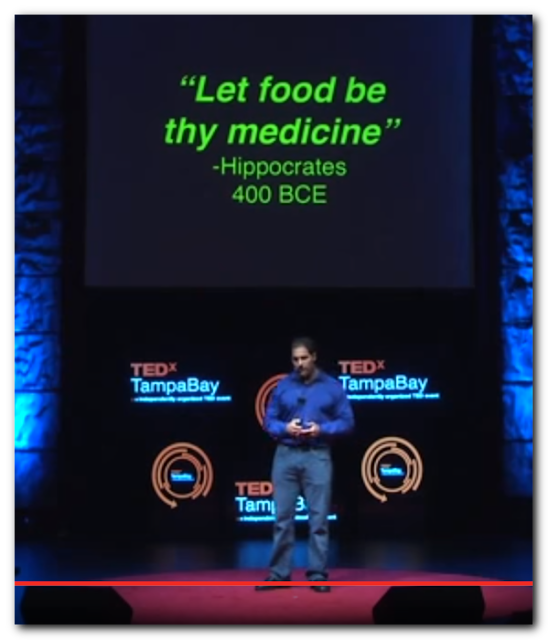
Ketones: Not Hippocrates' Food

Image
If you've circulated in the realms of nutritional science or sorcery for any length of time, you've probably heard the phrase ... Let food be thy medicine and medicine be thy food ... enough for it to have long past turned to the point of cliché.   Whether or not it was actually said by Hippocrates notwithstanding, you've probably seen it misused as often as it is appropriately applied.   This post is about its misuse in the image below. Starving cancer:  Dominic D'Agostino at TEDx TampaBay Screenshot

Empty Calories

Image
How many times a day does a regular about the nutrition internets hear this term?  One, two ... a dozen?  In this community, it is often carbohydrates that are slapped with this tag.  I find it ridiculous to label a class of molecules as "empty" with no mention of the context in which they are found and consumed.  It is also rather warped that most of the residents of relatively wealthy countries view calories for the sake of the life sustaining energy -- so that the body doesn't have to cannibalize itself -- in a negative light.   Does anyone really think paleolithic humans thought about whether their food came with an appropriate density of vitamins and minerals?  Of course there would have been little opportunity for them to consume such foods ... those are processed/refined foods.  I also cannot envision our ancestors passing up starchy plants to consume non-digestible fibers, but that's a topic for another day.

Does Coconut Oil stimulate appetite?

A comment I read on PaleoHacks led me to this article on Livestrong:  Does Coconut Oil increase your appetite?   It cites the following study:  Ingested Medium-Chain Fatty Acids Are Directly Utilized for the Acyl Modification of Ghrelin . ABSTRACT: Ghrelin, an acylated brain and gut peptide, is primarily produced by endocrine cells of the gastric mucosa for secretion into the circulation. The major active form of ghrelin is a 28-amino-acid peptide containing an n -octanoyl modification at serine that is essential for activity. Studies have identified multiple physiological functions for ghrelin, including GH release, appetite stimulation, and metabolic fuel preference. Until now, there has not been any report detailing the mechanism of ghrelin acyl modification. Here we report that ingestion of either medium-chain fatty acids (MCFAs) or medium-chain triacylglycerols (MCTs) increased...

Fatty Acid Contents of Foods: Butter & Coconut Oil

Image
On occasion I look up this type of info on www.nutritiondata.com -- it comes from the pull-down analysis of the fats.  This is for one ounce (28g) of butter.  (NOTE:  I suspect there is an error here on the serving size vs. fat content.  Normally 1T butter has ~11g total fat) Of note, a little more than 3% (~1/2 g) of the total fat is butyric acid, the short chain fatty acid product that is the byproduct of some soluble fiber metabolism.  Butter also contains 3.6% of capric and caprylic acids combined -- these are the 8 & 10 carbon medium chain triglycerides in "MCT oil".  Lauric acid (12C)  is 2.7% (this is the longest chain length characterized as medium chain, that is almost 50% of the fatty acid content of coconut oil).  All in all, the short and medium chain triglyceride content of butter is 11.6%, of which ~8.4% are classified as MCT's.  By contrast, coconut oil (source: wikipedia) is a little more than 60% MCT's. The PUFA's a...