Posts

Showing posts with the label Inflammation

Lessons from the Cafeteria Rat: Adiposopathy ~ How/Why Does Fat Get "Sick"

Image
For today.  Just thoughts.  No references.  Also I will use the term theory, it sounds better, and frankly in the semantics of scientific progression, we've been there for a while now with Adiposopathy (I'll capitalize it for emphasis) anyway. Since offhandedly throwing out the term Adiposopathy in response to a query as to what I consider to be the cause of CVD/diabetes, etc.  -- collectively known as "metabolic diseases" and sometimes "chronic diseases" -- there's been one question raised a few times:  How and/or why do fat cells get "sick".  I think I found the perfect illustration ... take it away Lucy and Ethel ...
Why We Get (Sick) Fat (and Sick Livers) - Lessons from a Cafeteria Rat

Image
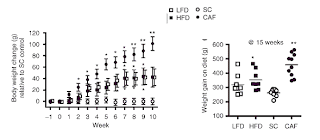
Since we're talking about fructose and the liver of late, I thought I'd bump this post.  In this study groups of rats were fed one of four diets.  The "low fat" diet is better described as a high sucrose diet as 35% of the diet was sucrose.  This replaced 35% of the fat in the 45% "high fat" diet.  While the LF and HF rats gained a little more weight than the standard (also LF at 12%) chow rats, it is clear that the high fat has rather more negative metabolic effects.  I don't think the 35% sucrose diet was beneficial, rather the contrary, but that level of sucrose consumption, every single day for 10-15 weeks (which is quite a long time for a rat) is also hardly indicative of even SAD consumption. Original Posting:  3/8/11 It seems fairly generally accepted that whatever the cause or progression, the so-called Metabolic Syndrome, Syndrome X and Type 2 Diabetes are associated with a dysregulation of adipose tissue metabolism, and fat tissue that ...

Life, Risk & Biomarkers

Image
Let's start out with a little nostalgia, eh?  Before video games, there was a time when humans played boardgames, like Life and Risk. Newman & Kramer play Risk on the subway!

Fat Tissue Regulation ~ Part II: Meet C3KO

Image
I've shortened the title of this series from The Full Physiological Regulation of Fat Tissue to allow for some descriptions of each installment without generating 30 word blog post titles.  Yes, I did consider TFPRFT {cheeky grin} but thought the wiser of that one!  Allow me to introduce you to C3KO   (note my high tech graphics skills!  LOL) No, C3KO is not a character in Star Wars Episode MMXI*:  Battle for the Adiposity Galaxy .  Rather, there is a protein known as Complement 3, C3 for short.  The complement system is an important one in the functioning of our immune systems and has long been recognized for mediating inflammation .  In studying the role of this protein in physiology, researchers created a C3 knockout mouse -- one that does not produce C3.  This mouse is sometimes called C3KO**   

Free Fatty Acids and Cytokines Induce Pancreatic ß-Cell Apoptosis by Different Mechanisms

Free Fatty Acids and Cytokines Induce Pancreatic ß-Cell Apoptosis by Different Mechanisms (I've scrubbed the distracting reference numbers from some excerpts of the introduction and I'm also going to try to cite only the information pertinent to T2) Hypercaloric diets containing large amounts of fat, also called the Western diet, contribute to a major extent to the increasing prevalence of obesity and type 2 diabetes mellitus (T2DM). T2DM is characterized by peripheral insulin resistance, pancreatic ß-cell dysfunction, and decreased ß-cell mass associated with increased rates of ß-cell apoptosis. Elevated levels of circulating free fatty acids (FFAs) contribute to the pathogenesis of T2DM. High concentrations of FFAs lead to both impairment of insulin action and ß-cell dysfunction.  Moreover, FFAs have been shown to cause ß -cell death, mainly by apoptosis.  Of note, increased adiposity is associated not only with increa...

Join a discussion on: Saturated fatty acids and insulin resistance

Hi gang!  I'm going to try something a little different here with my blog.  Mirrorball had the idea to start a Scientific Discussion Group of sorts over at the Meeting Rooms, but we're not getting much in the way of takers.    So I thought I'd try a few things. The first is this post per se, because I know far more people read feeds, etc., to see if we can't snag a few more interested takers for such a thing. The second is that the really cool thing about my discussion board system is that I can embed a topic right here in this blog post for everyone to talk amongst themselves without going anywhere, yet this thread will be over in the Scientific Discussion sub-forum at the Meeting Rooms.  This should also give those who have trouble logging into blogger the ability to join in as well.  The default is a flat style display, but this should also allow for greater ease in following discussions that have, at times, become very difficult to follow in the comme...

Some links about Gut Microflora

This is mostly a bookmarking post to put some links out there. Same poop, different gut  - this one deals mostly with fecal transplants to treat bacterial infections The gut flora as a forgotten organ  - mostly dealing with diseases though touts the promise of obesity relationship The environment within: how gut microbiota may influence metabolism and body composition  - An excellent review of the current understanding of the role of gut flora in inflammation, disease, obesity, etc.  The lead author is the researcher who did the fecal transplant study on obese men that demonstrated improvements in insulin sensitivity (see next link).  I recommend reading this one.  IMO, at this point, finding a bacterial solution to obesity seems to be a long-shot and lots of wishful thinking.   Fecal Transplant Flushes Insulin Resistance   I really look forward to their upcoming publication of this work.  It will be interesting to see the magn...

Insulin Is an Anti-inflammatory and Anti-atherosclerotic Hormone

Insulin Is an Anti-inflammatory and Anti-atherosclerotic Hormone   (full text free until end of the month) Fasting hyperinsulinemia is associated with an increased risk of atherosclerotic complications of heart attack and stroke. This has resulted in the concept that insulin may promote atherosclerosis in spite of the absence of any evidence that insulin is atherogenic either in the human or in experimental models. Recent evidence shows that insulin exerts vasodilatory, anti-platelet and anti-inflammatory effects at the cellular level in vitro and in the human in vivo. Since atherosclerosis is a chronic inflammatory process of the arterial wall, insulin may be potentially anti-atherosclerotic in the long term. More recent data on experimental atherosclerosis in the mouse shows that (1) insulin administration reduces the number and the size of atherosclerotic lesions in apo E null mice and (2) in IRS-2 null mice, the interruptio...

Comparative Fatty Acid Toxicity on Macrophages

Image
Comparative toxicity of fatty acids on a macrophage cell line (J774) In the present study, the cytotoxicity of palmitic, stearic, oleic, linoleic, arachidonic, docosahexaenoic and eicosapentaenoic acids on a macrophage cell line (J774) was investigated. The induction of toxicity was investigated by changes in cell size, granularity, membrane integrity, DNA fragmentation and phosphatidylserine externalization by using flow cytometry. Fluorescence microscopy was used to determine the type of cell death (Acridine Orange/ethidium bromide assay). The possible mechanisms involved were examined by measuring mitochondrial depolarization, lipid accumulation and PPARγ (peroxisome-proliferator-activated receptor γ ) activation. The results demonstrate that fatty acids induce apoptosis and necrosis of J774 cells. At high concentrations, fatty acids cause macrophage death mainly by necrosis. The cytotoxicity of the fatty acids was not strictly related ...

The Anti-Inflammatory Properties of Insulin

Some more articles presented without comment for book-marking purposes: The anti-inflammatory and potential anti-atherogenic effect of insulin: a new paradigm Intensive Insulin Therapy Exerts Antiinflammatory Effects in Critically Ill Patients and Counteracts the Adverse Effect of Low Mannose-Binding Lectin Levels Anti-Inflammatory and Profibrinolytic Effect of Insulin in Acute ST-Segment–Elevation Myocardial Infarction

Insulin: Endogenous Cardio-Protector?

Is insulin an endogenous cardioprotector? Presented without comment, except to say that hyperinsulinemia is not the problem, it's what causes the hyperinsulinemia.  That being insulin resistance!

Adipocyte Size & Adipokine Secretion

Image
Relationship between Adipocyte Size and Adipokine Expression and Secretion Context : Adipocytes are known to release a variety of factors   that may contribute to the proinflammatory state characteristic   for obesity. This secretory function is considered to provide the basis for obesity-related complications such as type 2 diabetes   and atherosclerosis. Objective : To get a better insight into possible underlying   mechanisms, we investigated the effect of adipocyte size on   adipokine production and secretion. Design, Patients, and Main Outcome Measures : Protein secretion   and mRNA expression in cultured adipocytes separated according   to cell size from 30 individuals undergoing elective plastic   surgery were investigated. Results : The mean adipocyte volume of the four fractions ranged   from 205 ± 146 to 1.077 ± 471 pl. There were strong linear correlations for the secretion of adipokines over time.   Secr...

Aspirin for Insulin Resistance?

Image
I have just recently come across what seems to be a treasure trove of research indicating salicylates (e.g. acetylsalicylic acid aka aspirin) .  Much of the research is in rodents, but the glycemic lowering properties of this common drug are well known (apparently) and documented in humans, but seemingly ignored?   Here's one:   Reversal of Obesity- and Diet-Induced Insulin Resistance with Salicylates or Targeted Disruption of Ikkß   (Full text is available with FREE registration for anyone interested.  You fill out name and they ask for phone/fax info but I left that blank and had no issues.) We show that high doses of salicylates reverse hyperglycemia, hyperinsulinemia, and dyslipidemia in obese rodents by sensitizing   insulin signaling. Activation or overexpression of the I B kinase    (IKK ) attenuated insulin signaling in cultured cells, whereas   IKK  inhibition reversed insulin resistance. Thus, IKK , rather   th...

Aspirin for Insulin Resistance?

Image
I have just recently come across what seems to be a treasure trove of research indicating salicylates (e.g. acetylsalicylic acid aka aspirin) improve insulin sensitivity and lower blood glucose levels.  Much of the research is in rodents, but the glycemic lowering properties of this common drug are well known (apparently) and documented in humans, but seemingly ignored?   Here's one:   Reversal of Obesity- and Diet-Induced Insulin Resistance with Salicylates or Targeted Disruption of Ikkß   (Full text is available with FREE registration for anyone interested.  You fill out name and they ask for phone/fax info but I left that blank and had no issues.) We show that high doses of salicylates reverse hyperglycemia, hyperinsulinemia, and dyslipidemia in obese rodents by sensitizing   insulin signaling. Activation or overexpression of the I B kinase    (IKK ) attenuated insulin signaling in cultured cells, whereas   IKK  inhibition reve...

Insulin Resistance and Inflammation

Chronic inflammation in fat plays a crucial role in the development of obesity-related insulin resistance This is yet another paper demonstrating that the evidence strongly points to the fat cells being the origin of the sequences of events leading to peripheral insulin resistance.  This paper looked at inflammation. Abstract: Insulin resistance arises from the inability of insulin to act normally in regulating nutrient metabolism in peripheral tissues. Increasing evidence from human population studies and animal research has established correlative as well as causative links between chronic inflammation and insulin resistance. However, the underlying molecular pathways are largely unknown. In this report, we show that many inflammation and macrophage-specific genes are dramatically upregulated in white adipose tissue (WAT) in mouse models of genetic and high-fat diet-induced obesity (DIO). The upregulation is progressively increased in WAT of mice with DIO and precedes a drama...

Fiber and CRP

Came across this so just putting it out there.  It's a meta study of 7 clinical trials in which fiber was studied or reported.  In 6 of 7 CRP was reduced.  One study involving just psyllium showed no effect. The effects of dietary fibre on C-reactive protein, an inflammation marker predicting cardiovascular disease Conclusions: In the presence of weight loss and modified saturated, monounsaturated and polyunsaturated fat intakes, significantly lower CRP concentrations (25–54%) are seen with increased fibre consumption 3.3 g/MJ). Mechanisms are inconclusive but may involve the effect of DF on weight loss, and/or changes in the secretion, turnover or metabolism of insulin, glucose, adiponectin, interleukin-6, free fatty acids and triglycerides. Clinical studies of high- and low-fibre diets are needed to explore the potential favourable effects as observed epidemiologically, and to understand individual susceptibility to its anti-inflammatory effect and long-term cardiova...

Low Carbohydrate, High Fat Diet Increases C-Reactive Protein during Weight Loss

Image
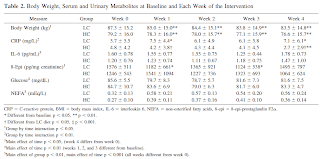
Low Carbohydrate, High Fat Diet Increases C-Reactive Protein during Weight Loss Janet W. Rankin, PhD and Abigail D. Turpyn  Journal of the American College of Nutrition, Vol. 26, No. 2, 163-169 (2007) Studied Variable: Dietary Carbohydrate Variables Measured: Body weight, IL-6, CRP, urinary 8-epi-prostaglandin, FBG, FFA (fasting) Variables controlled for: Caloric intake Protocol Summary: Subjects were ed into two groups followed calorie restricted (~1360 kcal/d) diets varied in composition: LC = 58F/12C/30P ; HC = 24F/59C/18P. Weight, inflammatory markers (IL-6 and CRP) and oxidative stress (8-epi) were measured weekly. Human Study Gender:  Women Age:  adult, premenopausal Number of Participants: 29 Weight Status: Overweight BMI 32.1 ± 5.4 kg/m2 Health Status: weight stable for at least 6 months, nonsmokers, sedentary, otherwise healthy and unmedicated Study Duration: 4 weeks Summary of results: * LC lost a bit more weight (3.8 ± 1.2 kg LC vs. 2.6 ± 1...