Posts

Showing posts with the label IL-6

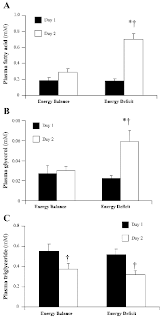
Energy deficit w/o LC alters resting carb oxidation and FA availability
Image
Originally lucky post #13 made on March 23, 2010 In light of all of the "fat burning" , respiratory quotient and mitochondrial mayhem discussions of damaged metabolisms, I thought this might be a fitting post to bump to the top today.  The take home message of this study, IMO, is that the body burns what it needs to burn, and hormone levels adjust accordingly, not so much the other way around.   Energy deficit without reducing dietary carbohydrate alters resting carbohydrate oxidation and fatty acid availability Reduced carbohydrate (CHO) availability after exercise has a potent influence on the regulation of substrate metabolism, but little is known about the impact of fat availability and/or energy deficit on fuel metabolism when dietary CHO availability is not reduced. The purpose of this study was to determine the influence of a postexercise energy deficit, independent of CHO availability, on plasma substrate concentrations and substrate oxidation.

Adipose Tissue & Adipokines

Normally these days I'd put this in the library, since I'm not really going to blog on this, but I thought this paper a good one to share. Adipose tissue and adipokines: for better or worse In recent years, it has been recognized that adipose tissue (WAT) secretes a number of bioactive peptides and proteins, collectively termed “adipokines”.  These WAT-derived factors play a central role in whole body homeostasis by influencing a variety of biological and physiological processes, including food intake, regulation of energy balance, insulin action, lipid and glucose metabolism, angiogenesis and vascular remodeling, regulation of blood pressure and coagulation. The present review is focused on a restricted number of adipokines, which have been implicated in vascular (angiotensinogen, PAI-1) and energy and glucose homeostasis (ASP, TNFα, IL-6, resistin, leptin, adiponectin).  

Comparative Fatty Acid Toxicity on Macrophages

Image
Comparative toxicity of fatty acids on a macrophage cell line (J774) In the present study, the cytotoxicity of palmitic, stearic, oleic, linoleic, arachidonic, docosahexaenoic and eicosapentaenoic acids on a macrophage cell line (J774) was investigated. The induction of toxicity was investigated by changes in cell size, granularity, membrane integrity, DNA fragmentation and phosphatidylserine externalization by using flow cytometry. Fluorescence microscopy was used to determine the type of cell death (Acridine Orange/ethidium bromide assay). The possible mechanisms involved were examined by measuring mitochondrial depolarization, lipid accumulation and PPARγ (peroxisome-proliferator-activated receptor γ ) activation. The results demonstrate that fatty acids induce apoptosis and necrosis of J774 cells. At high concentrations, fatty acids cause macrophage death mainly by necrosis. The cytotoxicity of the fatty acids was not strictly related ...