Posts

Showing posts with the label Hyperinsulinemia

The $12M NuSI/Ludwig Study ~ Part V: Intake, REE and TEE Measures

Image
S ummary: Continuing on with discussion of:   Effects of a low carbohydrate diet on energy expenditure during weight loss maintenance: randomized trial Previous posts in this series: Part I: Critique of the Study Design Part II: $12 Million for 12% Weight Loss? Part III: Some "Early" Lessons Part IV: Insulin Resistance Does Not Hamper Weight Loss This post should perhaps have come first, but it has taken a while to look deeply at the data for the primary outcome -- total energy expenditure measured by doubly labeled water -- and related outcomes of intake and resting energy expenditure. In this study, all participants were paid to participate, AND provided free food for ~8 months.  Said food was professionally and meticulously prepped, weighed, measured, individualized to provide each subject with some pretty exact caloric level and macronutrient composition.  The test phase (in other words, the study proper) involved maintaining a consiste...

The $12M NuSI/Ludwig Study ~ Part IV: Insulin Resistance Does Not Hamper Weight Loss

Image
       C ontinuing on with discussion of: Effects of a low carbohydrate diet on energy expenditure during weight loss maintenance: randomized trial No summary for this post.  Here are links to earlier parts in this series: Part I: Critique of the Study Design Part II: $12 Million for 12% Weight Loss? Part III: Some "Early" Lessons :   In this most recent post, I discussed the relationship between measures of insulin (both fasting and 30 minute OGTT response) and weight loss during the Run-In Phase.  

β-Cell lipotoxicity in the pathogenesis of non-insulin-dependent diabetes mellitus of obese rats: Impairment in adipocyte-β-cell relationships

Image
BUMP NOTICE:  I'm bumping this post due to some recent discussions on social media regarding the reversibility of Type 2 Diabetes and the role of low carbohydrate diets in the growing "curing diabetes" paradigm.  Recently Dr. Roy Taylor (the investigator I most closely associate with the crash diet, though this is an extensive group) and colleagues, who implemented a "crash diet" to cure diabetes -- by reducing pancreatic and hepatic (liver) fat concurrently with rapid weight loss -- published the following in BMJ:   Beating type 2 diabetes into remission .    The criteria are non-diabetic markers for a period following reversal of the progression.  Here is where various low carbohydrate interventions "fail", as many are able to maintain normoglycemia only by avoiding carbohydrates.  The question remains if this is effectively the same as other reversals.  I contend it is not, as normal pancreatic function -- specifically GSIS -- has not ...

Insulin Caused Cerebral Stress - And THANK YOU! I'm baaaaack :-)

Image
Dateline:  March 26, 2016 Helloooo Inmates!! A quick update, but first a sincere thank you to each and every one who participated in my 40 Day Lenten Lentil Fast post.  As of this morning -- two months after publication -- we stand at just over 2700 comments.  No that's not a typo.  Who knew all I had to do was stop blogging?    It fills my heart to have such great interaction here at any time.  It especially filled it these past two months, months that have been more tumultuous than time-constrained, and some of the most difficult of my life.  So THANK YOU, and especially for much needed laughter along the way!  What more is there to say? I may or may not elaborate further on some unintended blog-related whys for the unplanned hiatus, but surely one of them has to be that old saying "the more things change, the more they stay the same".    While there are many examples of low carb antics I could use, there seems to be somet...

Revisiting the Fatty Diets & Diabetes Study ~ How to Make Mickey Fat or Fattier

Image
High Fat Diets!  I'm going to continue bumping up some of the hundreds of blog posts I've written on studies that support the role of dietary fat in obesity and diabetes.   As I do this I'll make some formatting changes for ease of reading, may fix a typo or awkward wording here or there, but won't alter the content meaningfully.  Instead, I'll insert Ed. Notes where I feel an update or clarification is needed. ORIGINAL POST 8/31/2011 In her piece over at MDA on the How Fatty Diets Cause Diabetes , Denise Minger spent a bit of time discussing the strain of mouse used in the study.  That being the not-uncute fella you see pictured here:  A C57BL/6J mouse.   Denise describes these mice as:   "uber-susceptible to obesity, high blood sugar, insulin resistance, leptin resistance, and all that other fun stuff plaguing modern humans."   This didn't really square with my memory from when I blogged on a study involving this crit...

The Glycemic Index, Carbs & Protein, and Weight Loss

Image
Hey all ... just a quick note. It's been one of those weeks and all where I've started like a half a dozen blog posts and gotten distracted or needed to do some "cleanup" on them so I've held them in the draft bin. Lots going on in real life in addition to the online side. But as often happens when I'm writing about a topic, a related paper pops up and something catches my eye. Such was the case when I looked into some of Dr. David Ludwig's work on the glycemic index for background on a post, and another study was mentioned along with his work. Studies such as this one from Ludwig --  High Glycemic Index Foods, Overeating, and Obesity  -- and, frankly, common sense to a degree -- paint high glycemic index foods as "bad" because: The rapid absorption of glucose after consumption of high-GI meals induces a sequence of hormonal and metabolic changes that promote excessive food intake in obese subjects. And this makes sense, and i...

60 Teaspoons of Sugar in 150 Minutes ... and STILL no sustained hyperglycemia

Image
I've got the teaspoon gang on the mind after my last post, and I'm making my way through some 1960's diabetes research at the moment.  In a study older than me (that's more than a half century old!) two of Taubes' oft-cited diabetes researchers, Solomon Berson and Rosalyn Yalow, reported in the peer review literature something that might be of interest. You know the drill by now,  That's a little more than 1 teaspoon of sugar:  1 teaspoon  = 4 grams    (that would be 80 mg/dL).  

Aug. 1 Over the Hump Bump: Baby your Pancreas? Part I: The Tired Pancreas

Another two-fer for the Thursday post bumps again this week.  More explanation for why this set in the next bump. Original Publish Date:  7/26/11 In the comments on  a recent post on beta cell lipotoxicity , Ned Kock (of Health Correlator blog) posted a link to a post he made a while back entitled:   Lipotoxicity or tired pancreas? Abnormal fat metabolism as a possible precondition for type 2 diabetes .  This article deals with the concept of the "tired pancreas" in the development of diabetes.  It seems that (and hopefully he corrects me if I'm wrong here) Ned and I agree that this is not a likely explanation for diabetes.   Ned summarizes the progression of obesity induced T2 diabetes from  Unger & Zhou, 2001 .  It is worth mentioning that Unger is often summarily dismissed from the "scientific discussion roundtable" by low carbers because of the unfortunately titled "Gluttony and Sloth" paper, that, even more unfortunatel...

Insulin/Proinsulin/etc. in Normal, IGT and T2 Diabetics

Image
One more on the measurement side of things since these type posts are easier to put the finishing touches on to get out the door.  This is another older paper, and I'm trying to track down more info on newer/current analyses and their specificity.  Unlike the last discussion here , I want to focus on the secretory capacity of the  β-cell through the progression of diabetes.   Serum proinsulin levels at fasting and after oral glucose load in patients with Type 2 (non-insulin-dependent) diabetes mellitus  (1988).   40 newly diagnosed with T2 diabetes + 21 IGT -- No medications or special diet BMI < 27 in men, < 25 in women Controls were weight matched to study group participants.

Measuring Insulin Levels, Hyperinsulinemia and Insulin Resistance

Image
A slight detour in my current endeavors to put forth some information regarding the etiology of diabetes, insulin resistance and β-cell function, before I get to the two major reviews that prompted this. To review, in my last post , discussing this paper , a seminal observation/conclusion can be summed up as follows:   Insulin is formed in stepwise fashion from a larger protein (preproinsulin) that has a terminal signaling chain cleaved forming proinsulin that is then folded, cross-linked and has one of the three main chains cleaved in the last step(s) resulting in a protein with two parallel chains, insulin.  I like this newer representation I found below because it provides the numbers in the amino acid sequence at which the cuts are made.  This is important to better understanding the papers I'm going to discuss here.

More Hyperinsulinemia, Insulin-Suppressive Drugs & Obesity (and Lustig)

Image
Building on my last post   on this topic ... So far I've spent most of the blogging on a study comparing 3 doses of octreotide, an insulin suppressing drug, vs. placebo in a subset of obese people pre-tested and determined to be insulin hypersecreters as defined by a corrected ratio for insulin to glucose levels.  This post will focus more on two other studies using this drug, perhaps just the first ... let's see how long this gets ;-)    I think it will be easiest to number the 3 studies, all bearing Lustig's name: Study 1: Suppression of insulin secretion is associated with weight loss and altered macronutrient intake and preference in a subset of obese adults  (2003) Study 2: Obesity, leptin resistance, and the effects of insulin reduction   (2004) Study 3: A multicenter, randomized, double-blind, placebo-controlled, dose-finding trial of a long-acting formulation of octreotide in promoting weight loss in obese adults with insulin hypersecreti...

Lessons from LIRKO

Image
The LIRKO mouse has no insulin receptors in its liver.  It's one pretty sickly mouse.  In most studies it becomes hyperglycemic and hyperinsulinemic very early in life, but by six months or so of age is either normoglycemic or hypoglycemic.  Despite the concurrent hyperglycemia and hyperinsulinemia, the LIRKO remains normal weight, it is even a bit underweight if anything.  This is despite the fact that  circulating free fatty acids (FFA, or my preferred acronym, NEFA)  are suppressed by 40%.  {Here are the two papers I've discussed in previous blog posts: Loss of Insulin Signaling in Hepatocytes Leads to Severe Insulin Resistance and Progressive Hepatic Dysfunction , High Circulating Leptin Receptors with Normal Leptin Sensitivity in Liver-specific Insulin Receptor Knock-out (LIRKO) Mice both links are to free full texts} LIRKO presents two problems for the TWICHOOB: 1.  Chronic hyperinsulinemia does not cause rampant fat accumulation...

Hyperinsulinemia, Insulin-Suppressive Drugs & Obesity (and Lustig)

Image
The recent buzz about hyperinsulinemia being at the root of obesity (whatever the mechanism) has had me thinking again about the insulin lowering drugs.   Studies in this regard were referenced in the recent article in Cell from Dr. James Johnson's research group at UBC.   If this is really all there is to it, why not just treat obesity with such drugs?  Or at least give them to the reduced-obese so they won't regain the weight, and/or the so-called pre-obese who start gaining at some point in life before they become obese.  This is really the bottom line of studies like the recent one from UBC.  Because if all we need to do is suppress the hyperinsulinemia (however it is caused) to prevent obesity it would be done.  There is a relatively rare condition, called by many names, but most descriptively neo-natal or infant hyperinsulinism.  These children must be treated ASAP to avoid the consequences of hypoglycemic episodes.  I surmise the drugs oc...

Insulin Secretion and the Corrected Insulin Response (CIR)

Image
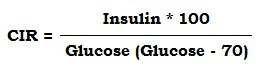
I'm working on a post about hyperinsulinemia and obesity in humans.  It may well turn into several posts.  But in one study I will be discussing they identified hypersecreters according to something called the corrected insulin response, CIR.  Sometimes this is further "standardized" as the CIRgp which is evaluated at the peak glucose reading.  The CIR is value calculated following a standard OGTT.  If you have data from your OGTT, you can calculate your own and determine how you rank. The CIR was developed by Sluiter and colleagues as outlined in:   Glucose Tolerance and Insulin Release, A Mathematical Approach I. Assay of the Beta-cell Response After Oral Glucose Loading .   From the dose-response relations between glucose and insulin after oral glucose loading, a reproducible parameter for beta-cell response was deduced. The main advantage of this parameter lies in its independence from the initial or reached glucose level....

Does Hyperinsulinemia Drive Diet-Induced Obesity?

Image
Unless you've been living under the internet equivalent of a rock in this community, no doubt you've heard there was a paper published in Cell and Metabolism entitled  Hyperinsulinemia Drives Diet-Induced Obesity Independently of Brain Insulin Production .  It's a TWICHOOB's dream title ... until you actually read the paper, or even the abstract and freely available charts and diagrams.  Too bad most did not.  My link is to the full text I'm sharing with my readers through Google docs.   But you actually don't need to read this whole paper get the basic gist of what the study entailed and the results.  However, before we even do that, consider this.  How do you induce obesity in a C57Bl6/J mouse?  You feed it a high fat diet, HFD.    And as the graphic clearly shows, the researchers believe the results of their study warrant a change in the chain of

Remember LIRKO? Grey & Kipnis?

Image
So a recent research paper has been making the rounds.  It has a "red meat" title for the die hard TWICHOOB:   Hyperinsulinemia Drives Diet-Induced Obesity Independently of Brain Insulin Production .  This paper was brought up in my comments section as well.   Every time this happens I really do feel like I'm in some sort of nutritional remake Groundhog Day.    I'm a bit backlogged at the moment, but luckily Stephan Guyenet has weighed in with his analysis and included some additional studies in support of his position.   Whenever I think hyperinsulinemia causes obesity,  I'm reminded of the LIRKO mouse.  LIRKO is normal except its liver lacks insulin receptors.  The result is a mouse with raging hyperglycemia and hyperinsulinemia throughout much of its young life until its liver poops out.  I blogged on this mouse here:   Bloggo Science ~ LIRKO Wars Edition .  (Incidentally that post links to an older post by...

Insulin Doing Its Thang! And Still No Starving Cells

Image
In comments yesterday, Wayne/ProudDaddy wondered whether triglycerides might be the bad guy instead of NEFA based on this study from Keith Frayn's research group: Adipose tissue fatty acid metabolism in insulin-resistant men . Aims/hypothesis   Increased NEFA production and concentrations may underlie insulin resistance. We examined systemic and adipose tissue NEFA metabolism in insulin-resistant overweight men (BMI 25–35 kg/m 2 ).

More Bloggo Science

Sigh.  I would normally comment on a person's blog if I read something like this:   Insulin, the Un-dead and coffin nails , but since Peter doesn't want to distract his readership with potentially productive discussions amongst them, I refrain from posting there.  In the article he makes two statements I find rather outrageous: Hyperglycaemia causes insulin resistance. This is not controversial, as far as I am aware. It's not controversial in those circles where it is repeated uncritically.  It's not really controversial that this statement is wrong.    Let's take this together with another statement: Let's summarise. This is very, very important:    Excess insulin causes insulin resistance End summary. This is just day to day internal medicine. You have to pay the mortgage somehow. Only this too is at the very least controversial, and almost certainly not true in most cases.

Fasting Insulin & Diet ~ Time for some Cognitive Dissonance?

Image
Reader Josh brings this study to our attention : High saturated fat and low starch and fibre are associated with hyperinsulinaemia in a non-diabetic population Huh?  They compared dietary intake (24 hour recall) for 1069 non-diabetics (assessed by administering a glucose tolerance test) with fasting insulin levels.   Subjects were seen for up to three visits from 1984 to 1992. A 24-h diet recall and fasting insulin concentrations were collected at all visits.... ... High total and saturated fat intake were associated with higher fasting insulin concentrations after adjusting for age, sex, ethnicity, body mass index, waist circumference, total energy intake and physical activity. Dietary fibre and starch intake were inversely associated with fasting insulin concentrations.... ... Associations were similar in men and women and for active and inactive subjects, though associations of fibre and starch intake with insulin concentrations we...

Gary Debunks Taubes ~ It's the Fructose Stupid!

Image
In his second blog installment in a series that says nothing about its purported purpose (to debunk the food reward hypothesis so we can all return to eating our high reward Science Krispies ), Gary Taubes cites the following study: Consumption of fructose-sweetened beverages for 10 weeks reduces net fat oxidation and energy expenditure in overweight/obese men and women C L Cox, K L Stanhope, J M Schwarz, J L Graham, B Hatcher, S C Griffen, A A Bremer, L Berglund, J P McGahan, P J Havel* and N L Keim Background/Objectives: The results of short-term studies in humans suggest that, compared with glucose, acute consumption of fructose leads to increased postprandial energy expenditure and carbohydrate oxidation and decreased postprandial fat oxidation. The objective of this study was to determine the potential effects of increased fructose consumption compared with isocaloric glucose consumption on substrate utilization and energy expenditure following sustained consumpt...