Posts

Showing posts with the label NEFA/FFA

β-Cell lipotoxicity in the pathogenesis of non-insulin-dependent diabetes mellitus of obese rats: Impairment in adipocyte-β-cell relationships

Image
BUMP NOTICE:  I'm bumping this post due to some recent discussions on social media regarding the reversibility of Type 2 Diabetes and the role of low carbohydrate diets in the growing "curing diabetes" paradigm.  Recently Dr. Roy Taylor (the investigator I most closely associate with the crash diet, though this is an extensive group) and colleagues, who implemented a "crash diet" to cure diabetes -- by reducing pancreatic and hepatic (liver) fat concurrently with rapid weight loss -- published the following in BMJ:   Beating type 2 diabetes into remission .    The criteria are non-diabetic markers for a period following reversal of the progression.  Here is where various low carbohydrate interventions "fail", as many are able to maintain normoglycemia only by avoiding carbohydrates.  The question remains if this is effectively the same as other reversals.  I contend it is not, as normal pancreatic function -- specifically GSIS -- has not ...

Lessons from the Cafeteria Rat: Adiposopathy ~ How/Why Does Fat Get "Sick"

Image
For today.  Just thoughts.  No references.  Also I will use the term theory, it sounds better, and frankly in the semantics of scientific progression, we've been there for a while now with Adiposopathy (I'll capitalize it for emphasis) anyway. Since offhandedly throwing out the term Adiposopathy in response to a query as to what I consider to be the cause of CVD/diabetes, etc.  -- collectively known as "metabolic diseases" and sometimes "chronic diseases" -- there's been one question raised a few times:  How and/or why do fat cells get "sick".  I think I found the perfect illustration ... take it away Lucy and Ethel ...

More on the Mechanisms of the Glycemic Index: A Fatty Acid Roller Coaster?

Image
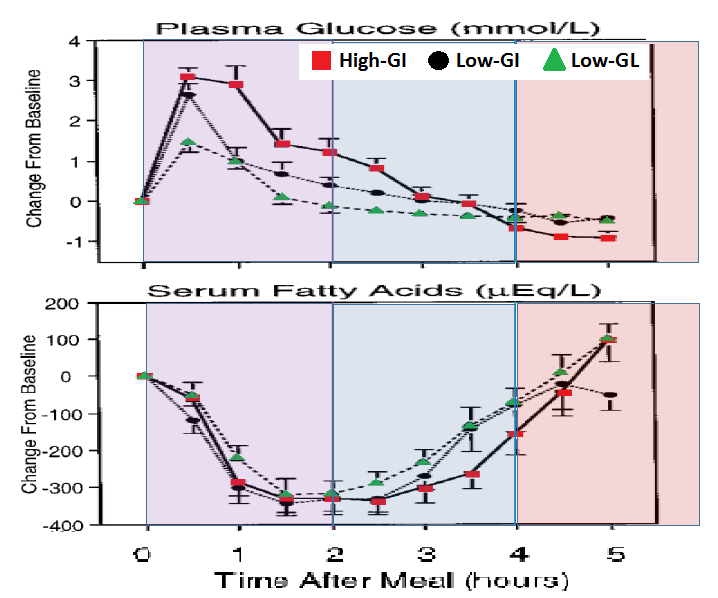
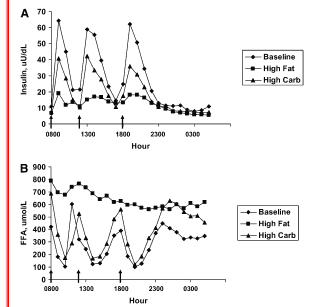
A Continuation of  The Mechanisms of the Glycemic Index: A Fatty Acid Roller Coaster?  .... Quick summary of Ludwig's mechanism for high-GI making us fat v. 2002: High GI carb causes glucose and insulin to spike and fatty acids to plummet early on.  Then glucose plummets resulting in hypoglycemia and counterregulatory hormones kick in.  These bring glucose back or slightly elevated and cause fatty acid levels to rebound to levels reminiscent of a long fast making the person hungry (hypoglycemia) and hungrier (feeling fasted) so they eat more.     The Mechanism of High-GI ~ 2012 by Davis S. Ludwig In 2012, with colleague (often listed as a co-lead investigator) Cara Ebbeling and others, Ludwig published:   Effects of Dietary Composition on Energy Expenditure During Weight-Loss Maintenance .  In  JAMA .  I only mention this study here for two reasons.  First, to demonstrate that the 2002 review paper was not by t...

The Circulating "Food" Supply and The Failed Internal Starvation Hypothesis

Image
There are several recurring themes, mostly from low carb advocates of the "fat burning is best" bent, that keep ... well ... recurring!  Perhaps foremost among these is this concept of "internal starvation".  From Gary Taubes in Good Calories, Bad Calories :   "F or the past century, the conspicuous alternative to the positive-caloric-balance hypothesis has always been, as Pennington, Astwood, and Hilde Bruch suggested, that obesity is caused by a defect in the regulation of fat metabolism. At the risk of repetition, it is important to say this is, by definition, a disorder of fat accumulation, not a disorder of overeating. For whatever reason , the release of fat or its combustion is impeded, or the deposition or synthesis of fat is promoted, as Astwood said, and the result is obesity. That in turn will cause a deficit of calories elsewhere in the body— Astwood’s “internal starvation”— and thus a compensatory hunger and sedentary behavior.

The Mechanisms of the Glycemic Index: A Fatty Acid Roller Coaster?

Image
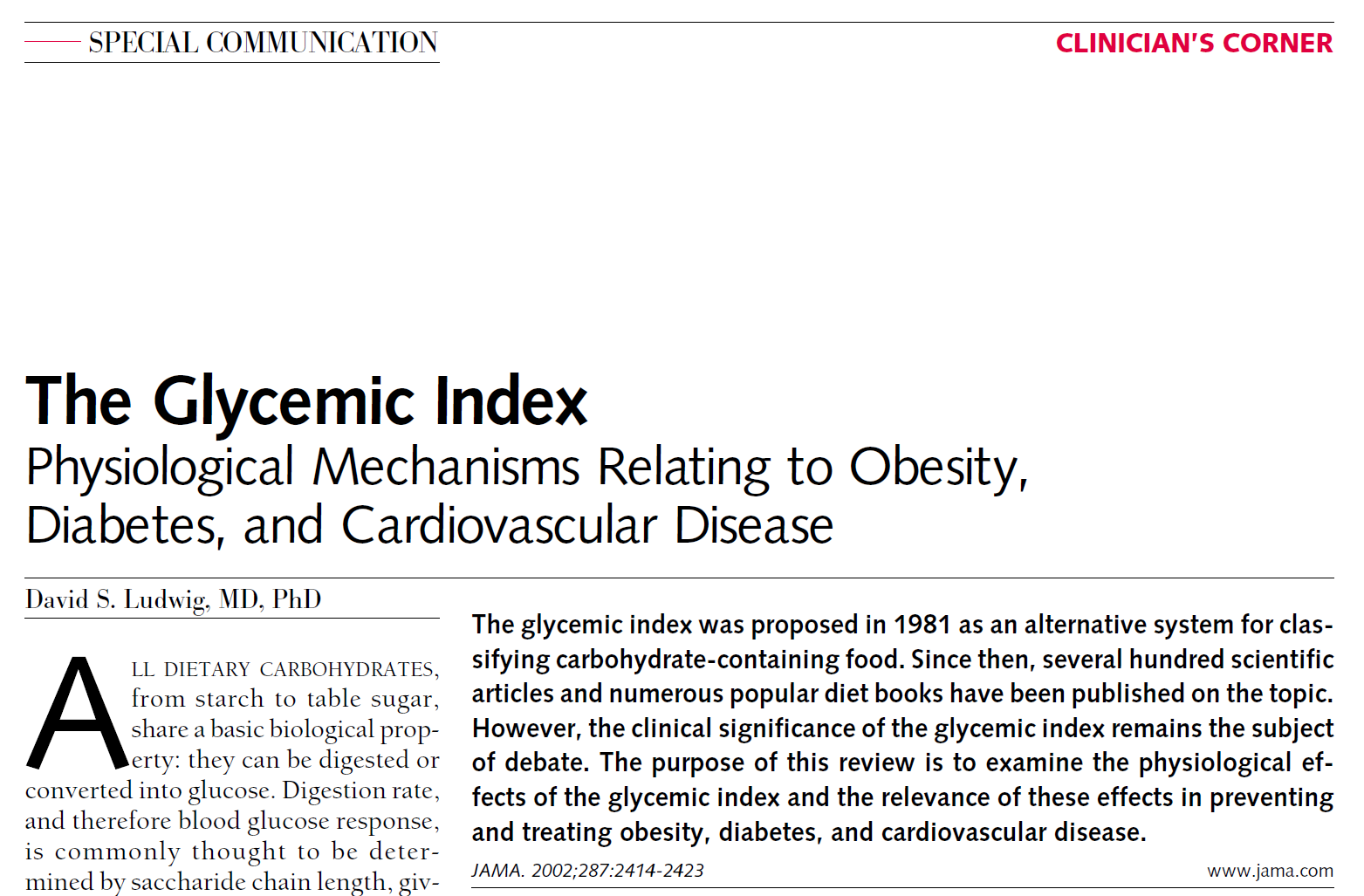
This post will focus on some statements made by a researcher who I've dubbed "America's GI Man", Dr. David Ludwig, in this review: The Glycemic Index: Physiological Mechanisms Relating to Obesity, Diabetes and Cardiovascular Disease , JAMA , 2002. A Note Regarding Definitive Statements in Review Papers As I found myself getting sucked down the Pubmed rabbit hole that is the GI, it was really this paper that took me past that point of no return.  I have taken a screenshot of the top of the PDF format of the article to convey a few things, and at this point I'm beginning to understand how it is that doctors can get sucked into bad paradigms when their "prestigious journals" put out "SPECIAL COMMUNICATION"s from their "CLINICIAN'S CORNER"

That New Volek (& Phinney) Study: Part III ~ Science or Advocacy?

Image
LC Biomarker Bingo OK ... before I begin on this, let me say this has languished in the draft hopper probably past it's usable publish date :-)  So first, I'll give a belated shout out to Kevin Klatt over at Nutrevolve blog for taking a close look at this study and "getting it out there" in rapid time!   Carbs, SFAs, and Circulating Fatty Acids . Effects of Step-Wise Increases in Dietary Carbohydrate on Circulating Saturated Fatty Acids and Palmitoleic Acid in Adults with Metabolic Syndrome I confess to skimming it b/c the last time he scooped me Kevin wrote so much of what was in my head I wasn't sure how to formulate the parts I still wanted to discuss without sounding repetitious.  For me, this study and its media blitz has hit a nerve and awoken my interest in a topic I had gotten a bit side tracked from.  It's almost a perfect ending to this year of what can only be described as utter insanity in the nutrition world.   So, with that said, ...

That New Volek (& Phinney) Study: Part I The Journal Article & The Headlines

Image
Yes folks! Yet another study has hit the presses to tell you everything you thought you knew about nutrition is wrong, wrong and more wrong!!  The Journal Article Effects of Step-Wise Increases in Dietary Carbohydrate on Circulating Saturated Fatty Acids and Palmitoleic Acid in Adults with Metabolic Syndrome Brittanie M. Volk, Laura J. Kunces, Daniel J. Freidenreich, Brian R. Kupchak, Catherine Saenz, Juan C. Artistizabal, Maria Luz Fernandez, Richard S. Bruno, Carl M. Maresh, William J. Kraemer, Stephen D. Phinney, Jeff S. Volek . Count 'em ... a dozen authors.

Fat Burning 101 -- The Biochemistry

Image
Laugh if you get it! In comments on my last Thermodenyics post , I made the following statement: The β-oxidation + Krebs part is the "metabolism" of fatty acids resulting in production of some heat, some ATP, and a large number of so-called "reducing equivalents" that will produce much more ATP (cellular energy currency) in the Electron Transport Chain. You don't see mass escaping your body, but the carbons that were originally contained in the larger fatty acid molecules are exhaled as carbon dioxide. Atkins' original claim was that enough molecules escaped the Krebs cycle and were excreted before being fully metabolized for their caloric content. The vast majority of β-oxidation to burn fat for energy occurs in organs like the heart and skeletal muscle. Once a fatty acid is committed to the β-oxidation pathway they are oxidized completely down to carbon dioxide. In comments , Kindke quoted that last bolded line and inquired: I'm interes...

Announcing Limited Edition Keto Clarity Commemorative Teaspoons!

Image
Links to scientific background and calculations below.   Oh ... and more teaspoons :-)

There's no dietary need for saturated fat ...

Image
Random Bump! Original Publish Date:  6/15/12 There's no dietary need for saturated fat ... ... or monounsaturated fats, MUFA, for that matter.  Therefore low fat diets, where most of the fat is essential PUFA, are optimal.  The body can make all the SF and MUFA we need from carbohydrates.  Furthermore, relying on this metabolic pathway as a source of body fat is metabolically advantageous for weight management as making fat from carbohydrate is an energy intensive process.   Sounds a little silly, right?  I think so.  But so, too, is the ridiculous mantra from low carbers citing the fact (true) that there's no dietary necessity for carbohydrate.  You know the drill, we can make all the glucose we need by gluconeogenesis (just saying that makes me feel smarter) therefore LC diets are optimal.  There is a metabolic advantage built into LC diets because gluconeogenesis requires energy to convert protein to glucose.

Where do triglycerides come from? Part I (Updated)

Image
This post contains sufficient updates from the original (dated 5/11/11) that I consider it more of a fully updated version vs. a bump.   This began with my intent to link to this post in an upcoming discussion of triglycerides, when I noticed that Dr. Ronald Krauss was amongst the authors.   This study originally caught my eye because of    Marc Hellerstein 's name, he of  DNL not a major pathway in humans fame , that I've  blogged on  previously. Now I have excerpted copiously from the discussion because the authors make several points relevant to the discussion of what comprises a healthy lipid profile.  As part of updating, I am breaking those excerpts up a bit more and adding some/more emphasis and additional commentary.

The Vascular Functions of Insulin

Random Replay Was having a discussion on FB about insulin this morning and while going through some blog posts this one popped up.  I find reading some old stuff interesting at times ... this is over 3 years old.   If someone goes on a low carb diet and this manages their hyperglycemia, this is a classic example of treating symptoms while not addressing the cause of the problem which is pancreatic beta cell dysfunction, and in the case of the T2, coupled with hepatic insulin resistance.   What low carb doesn't do is restore normal insulin secretion and signaling, and insulin plays many roles in the body beyond glucose transport.  For one, it also assists amino acid transport (and protein synthesis) which is why the IR often have elevated circulating levels of the most insulinogenic (e.g. insulin requiring) amino acids, the BCAAs.   This post is a flashback of some of the other things insulin does.  Further it discusses the role of NEFA in all...

Aug. 1 Over the Hump Bump: Baby Your Pancreas? Part II: Go all Jillian Michaels on your Liver?

Image
On Facebook today, Mark Hyman MD (functional medicine doc) posted : There are no essential carbohydrates. There are essentials fats and essentials proteins, but if you never had any carbohydrates again, you would survive. The Teaspoon Party This was brought to my attention but also reminded me that Richard Feinman is at it again with a recent blog post on this no essential dietary carb canard, couched in a history lesson of sorts:   Revolutions. Political and Scientific .  He discusses Claude Bernard finding sugar in a dog that hadn't been fed any carbohydrate.  The question is why ... again ... why ... now?   This idea has earned him an honored place in the group at right.

The Myth of Starving Cells II and NEFA Levels Again.

Image
Related Post:   Insulin Doing Its Thang! And Still No Starving Cells .  It discusses another study by Keith Frayn that shows increased NEFA uptake into the muscle cells of men with hyperinsulinemia.  It may be worth a read for newer readers along with The Myth of Starving Cells. Original Content Published June 7, 2013: A couple of years ago I wrote:   The Myth of Starving Cells .  As the story goes --as related by science journalist Gary Taubes, to Low Carb Diet Doctor Mike Eades, to Fat Head Naughton -- insulin traps our fat in our fat cells, causing "internal starvation" as the rest of our cells go without, triggering hunger and overeating.   We overeat because we are getting fat, or some nonsense like that.   In the post, I discussed studies demonstrating the opposite is true.  In obesity, there is failure to properly suppress NEFA release from fat cells, NEFA are elevated in the fasted state, and irrespective of absolute concentration,...

Why We Get (Sick) Fat (and Sick Livers) - Lessons from a Cafeteria Rat

Image
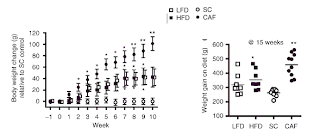
Since we're talking about fructose and the liver of late, I thought I'd bump this post.  In this study groups of rats were fed one of four diets.  The "low fat" diet is better described as a high sucrose diet as 35% of the diet was sucrose.  This replaced 35% of the fat in the 45% "high fat" diet.  While the LF and HF rats gained a little more weight than the standard (also LF at 12%) chow rats, it is clear that the high fat has rather more negative metabolic effects.  I don't think the 35% sucrose diet was beneficial, rather the contrary, but that level of sucrose consumption, every single day for 10-15 weeks (which is quite a long time for a rat) is also hardly indicative of even SAD consumption. Original Posting:  3/8/11 It seems fairly generally accepted that whatever the cause or progression, the so-called Metabolic Syndrome, Syndrome X and Type 2 Diabetes are associated with a dysregulation of adipose tissue metabolism, and fat tissue that ...

Stick a Toothpick in It? Taubes' 4-pronged Carb/Insulin "Fork" Loses its Tines

Image
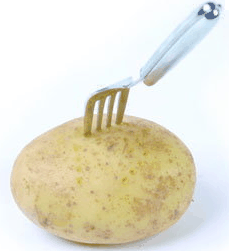
This post updated slightly 6/22/2012.   Original publication date 1/23/11 In the comments at Jimmy's blog on my interview podcast, several comments either directly or by inference say I failed to make my case against Taubes.  Well, I think I did pretty much get to what I consider the four prongs of Taubes carb/insulin hypothesis, but I've decided to try and summarize this in a blog post.  Another common comment is that I'm somehow nit-picking at minutia, basically if folks lose weight on low carb, it doesn't matter the details of why.  To those, if they are reading this, I would say that any objective view of my arguments would lead to the conclusion that these are NOT minor details, they are the sum total of Taubes' evidence in support of his hypothesis.  Not only has he NEVER debunked the calorie-based theories on obesity, but almost all evidence in support of his "alternate" theory HAS been.   I will not be referencing this post, it's all...

An American Justice System for Food ~ Part I Intro and Carbs in General

Image
The cornerstone of the American justice system:  Innocent until proven guilty.  According to Wikipedia : sometimes referred to by the Latin expression Ei incumbit probatio qui dicit, non qui negat (the burden of proof lies with who declares, not who denies).  I like the first part of that Latin expression and suggest that what is truly needed in nutritional circles is to put the burden of proof on those making claims.  My point here is not a political one, it is not to argue the merits of my country's justice system or its implementation, or anything of the sort.  It is to put forth a suggestion -- that ALL who demonize foods be tasked with proving their charges.   I suggest this because it is darned near impossible to do the opposite especially in the face of baseless charges.   It is a bit of a stretch, but keep in mind that many of the compounds, such as water, can be toxic at some level of ingestion.  Furthermore, some of the chemical ...

Surrogate Biomarkers for NEFA?

Image
For reasons related largely to the difficulty (thus presumably expense) in measuring them, one fasting lipid that is not routinely assessed in lipid panels are the free fatty acids (FFA) aka the non-esterified fatty acids (NEFA -- Wholly irrelevant but I prefer the latter acronym as I like to sound them out in my head and knee-fah "sounds" better than eff eff ay to me ).  And yet, like glucose, it is NEFA that is elevated in diabetes.  Unlike glucose, however, NEFA is elevated in non-diabetic obese as well as elevated NEFA preceding frank hyperglycemia in the progression of Type 2.   One of insulin's primary roles vis a vis adipose tissue is to regulate the "basal" triglyceride/fatty acid cycle, acting on both adipocytes and the liver, to keep NEFA in a relatively small range of levels (amounting to roughly half to three-quarters of a gram in circulation under normal fasted circumstances).  

Chronic Exposure to Free Fatty Acid Reduces Pancreatic β-Cell Insulin Content by Increasing Basal Insulin Secretion That Is Not Compensated For by a Corresponding Increase in Proinsulin Biosynthesis Translation

Image
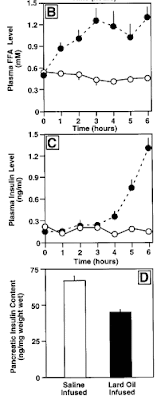
Coming next in the discussion of diabetes I am going to discuss insulin secretion in greater detail.  I was reminded of this post in the writing process.  So ... Bump! Original Publish Date:  4/4/11 Chronic Exposure to Free Fatty Acid Reduces Pancreatic β-Cell Insulin Content by Increasing Basal Insulin Secretion That Is Not Compensated For by a Corresponding Increase in Proinsulin Biosynthesis Translation JD McGarry contributing author. {Please note:  Excerpts from the text will be edited somewhat to avoid "cluttering" references, statistical values, and some rounding of numbers.  Text will sometimes be presented in bullet form or with paragraph breaks to ease reading.  It is not my intent to plagiarize nor to alter the content.  If anyone feels I've altered the content in any meaningful way, do please let me know!}  Direct quotes will be indented. FFA are an important physiological fuel for islets, and act as a sup...

Exogenous Insulin Stimulates Endogenous Insulin Production

Image
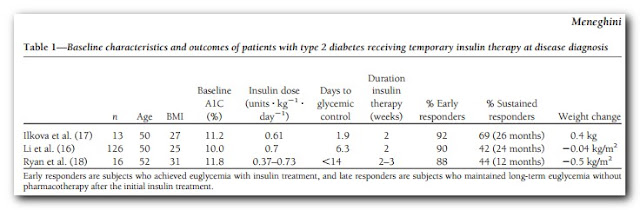
Continuing with our discussion on diabetes ... In my last post on the topic , I introduced this paper:   β-Cell dysfunction vs insulin resistance in type 2 diabetes: the eternal “chicken and egg” question .  This got me to thinking again about early insulin treatment for Type 2.   In an ideal world a more thorough post on EIT for T2 would precede this one, but I've got a paper on this open in the browser and don't want to forget it.  There are, however, several studies out there employing insulin early in the diagnosis of diabetes that have had remarkable results and this is worth revisiting briefly here.  Three of these studies are summarized in the table below from this paper